President Tokayev Reviews National Security Strategy, Sets Priorities for 2026–2030
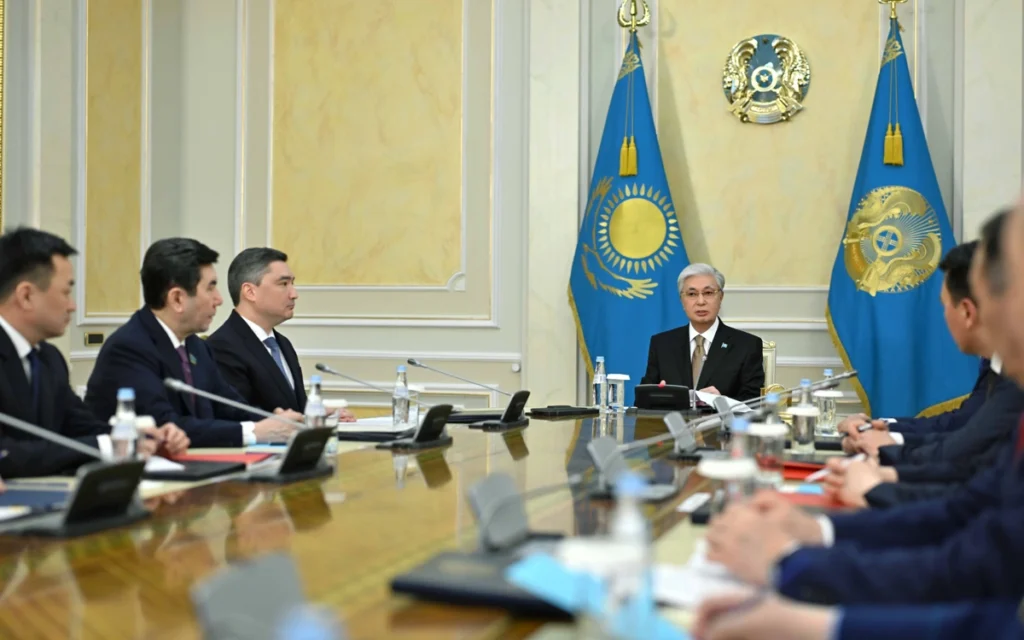
Astana, The Gulf Observer: Kassym-Jomart Tokayev on Monday chaired a meeting of the Security Council of Kazakhstan to review the outcomes of the National Security Strategy for 2021–2025 and outline priorities for the upcoming 2026–2030 period, according to the Presidential press service.
During the session, the Government presented a comprehensive report on the achievement of key indicators under the current strategy, while heads of relevant state agencies briefed the Council on progress across major sectors.
President Tokayev underscored the need to further strengthen public, economic, environmental, water, and food security, particularly in light of evolving geopolitical dynamics.
The meeting also examined a draft of the National Security Strategy of the Republic of Kazakhstan for 2026–2030, which is expected to serve as a cornerstone of the country’s state planning framework. The new strategy outlines key approaches to addressing major risks and challenges anticipated over the next five years.
Deputy Prime Minister and Minister of National Economy Serik Zhumangarin presented proposals on strategic priorities, target indicators, and mechanisms for managing medium-term risks.
Highlighting the broader political context, President Tokayev stated that the adoption of the new Constitution represents a new stage in Kazakhstan’s statehood, ensuring the protection of independence, sovereignty, and territorial integrity. He noted that the forthcoming strategy will reinforce constitutional principles while fostering sustainable and progressive national development.
The President stressed the importance of effectively implementing measures to safeguard national interests, enhance defense capabilities, and improve protection for citizens, the environment, and the information space. He also called for stronger cybersecurity frameworks and proactive steps to mitigate socio-economic risks.
Furthermore, Tokayev instructed relevant authorities to expedite the development of a dedicated programme aimed at attracting highly qualified foreign specialists in key sectors, including the economy, technology, and education, as part of efforts to boost national competitiveness and innovation.
The meeting concluded with a reaffirmation of the government’s commitment to ensuring comprehensive national security and long-term stability through coordinated policy implementation.