Restraint-Escalation Paradox Facing Pakistan
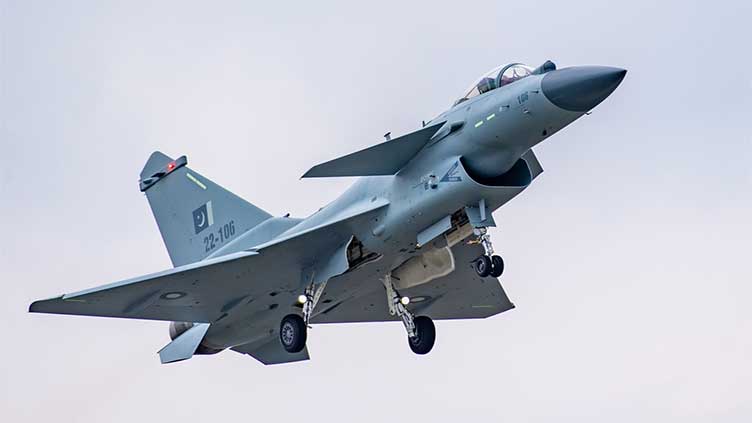

Air power has been the primary tool for limited-wars in India-Pakistan dyad ever since 1998, when the two countries in tandem opted to become declared nuclear states. Especially for conflicts in 2019 and 2025, air power emerged as a preferred kinetic application choice for India, which probably is the key reason for persistent escalation in India-Pakistan scenario. Having demonstrated the capacity to deliver a “quid-pro-quo-plus” response through prudent employment of Pakistan Air Force (PAF), Pakistan faces a paradox of restraint. Measured response exercising restraint in 2019 as well as 2025 for keeping escalation under control is becoming escalatory in itself. Pakistan’s endeavours for escalation control are incentivising a coercive attitude, as India tests the limits of Pakistan’s restraint; turning PAF’s prudence into escalation. Explaining why the Indian methodology is likely to persist for the foreseeable future, the article examines the fundamental reason for persistent escalation of the conflict, and the restraint-escalation paradox facing Pakistan.
Indian preference for air power stems from the fact that it offers tight escalation control while simultaneously dominating the media narrative. Large scale land-force employment is sluggish, especially given the geography of India-Pakistan borders, highly visible and difficult to reverse once initiated, hence offers relatively much lesser control over escalation ladder. On the contrary, air power is quick, flexible, reversible and seem to provide a better escalation control. Air power delivers immediate political dividends. Vis-à-vis ground and naval forces, which operate slowly and quietly at a distance from media; fighter aircraft are noisy, attractive and catch public attention immediately. Media picks up the activity quickly and amplifies the images and headlines with narrative of resolve, projecting leadership as bold, brave and aggressive. Primarily picked to keep the conflict below nuclear threshold, the attraction for employing air power for such domestic signalling has grown over time among Indian political as well as military leadership. Despite realising the reduced space for quiet diplomacy, it seems that the Indian leadership will continue to favour air power for political signalling to domestic audience for the foreseeable future. For Pakistan, however, once the air power is employed in this fashion with an intent to establish a “new-norm,” frequently demonstrated restraint becomes nonproductive, and strategically costly.
As observed during recent conflicts, with a grave misperception of their sensitivity to Pakistan, Indian Air Force (IAF) attacks Pakistani madrassahs and mosques, projecting them as “terrorist training camps” on media. Pakistan responds with counter force targeting, that too with extreme restraint and caution as demonstrated during 2019 symbolic bombing of the Indian Army’s infrastructure; primarily to keep the escalation under control. PAF’s restraint in 2019 probably signalled a permissive space, encouraging India to both establish air power as an instrument of choice for kinetic action and horizontally escalate the conflict beyond the Line of Control in 2025. On the opening day of May-War in 2025, PAF again demonstrated significant restraint by sticking to defensive counter air operation, relatively a much demanding strategy to implement; but the embarrassing air-to-air losses, especially the Rafales, forced IAF to drone and missile warfare, which led to a rapid escalation requiring external intervention for cease fire.
PAF’s restraint is clearly encouraging India to escalate the conflict; and more importantly, the IAF’s force goals and its future emergency procurement plans point to a dangerous emerging trend. Notwithstanding the escalation control offered by manned aircraft employing stand-off precision weapons, emerging airpower technologies, such as hypersonic missiles and drone warfare, that the Indian Air Force is hurriedly procuring have the potential to do the opposite, highlighting the IAF’s dilemma. Modern dual-role hypersonic missiles having capability to carry both conventional or nuclear warheads, travelling at speeds greater than mach-5 will compress decision-making process, which may encourage delegation. In such ambiguous environment, an impulsive worst-case assumption on the type of incoming warhead can potentially activate the higher rungs of escalation ladder.
Facing a paradox of measured response, “quid-pro-quo-plus” while keeping the escalation under control, options for Pakistan seem to be getting narrower as the conflict moves upwards on escalation ladder. Repeated demonstrations of restraint and a high sensitivity to escalation appear, over time, to become drivers of escalation rather than instruments of de-escalation, as an adversary obsessed with regional domination interprets them as signs of weakness. While balancing escalation with visible retaliation and credible resolve, Pakistan must signal with unmistakable intent that staying below nuclear threshold is a shared responsibility of the states directly involved in the conflict; essentially requiring a coherent strategic communication framework. Political leadership’s narrative along with military posturing and declaratory messages from time to time must reinforce a unified narrative that restraint reflects confidence and control at operational level, not vulnerability. Sustained use of formal communication channels and aggressive diplomacy can reinforce the message that nuclear-stability is a shared responsibility, and its erosion would be a collective failure with grave consequences.