The Effect of Spatial Spillover and Social Corporate Responsibility of BRI Infrastructure Development
Introduction
The Belt and Road initiative aims to improve the economic and social conditions of BRI countries via infrastructure development, increased trade, direct investments and ultimately creating jobs for the residents. A white paper titled as “The Belt and Road Initiative: A Key Pillar of Global Community of Shared Future” published by the State Council Information Office of the People’s Republic of China (2023) termed the BRI as a creative development that caries forward the spirit of ancient silk route-a route that connected Asia, Europe and Africa for trade, communication and cooperation-highlighting that the significance of this mega project is not merely because of its focus on building huge infrastructure and government-to-government initiatives but in uplifting the common people and their wellbeing.
1.1 Infrastructure Development under BRI
Infrastructure development is directly connected to economic growth in any country. The roads and highways constructed under infrastructure development facilitate the local people to trade more easily and efficiently and connect them with other regions, creating more opportunities for them. According to Social Exchange theory, people usually support any development when they expect any individual and social level benefits. The improved economic status always results in positive social impact on the lives of people in a country.
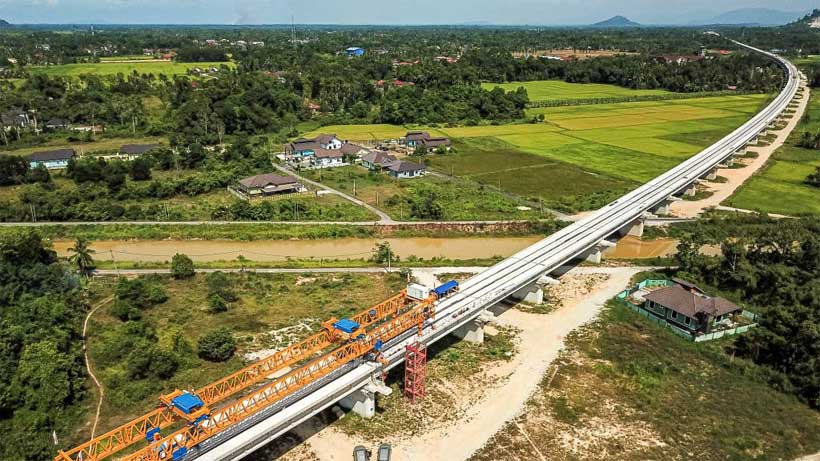
BRI being the mega project of constructional and trade development, with huge investment of $ 1 trillion in 70 countries, not only uplifting people out of poverty by building roads, highways, railways, ports, schools and hospitals but also improving their way of living and ability to afford more in terms of basic necessities. For example, in African Union (across 5 African region), China is mutually developing trade routes in order to promote industrialization, regional and intercontinental connectivity along with economic zones aligned with the BRI and with the Program for Infrastructure Development in Africa (PIDA) to ensure the economic growth in the region. This has led to the regional integration and social prosperity in African region, the region that was previously seen as dark continent.
Economic Impact of BRI
While investigating the Impact of Infrastructure Development of BRI and non-BRI countries, the World Bank Group (2019) stated that the infrastructure development in BRI countries “accelerate significantly the rate of economic integration and development in the region”. The infrastructure development resulted in trade cost reduction which largely benefitted the BRI countries. The global income increased 0.7 percent in 2030 relative to baseline and BRI area gained 82 percent of this increased percentage. The findings of the report also stated that the BRI contribute of uplifting 7.6 million people out of extreme poverty and 32 million from moderate poverty.
The transport infrastructure (highways, railways, roads) significantly played a crucial role in increasing economic growth in countries. The it is based on different factors such as geographical distance, economic distance, cultural distance and institutional distance which developed different impact on different economies across all BRI countries. Such as based on these factors, the transport infrastructure was found to be have negative spatial spillover effect in East-Asia, Central Asia, South Asia and the Commonwealth Independent States where as this effect is more positive in the economies of Central and Eastern Europe.
For example, in Pakistan the CPEC-the flagship project of BRI-significantly contributed to the economic uplifting of Pakistan and its people through huge infrastructure development. The massive networks of roads all across Pakistan, port development in Gawadar, reconstruction and expansion of KKH under its Phase II, construction of Gawadar Airport and establishment of SEZs, helped Pakistan to move towards more positive economic outlook. However, the negative spatial infrastructure effect reported on the economy of BRI countries in South Asia, the infrastructural development in surrounding regions of Pakistan are not very beneficial. However, CPEC is expected to improve this situation by bringing more direct investment in infrastructure, by creating competition for the neighboring countries, developing more opportunities within country and by providing more sources of trade for its people.
Social Impact of BRI
The second major perspective that makes a developmental project successful is its ability to which it serves the society. China has specially instructed its companies to promote Outward Foreign Direct Investment (OFDI) and to make Social Corporate Responsibility an essential part of project development. The difference-in-differences analysis of the influence of BRI on sustainable development performance showed that the BRI increased the pressure on it’s a listed firms to carry out green processes reforms which led to a continues increase in SDP effect (Wen et al. 2025). A number of initiatives has been taken so far such as facilities provision to the local people, providing them sources of livelihood, focus on environmental sustainability and green development. This CSR was not only found to have a strong social impact on the local people but it has also positively impacted the Chinese firms as it earned the Chinese companies a good social image, human capital and dynamic capabilities which resulted in enhancing their legitimate status in host country, increased their ability to resist the potential risks, more acceptability by the local people and most importantly helped the BRI to fight against the global propaganda (Wang et al. 2023).
Conclusion
The infrastructure development under BRI led to a number of positive results the most significant one is the development of positive attitudes towards the BRI project as whole (Khan et al, 2025). Despite of challenges and issues such as negative spatial spillover effect of transport infrastructure in South Asian countries, the initiatives such as outward foreign direct investment of Chinese companies in BRI countries and the project being developed under Social Corporate responsibility being taken under BRI aim at bringing more prosperity by uplifting the economy and standard of living in partnering countries. All these initiatives made the BRI a win-win project where not only the Chinese enterprises gain the benefits but bring the positive impact on the economy and social livelihood of the common people of the host country.