Tokayev’s Kurultai Address Signals Kazakhstan’s Confident Step Toward Modern Governance and Global Connectivity
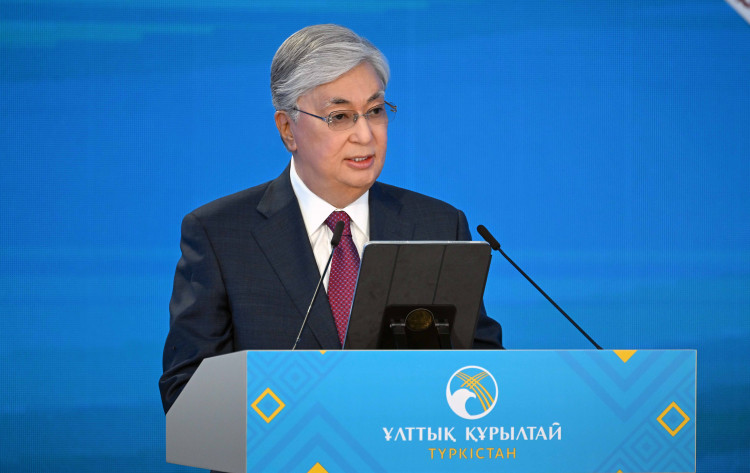

The speech of President Kassym-Jomart Tokayev at the National Kurultai in Kyzylorda is a milestone in the political development of Kazakhstan, promising a vision on the future, giving a combination of institutional reforms, strategic diplomacy, and technological changes. It is the reflection in what could be described as a leadership agenda of making the underpinnings of statehood stronger and making Kazakhstan a viable, predictable and competitive participant in the rapidly changing international system.
The central theme of the speech is an undertaking to revamp governance by being clear, balanced and accountable. Now this is an indication that Tokayev will focus on political predictability and institutional continuity by suggesting formalized rules of presidential succession and the adoption of a constitutionally guaranteed Vice Presidency. These actions reinforce the idea that legitimacy is passed on via elections and parliamentary approval, a message that will probably go well with the international community that seeks stability and governance by the rule of law.
It is also important that the intended shift to a new constitutional model and enhanced checks and balances further highlight reform trends in Kazakhstan. Governing parliamentary power in important selection of officials and judicial checks and balances is an attempt to institutionalize transparency and collective responsibility of the institutions of power. The suggested restructuring of legislature into lean, professional and party system is meant to increase efficiency in the legislature and reinforce the position of political institutions in national development.
Tokayev reiterates the balanced, pragmatic and interest-oriented diplomacy in foreign policy, which underscores the Kazakhstan ambition of being a bridge-builder in the world that is ever more fragmented. By portraying diplomacy as a weapon of compromise, instead of confrontation, the President strengthens the image of the country as a stabilizing force in Eurasia, a strategy that will satisfy the demands of both Europe and the United States, China and local partners.
Economically, the speech portrays Kazakhstan as a supporter of integration and a protector of the national strength. The priorities of the country in the reduction of trade barriers, the use of artificial intelligence, and ensuring food security is an indicator of a subtle attitude, both openness and strategic self-preservation as the chair of the Eurasian Economic Union in 2026. This equilibrium shows that there is appreciation of the world trade dynamics and regional collaboration is not abandoned.
The desire expressed by Kazakhstan to become a great transport and logistics center can be viewed as a strong indicator of the long-term development strategy. The investments in highways, railways and cargo aviation make the country a node in both east-west and North-South routes and contribute to its increased significance in worldwide supply chains and strengthen its presence in the connectivity of Eurasia.
The focus on digitalization and artificial intelligence as drivers of national competitiveness is, perhaps, the most noticeable. Offering to constitutionalize the digital infrastructure and demand the initial creation of data centre zones, Tokayev does not position technology as an instrument of economic activity but rather as a stronghold of national independence and authority. Such a strategic perspective makes Kazakhstan a part of an increasing number of states that are interested in making digital transformation be part of the very fabric of the state.
The address also reconciles between modernization and cultural continuity. Focusing on cultural infrastructure, UNESCO involvement and the digitalization of national heritage, the President introduces identity and history as a digital resource in the global world. Such combination of tradition and innovation strengthens the image of a country that is proud of its ground and, at the same time, entirely involved in the future.
Overall, the Kurultai speech of Tokayev produces a consistent and ambitious view of a Kazakhstan based on the rule of law, open to the world, technologically progressive and institutionally strong. So in my opinion, it is a good message to the international community that Kazakhstan wants to become not only a member of the world community, but a stable, reform-driven and strategically important entity that makes its own future in the complicated world.