Việtnam’s Population Seen Peaking Around 2059 as Ageing and Migration Trends Intensify
Hanoi, The Gulf Observer: Việtnam’s population is projected to peak around 2059 before entering a phase of slow growth or stability, according to long-term demographic projections released on Tuesday, as the country prepares to confront rapid population ageing, persistent gender imbalances and evolving migration patterns.
The projections were presented at a workshop hosted by the General Statistics Office in coordination with the United Nations Population Fund (UNFPA). The analysis draws on the latest census data and large-scale socio-economic surveys covering all 53 ethnic groups nationwide.
Under a medium-fertility scenario, Việt Nam’s population is expected to continue expanding for several decades before reaching its peak around the middle of the century, followed by a transition toward slower growth or relative stability. Over the 2024–2074 period, the population is projected to rise to approximately 114 million, though outcomes will vary significantly depending on future fertility trends.
Officials noted that the country’s “golden population structure” — a period when the working-age population substantially outnumbers dependents — is expected to end by 2036. This will usher in an era of population ageing and, eventually, super-ageing, driven by a decline in younger and middle-aged cohorts alongside a rapid increase in the elderly population.
The demographic shift is expected to place growing pressure on labour supply, healthcare systems and social protection frameworks. At the same time, an imbalance in the sex ratio at birth is projected to persist well into the mid-21st century, continuing to distort the population’s gender structure.
Urbanisation, while ongoing, is forecast to slow as the urban population approaches the 50 per cent threshold. Internal migration remains a major force reshaping population distribution, reflecting disparities in economic opportunity and labour demand between regions.
New data presented at the workshop showed that internal migration has declined in recent years, falling from about 6.4 million people during the 2014–2019 period to roughly 3.8 million between 2019 and 2024. City-to-city migration accounts for more than 70 per cent of all movements, indicating that most migrants leaving urban areas are relocating to other cities rather than returning to rural communities.
Short-distance moves are becoming increasingly common, a trend researchers attribute to a growing preference for residential stability and lower mobility costs. While overall migration has declined, migration among ethnic groups has decreased only slightly, increasing their share of total migrants.
Analysts said this suggests early gains from job creation and development policies in rural, peri-urban and satellite-city areas.
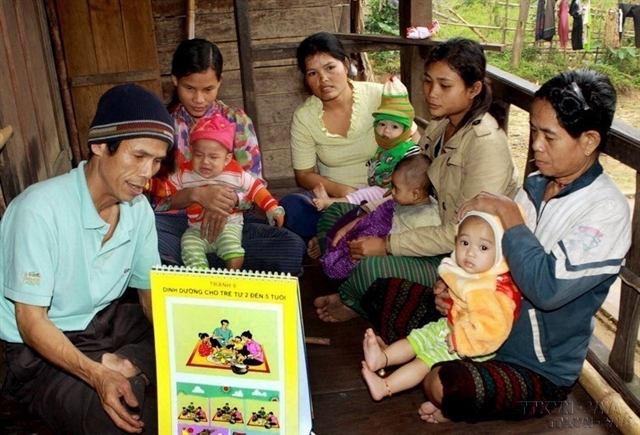
A separate report released at the workshop highlighted that illiteracy rates among very small ethnic groups — those with populations under 10,000 — are more than double those of larger ethnic communities. Early marriage, low educational attainment and inadequate sanitation were identified as interlinked factors driving multidimensional poverty among ethnic groups.
Education, particularly secondary education for girls, was identified as a critical tool for reducing intergenerational poverty and curbing child marriage. Officials called for more flexible and targeted policy interventions tailored to the specific conditions of different ethnic communities.
Taken together, the findings underscore a narrowing window for Việt Nam to capitalise on its remaining demographic dividend, while highlighting the urgency of long-term planning to manage population ageing, migration dynamics and gender imbalances.