Beyond Platforms: How Modern Air Power Is Being Misread
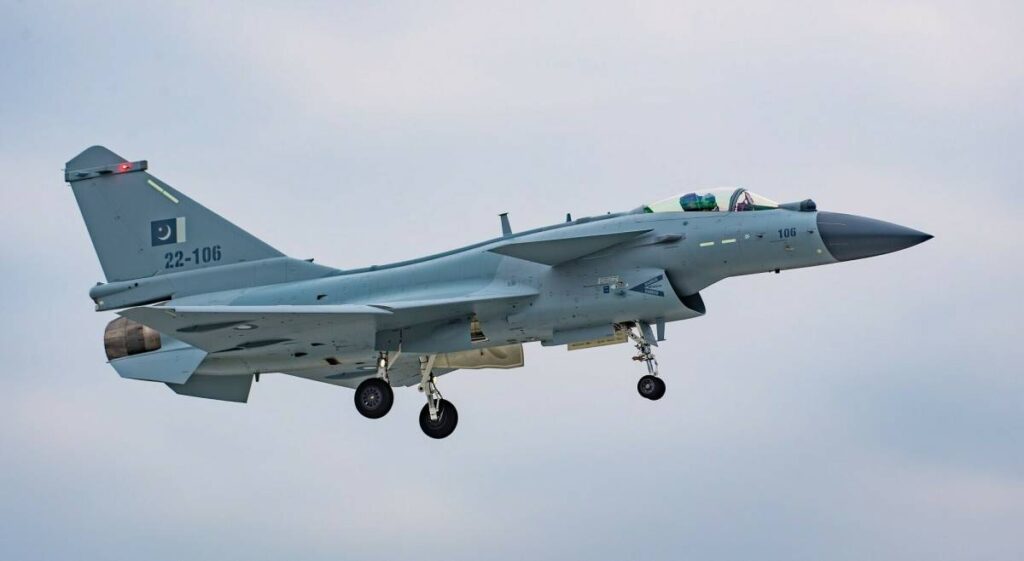
The effectiveness of air power is no longer determined by individual platforms but by the integration of sensors, command architecture, training regimes, and decisionmaking processes. Modern air warfare increasingly reflects system-level competition rather than isolated aircraft performance. Analytical assessments that fail to account for this shift risk misreading both outcomes and causes. In this context, the Swiss exploratory brief “Operation Sindoor: The India-Pakistan Air War (7-10 May 2025)”, published by the Centre d’Histoire et de Prospective Militaires (CHPM), Switzerland, must be examined critically.
Although presented as a neutral and exploratory assessment, the CHPM brief reflects a persistent imbalance in the narrative. Despite the abundance of technical details, the brief’s limitations stem from the way history, evidence, and credibility are selectively organised. What is labelled as detached analysis ultimately reproduces the Indian account of the war.
At the core of the brief lies a familiar framing. Pakistan is presented as a permissive security actor whose actions require sustained scrutiny, while Indian military behaviour is contextualised as reactive, constrained, and ultimately rational, while ignoring the fact that it used a false-flag operation as a pretext to start a war under nuclear overhang. This is a product of a selective ordering of evidence that predetermines conclusions and then assembles supporting explanations around it. Another issue is the report’s platform-centric lens. The performance of the Rafale is discussed in ways that implicitly detach it from the organisational and doctrinal ecosystem in which it was employed. The brief treats platforms as near-autonomous determinants of outcome rather than as components embedded within specific training regimes, command structures, and operational concepts. This approach shields broader systemic questions about the IAF’s loss of eight aircraft while narrowing analytical focus to hardware narratives.
What remains underexplored is the transformation of the Pakistan Air Force over the preceding years. The May engagement was the outcome of a deliberate shift towards multi-domain operations under the leadership of Air Chief Marshal Zaheer Ahmed Baber Sidhu. The PAF prioritised integration across air, space, cyber, electronic 2 warfare, and unmanned systems, compressing decision cycles and enhancing battlespace awareness. This was not platform parity but system coherence. The PAF’s conduct reflected a mature concept of employment rather than ad hoc adaptation, yet this organisational dimension receives limited attention in the CHPM brief.
The night of 6 and 7 May further illustrates this point. The air battle unfolded entirely at night and without crossing borders, making it the first large-scale, sustained Beyond Visual Range engagement of its kind. PAF operations combined space-based awareness, electronic warfare, cyber effects, and real-time sensor fusion with manned and unmanned aircraft operating in unison. This integrated employment under Markae-Haq allowed Pakistan to contest the battlespace while denying escalation through territorial penetration. Treating such an engagement within the legacy evidentiary framework overlooks how contemporary air combat is actually conducted.
The evidentiary critique is therefore misplaced. In a non-penetrative BVR environment, visual confirmation and accessible wreckage are structurally irrelevant. The PAF applied a conservative internal framework for kill confirmation based on layered sensor correlation, including aircraft radar lock, missile engagement within defined parameters, corroboration across airborne and ground-based sensors, and only then supporting human intelligence. Several engagements were excluded from official tallies because these criteria were not conclusively met. Whether one accepts every claim or not, this framework challenges suggestions of casual or inflated reporting.
The CHPM brief does not meaningfully engage with this reality. Instead, it treats the absence of legacy proof as grounds for scepticism while extending interpretive flexibility elsewhere. PAF’s achievements are framed as provisional, whereas Indian actions are consistently contextualised. This asymmetry is reinforced linguistically, most clearly in the description of IAF as a “giant in the making”. This description sounds comical in light of an engagement where a smaller PAF inflicted multiple fighter losses on the IAF. The use of aspirational language in place of performance-based assessment reflects a broader narrative bias that insulates Indian claims from critical scrutiny.
Finally, the brief gives limited analytical weight to Pakistan’s joint response. The employment of Al-Fatah missiles during Bunyan-um-Marsus was part of a calibrated escalation management strategy that integrated the air and land domains under 3 unified strategic direction. The role of Chief of Defence Forces Field Marshal Asim Munir in sequencing these strikes is central to understanding their deterrent signalling. Treating this dimension as peripheral underplays the significance of joint force integration in shaping the conflict’s trajectory.
The May 2025 war carried reputational consequences for the IAF and the French defence industry, particularly the Rafale programme. Within this setting, the brief functions less as a dispassionate assessment and more as reputational damage control. The issue, therefore, is not disagreement over claims but analytical responsibility. Without interrogating underlying assumptions, analysis risks managing narratives rather than explaining how modern air power actually operates.