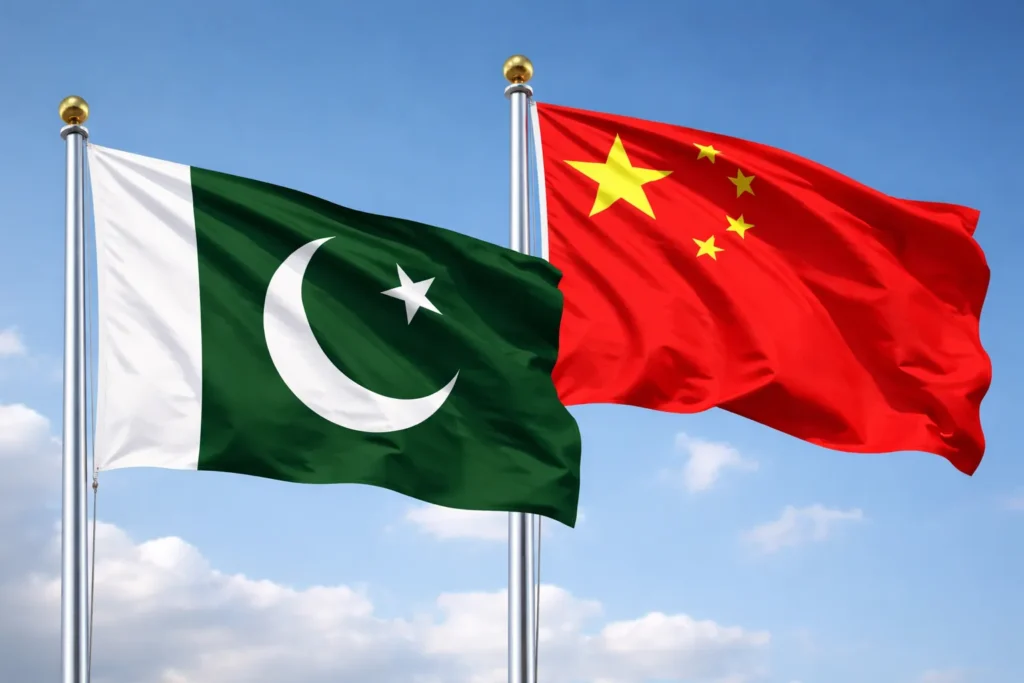
China-Pakistan Skills Corridor for Sustainable Development
The contemporary discourse on skills education is saturated with optimism, policy urgency, and global consensus, yet beneath this celebratory narrative lies a profound paradox embedded in the political economy of skills. The twenty first century, often described as an age of information abundance and virtual interconnectedness, has redefined not only how knowledge is produced and consumed but also how skills are constructed, valued, and controlled. In this emerging order, skills are no longer neutral instruments of empowerment but contested terrains shaped by power, capital, and ideology. The critical question is not merely how to equip youth with skills but who defines those skills, who benefits from them, and who is rendered perpetually unskilled in the process.
Globally, technical and vocational education and training has expanded at an unprecedented rate. Over 70 percent of countries have introduced national skills strategies aligned with labor market demands, and billions of dollars are invested annually in workforce development. In Pakistan, more than 3 million individuals have been trained through public institutions, yet youth unemployment remains around 11 percent, with significantly higher rates among educated youth. This contradiction exposes a deeper structural issue. The proliferation of skills programs has not resolved the crisis of employability but has instead reproduced it in new forms. The worker is never fully skilled but remains trapped in cycles of reskilling, upskilling, and deskilling dictated by market volatility.
This paradox becomes even more critical in the context of escalating global crises. The ongoing tensions involving Iran, the United States, and Israel have destabilized the Middle East, disrupted energy markets, and intensified economic uncertainty across the Global South. Inflationary pressures, supply chain disruptions, and declining job creation are redefining the global economic landscape. In such a context, the crisis of skills is no longer just a labor market issue but a geopolitical and developmental challenge.
Pakistan stands at a strategic crossroads in this shifting global order. Its geographic location positions it as a bridge between South Asia, Central Asia, and the Middle East. Amid global instability, Pakistan has the potential to emerge as a safe destination for investment and production. However, this potential is constrained by a fundamental contradiction within its skills ecosystem. While training programs are expanding, they remain disconnected from structural economic transformation, industrial policy, and local realities.
The root of this disconnect lies in the dominance of market driven approaches to skills development. Skills are increasingly treated as commodities, valued for their immediate utility rather than their contribution to human development. Education systems are oriented toward producing employable individuals for global value chains rather than fostering critical, creative, and contextually grounded capacities. Indigenous knowledge systems are marginalized, and local skills are rendered invisible because they do not align with standardized global benchmarks. What was once local is now nowhere, and what is called local is often merely a reflection of global economic norms.
At the same time, global initiatives in skills development, including those linked to sustainability and digital transformation, often reinforce these dynamics. While framed as inclusive and forward looking, they frequently prioritize market solutions and corporate interests. Evidence shows that top down training programs have limited long term impact, with only a fraction of graduates securing stable employment. This indicates that the crisis is not a lack of skills but a mismatch between training systems and the structural realities of economies.
In this context, the integration of a Pakistan–China Skills Corridor under the framework of the China Pakistan Economic Corridor and the broader Belt and Road Initiative offers a transformative policy pathway. Unlike fragmented and market driven models, China’s approach to skills development is embedded within a coherent national strategy that links education with industrialization, technological upgrading, and global engagement. Xi Jinping has emphasized that “development must be people centered,” underscoring the integration of skills within a broader vision of social and economic transformation.
For Pakistan, the key lesson is the need to align skills development with structural economic change. Special Economic Zones under CPEC should not function merely as sites of production but as integrated ecosystems of skills, innovation, and employment. Training institutions, industries, and research centers must operate in synergy, ensuring that skills are directly linked to value creation and job opportunities. This approach can transform the current model from supply driven training to demand linked development.
However, this transformation requires more than institutional reform. It demands a fundamental rethinking of the philosophy of skills development. The distinction between empowerment and emancipation becomes central. Empowerment, often driven by external actors, provides skills based on market needs but can reinforce dependency and external control. Emancipation, in contrast, is rooted in the agency of individuals and communities. It enables people to define their own skills, aspirations, and development pathways. A Pakistan–China Skills Corridor must prioritize emancipation by integrating local knowledge systems with modern technologies, creating hybrid models that are both globally competitive and locally grounded.
The relevance of this approach is heightened by the current global crisis. As conflicts reshape global trade and investment patterns, there is a growing search for stable regions with strategic connectivity. Pakistan, with its CPEC infrastructure and geographic advantage, is well positioned to attract global capital. Yet, without a skilled, adaptable, and contextually grounded workforce, this opportunity cannot be fully realized. Skills must be understood not merely as tools for employment but as foundations for resilience, innovation, and sovereignty.
Comparative experiences reinforce this perspective. Countries that have successfully linked skills development with industrial policy and social objectives have achieved more sustainable outcomes. However, these models cannot be replicated without adaptation. Pakistan’s large informal sector, regional disparities, and cultural diversity require context specific solutions. Approximately 72 percent of the workforce operates in informal sectors, and women’s participation remains below 25 percent. These realities demand decentralized, inclusive, and community driven approaches to skills development.
Policy directions for operationalizing the Pakistan–China Skills Corridor include establishing joint vocational universities and technical institutes aligned with CPEC projects. These institutions should focus on applied research, technology transfer, and industry oriented training. Curriculum design must integrate global technological trends with local economic realities. Decentralized community resource centers should serve as nodes within the corridor, ensuring that rural and marginalized populations are included.
Furthermore, indigenous skills must be recognized and integrated into formal systems. Traditional crafts, agricultural practices, and community based knowledge represent valuable assets that can contribute to sustainable development. Linking these skills with modern value chains can create new opportunities for employment and innovation while preserving cultural identity.
The concept of shared prosperity provides a guiding framework for this transformation. Skills should not be treated as individual commodities but as collective capacities that contribute to social cohesion and economic resilience. Cooperative models, community enterprises, and participatory governance structures can create spaces where skills are nurtured, shared, and celebrated.
Ultimately, the challenge is to move beyond the neoliberal logic that reduces skills to market instruments and to reclaim them as tools for human development. The war against youth is not fought with weapons but with policies, narratives, and institutions that shape their futures. In an era of global crisis, this war becomes even more intense, as economic uncertainty and geopolitical tensions limit opportunities and increase vulnerability.
To navigate this moment, Pakistan must adopt a bold and integrated approach that connects skills development with national strategy, regional cooperation, and global transformation. The Pakistan–China Skills Corridor, anchored in CPEC and the Belt and Road Initiative, offers a pathway to achieve this vision. However, its success depends on prioritizing bottom up approaches, valuing indigenous knowledge, and fostering emancipation rather than dependency.
The skills paradox is not merely a technical problem but a reflection of deeper structural inequalities in the global system. Addressing it requires reimagining skills education as a site of transformation rather than control. By aligning skills with dignity, resilience, and shared prosperity, Pakistan can turn its demographic challenge into an opportunity and position itself as a stable, innovative, and inclusive hub in an increasingly uncertain world.