Morocco’s Parliament Opens New Legislative Session Amid Global Challenges and Pre-Election Momentum
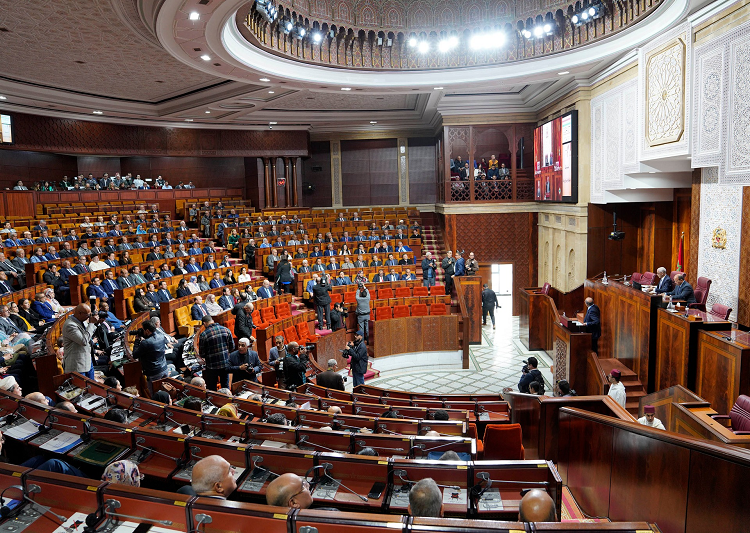
Rabat, The Gulf Observer: Morocco’s two chambers of parliament formally opened the second session of their fifth legislative year on Friday, setting the stage for an intensive period of lawmaking, government oversight, and diplomatic engagement ahead of upcoming legislative elections.
A joint plenary session is scheduled for next Wednesday, during which the government will present its performance review before both houses in accordance with Article 101 of the Moroccan Constitution.
Speaker of the House of Representatives, Rachid Talbi El Alami, said the session begins against the backdrop of global geopolitical and economic challenges. However, he подчеркнул that Morocco continues to demonstrate resilience, citing stable economic indicators and what he described as a credible and consistent diplomatic stance.
Addressing the Western Sahara dispute, Talbi El Alami highlighted growing international backing for Morocco’s autonomy plan, particularly following UN Security Council Resolution 2797. He described this shift as a “decisive turning point” in the international community’s handling of the issue and urged lawmakers to maintain diplomatic vigilance in line with the King’s address on October 31, 2025.
The lower house is set to deliberate on an extensive legislative agenda, with 39 bills scheduled for review, including 23 related to international agreements, as well as legislation focusing on state modernization and professional regulation.
On oversight, Talbi El Alami revealed that a total of 2,481 parliamentary questions—865 oral and 1,616 written—were submitted during the inter-session period. He called for accelerating oversight mechanisms and fostering meaningful parliamentary debate to strengthen democratic institutions and public trust.
Meanwhile, Speaker of the Chamber of Advisors, Mohamed Ould Errachid, described the session as carrying “particular significance,” as it coincides with expanding regional development programs and precedes a major electoral cycle.
He noted that several high-priority bills are nearing final adoption stages and emphasized the importance of balancing government-sponsored legislation with initiatives proposed by lawmakers, calling the latter an “essential constitutional mechanism.”
Ould Errachid also highlighted the chamber’s oversight activities, stating that since the previous October session, 215 written and 451 oral questions had been submitted to the government, with 143 written responses received. A joint session with the lower house is also planned to review a report by the Court of Auditors on financial court activities for 2024–2025.
Additionally, he announced plans to expedite revisions to the chamber’s internal rules, with a draft expected to be presented to the relevant committee soon before undergoing review by the Constitutional Court.
On the diplomatic front, Ould Errachid underlined the expansion of parliamentary engagement at both bilateral and multilateral levels, aligning with Morocco’s broader foreign policy priorities, particularly regarding the Western Sahara issue.
He concluded by urging lawmakers to treat the session as an opportunity to deliver measurable and strategic outcomes, reinforcing the role of parliament in addressing national priorities and strengthening institutional effectiveness.