Europe Paying the Price for Its Ban on Russian Gas, Says Russian Foreign Ministry
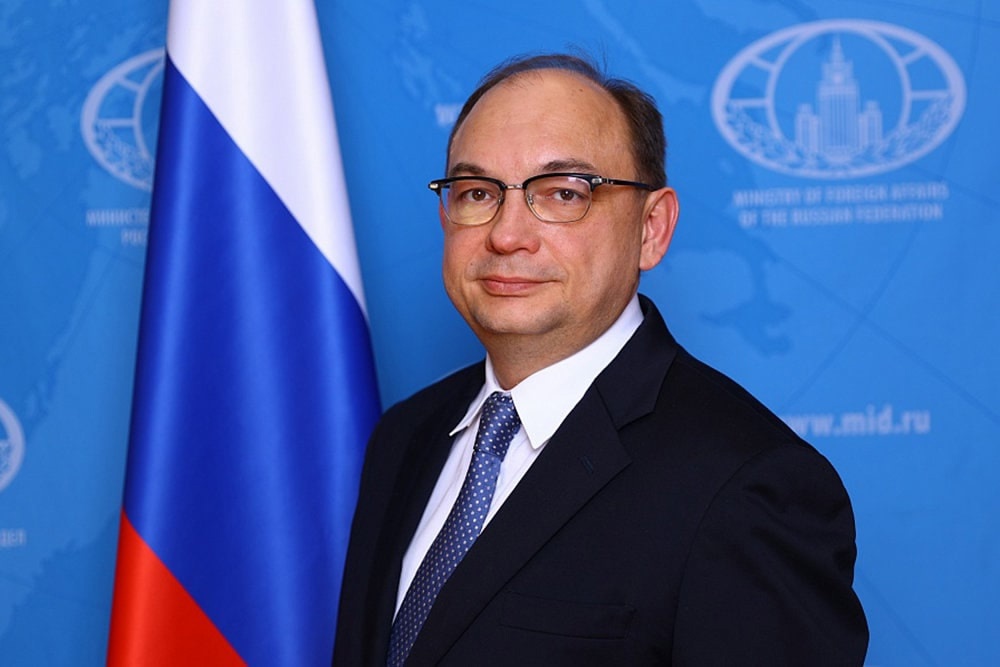
Moscow, The Gulf Observer: Europe has suffered significant setbacks since it imposed a self-ban on Russian gas, according to Dmitry Birichevsky, director of the Russian Foreign Ministry’s Department of Economic Cooperation.
In an interview, Birichevsky called the European restrictions on Russian gas “entirely untenable” and said they were hurting the very countries that imposed them.
“Self-Imposed Bans Directly Hurt Those Who Impose Them”
“It is clear to us that these measures are entirely untenable. Such self-imposed bans and other restrictions directly hurt those who impose them,” Birichevsky said.
The Russian diplomat said European economies and consumers were already feeling the consequences of the ban on Russian gas. “European economies and end users, both industry and households, now face sharply higher costs, while businesses are shutting down or moving to other jurisdictions,” he stated.
Putin’s Warning: “Whoever Digs a Pit Will Fall Into It”
To underline his point, Birichevsky recalled a remark by Russian President Vladimir Putin at the 8th summit of the Gas Exporting Countries Forum (GECF) in Moscow. “As Russian President Vladimir Putin said at the 8th summit of the Gas Exporting Countries Forum in Moscow, ‘Whoever digs a pit will fall into it,’” the diplomat said.
The proverb, he suggested, sums up how Moscow sees Europe’s energy policy: measures meant to pressure Russia have rebounded on European industry and households instead.
EU’s Full Ban on Russian Pipeline Gas and LNG
Birichevsky also addressed the European Union’s initiative to impose a complete ban on imports of Russian pipeline gas and liquefied natural gas (LNG). He described the move as part of the politicised sanctions policy the EU has pursued in recent years to isolate Russia economically.
According to the Russian official, the ban on Russian gas is the latest step in a broader European effort to cut economic ties with Moscow, an approach Russia has repeatedly criticised as counterproductive.
Decades-Old Energy Ties Severed
Birichevsky stressed that Europe, not Russia, chose to break the long-standing energy partnership between the two sides. “It was the Europeans who began severing the longstanding, mutually beneficial energy ties with our country that dated back to Soviet times,” he recalled.
For decades, Russian gas was a cornerstone of Europe’s energy supply, powering industry and heating homes across the continent. Moscow argues that walking away from that relationship has left Europe facing higher energy costs and a loss of industrial competitiveness.
Energy Debate Continues
The Russian Foreign Ministry’s remarks come as Europe’s energy policy and its move away from Russian gas remain central to debates over energy security, industrial costs and the wider economic fallout of sanctions. For Moscow, the message is clear: Europe’s self-imposed ban on Russian gas is costing Europe more than it is costing Russia.