Azerbaijan National Flag Day is a Proud Tricolored Celebration of 108 Years of Unyielding National Spirit


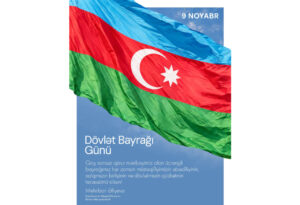
One of the most important dates of the Azerbaijani national calendar is Azerbaijan National Flag Day that is celebrated on 9 November annually. It celebrates a flag that conveys the history of a country’s fight for freedom, its survival through the hard years, and its return to freedom. There are not many symbols that have as much of a story to tell as this one does. The blue, red and green tricolour as the state flag of Azerbaijan embodies the notion of a modern state and also connects generations of Azerbaijanis and their past, a journey of hope, loss, revival and determination.
Azerbaijan’s flag is a tale of bravery and perseverance. On 9 November each year the nation commemorates the creation of its modern statehood and how its identity has endured political change as well as the unique status of the tricolor in its people’s hearts.
Birth of a Nation’s Symbol in 1918
The tale of Azerbaijan National Flag Day starts in the year of 1918. The Azerbaijan Democratic Republic (ADR) declared its independence as Russia’s Empire fell. The tricolour was officially made the national flag on 9 November that same year.
The decision was bold and far-sighted. At the moment the idea of an independent Azerbaijan state was only starting to take form and the founders of the republic selected the symbol which announced their political ambitions to the world. It is still a matter of national pride more than 100 years later and the day of its adoption was the base for the Azerbaijan National Flag Day.
Meaning and Theme Behind the Blue, Red and Green
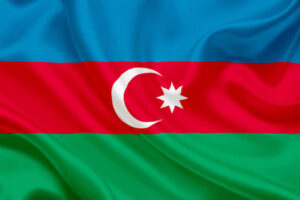
The beauty of Azerbaijani flag is in the meaning of it. Each colour represents a different facet of the country:
Blue is the colour of the Turkish heritage of the Azerbaijanis
Red indicates modernization, and the building of democratic institutions.
Green is the colour of the country as it has a strong association with Islamic civilisation.
A white crescent and an eight-pointed star finish off the design at the centre. These elements combined into one unified and harmonious symbol represent national identity, cultural heritage and hope for a modern future.
This pairing is what makes this flag so unique. It demonstrates that heritage and progress do not have to be mutually exclusive. Azerbaijan’s tricolour is a symbol of the nation’s ability to embrace its heritage while striving for modernity, embodying a perfect blend of history and future.
A Republic ahead of its Time
The tricolour was to symbolize a relatively modern republic. Parliamentary institutions were established and significant political reforms were introduced in Azerbaijan Democratic Republic. Among other great achievements was the right to vote, which was granted in 1918, and that made Azerbaijan one of the first Muslim countries to do so.
The history of the Azerbaijan State has made Azerbaijan National Flag Day more meaningful. The flag reminds Azerbaijani people that the founders of the first republic of Azerbaijan were pioneers and advocates of representation, reform and equality in a time when many states had never envisioned any such concepts.
Lowered but Never Forgotten
The independence of the ADR was short-lived. The republic was brought to an end by the Soviet military intervention in April 1920 and the tricolour was lowered. The flag stayed outside of the official political life of the Republic of Azerbaijan for nearly 70 years.The flag had been absent from the political life of the Azerbaijan for the period of almost 70 years.
But its purpose never wavered. The tricolour went on to live a quiet life during the Soviet era, as a symbol of a national aspiration and an indeterminate story of independence. This endurance is one of the moving moments in the history that is commemorated on Azerbaijan National Flag Day. It is possible for a flag to be removed from a public building, but the ideals it represents may live on in a nation’s memory.
The Tricolor Came Back
The tricolour was re-introduced on a historic occasion just before the end of the Soviet Union. The Supreme Assembly of the Nakhchivan Autonomous Republic headed by Heydar Aliyev reinstated the flag as the official symbol of the republic on 17 November 1990. The choice was a clear signal of the future course of Azerbaijan.
The tricolour became officially the National Flag of Azerbaijan on 5 February 1991. After regaining state independence it became one of the symbols of the newly independent state later that year. The flag which had been flown over the sovereign Azerbaijan in 1920 once again imbued with pride to be flown over the sovereign Azerbaijan.
History of the Establishment of Azerbaijan National Flag Day
In 2009, the flag’s history was enscribed into the nation’s calendar. The order was signed by President Ilham Aliyev on 17 November that year, which established the day of the state flag.
Azeri National Flag Day is a day of celebration used to link the present day Azerbaijan independent republic to the vision of its founders who first adopted this flag in 1918. It is a statement of the continuous and strident march toward statehood by modern Azerbaijan.
A Symbol of Unity and Territorial Integrity
The significance of the Azerbaijani flag has been developing in the modern history of Azerbaijan. The Karabakh conflict with Armenia gave it an extra dimension of significance. The tricolour for Azerbaijanis came to represent territorial integrity, national unity and the commitment to reclaiming the internationally recognized territories.
This symbolism was given a new emotional charge in 2020. After the Patriotic War, which lasted for 44 days, Azerbaijan began to regain the territories and pictures of the raising of the national flag in the towns and villages started to become a symbol of a historic turning point. The restoration of the sovereignty of the Republic of Azerbaijan in the internationally recognised territory of the State in September 2023 has made the political and emotional value of the flag even greater. Azerbaijan National Flag Day today is also a reminder for many of the citizens of Azerbaijan of those days.
Copyright © 2026 by Muhammad Ali Pasha. All rights reserved. Reproduction or distribution of this content, in whole or in part, without prior written permission is prohibited.