Azerbaijan and United Kingdom Elevate Relations to Strategic Partnership
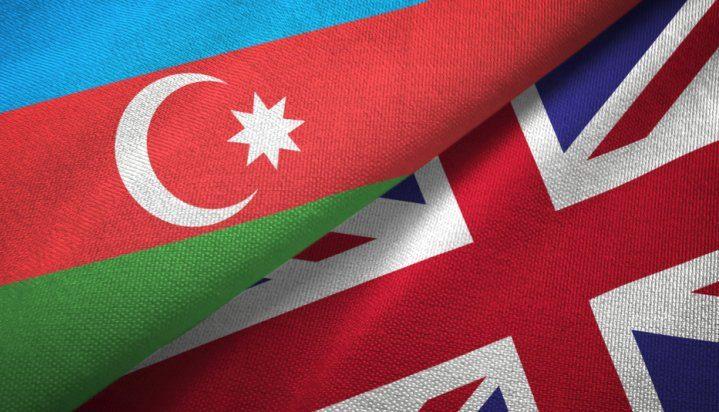
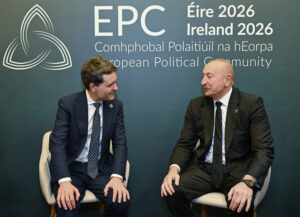
Dublin, The Gulf Observer: The Republic of Azerbaijan and the United Kingdom of Great Britain and Northern Ireland have elevated their bilateral relations to the level of a Strategic Partnership, with President of Azerbaijan Ilham Aliyev and Prime Minister of the United Kingdom Andy Burnham signing a joint declaration in Dublin on 12 November 2026.
The Azerbaijan UK Strategic Partnership is grounded in mutual respect, shared interests and practical cooperation. It builds on the longstanding relationship between the two countries, recalling the Joint Declaration on Friendship and Cooperation of 23 February 1994 and the Joint Declaration on Friendly Relations and Partnership of 21 July 1998, and recognising the strength, depth and dynamism of bilateral ties.
In the declaration, both sides reaffirmed their commitment to the Charter of the United Nations and the principles and norms of international law, in particular those relating to the inviolability of internationally recognised borders and respect for sovereignty, independence and territorial integrity.
UK Support for Azerbaijan–Armenia Peace Process
The declaration emphasised the importance of the Washington Peace Summit Declaration of 8 August 2025 and welcomed the subsequent steps taken towards the normalisation of relations between Azerbaijan and Armenia. The United Kingdom reaffirmed its continued support for the efforts of both countries to achieve sustainable peace in the region through bilateral dialogue.
The two sides also acknowledged that strong, resilient and diversified economic growth, open trade, investment and innovation are essential foundations for long-term stability and prosperity, and that enduring partnerships are built on trust, openness and strong people-to-people links.
Three Pillars of the Azerbaijan UK Strategic Partnership
Defence and Security
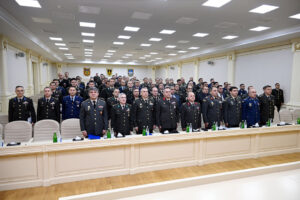
Under the first pillar, the two countries committed to strengthening cooperation in defence and security in support of regional peace and stability, and to enhancing their ability to deter, prevent and respond to common threats. They will sustain the momentum of high-level engagement and deepen coordination on bilateral, regional and international issues of mutual interest.
Defence cooperation will focus on training, capacity building and interoperability, while opportunities will be explored to enhance defence industry cooperation, including joint initiatives. The two sides will also form enhanced law-enforcement partnerships, cooperate on border management, and expand judicial and legal collaboration to strengthen the rule of law and institutional resilience. They further affirmed their intention to cooperate in multilateral fora where their interests align.
Trade, Investment and Growth
The second pillar sets out a shared ambition to broaden and deepen bilateral trade and investment ties and to promote sustainable, inclusive and diversified economic growth. Priority sectors include renewable energy, infrastructure and services, with an emphasis on business-to-business links that generate jobs, skills and value in both economies.
Both sides underlined the importance of regional and international connectivity and pledged support for the development of the Middle Corridor, alongside transport, logistics and infrastructure projects that facilitate cross-border trade and investment. They will also cooperate on the clean energy transition, including renewable energy development, green finance and low-carbon technologies, in support of climate resilience, net-zero objectives and energy security.
The two countries will explore deeper cooperation in financial and capital markets, including dialogue between relevant authorities and financial institutions, to support sustainable investment, trade finance, SME growth and green finance. The Joint Intergovernmental Commission on Trade and Economic Cooperation will serve as the principal platform for advancing joint initiatives on investment, economic diversification, Middle Corridor development and energy cooperation.
Education and Innovation
The third pillar recognises education, science, research and innovation as essential enablers of long-term prosperity and inclusive economies. The two sides will deepen cooperation in higher education, vocational education and training, digital and technical skills, and executive and public-sector training.
They will also promote partnerships between universities, research institutions and industry, collaborating on digitalisation, emerging technologies and life sciences, including the exchange of expertise on artificial intelligence and digital governance. People-to-people exchanges and professional networks will be encouraged to foster mutual understanding and cultural ties between the two societies.
Annual Strategic Partnership Meeting
Under the final provisions, Azerbaijan and the United Kingdom agreed to hold an annual Strategic Partnership meeting to review progress across the three pillars, set priorities for future cooperation and agree on practical follow-up. Cooperation under the declaration will be subject to the availability of resources and in accordance with the respective laws and regulations of both countries.
The declaration was adopted in two original copies in the Azerbaijani and English languages, both texts being equally authentic.