Between Development and Dependency: Global Impacts of China’s Belt and Road Initiative
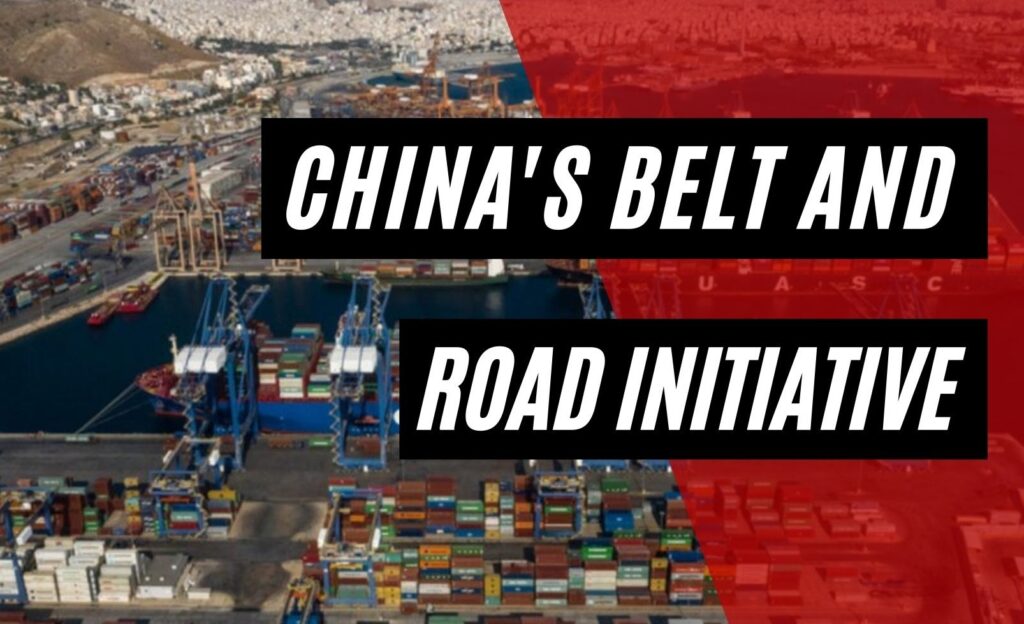
China’s Belt and Road Initiative (BRI) initiated in 2013 by Mr. Xi Jinping has become one of the most enormous infrastructure and investment projects of the modern times. Building on the stated aims to promote increased connectivity and cooperation to Asia, Africa, Europe, and Latin America, the BRI covers an extensive portion of roadways, rails, ports, energy pipelines, and digital infrastructure. As of 2023, China has signed 200 plus cooperation agreements with 150 countries and 30 international organizations, which is an indication of the wide scope of the initiative. Although BRI has the purpose of achieving economic growth and regional integration, the economic and social effects of implementing the BRI are very complicated and have mainly varied effects among various nations that participate in the BRI program.
Economic impact
The Belt and Road Initiative (BRI) has become an influential force of economic development and trade growth in countries involved. BRI-related infrastructure improvements have already paid off in tangible benefits: a study on Emerging Market Economies estimates the average growth of 2.6 percent in the partner countries, as it relates to better logistics and lower costs of trade. The case of Pakistan with the China-Pakistan Economic Corridor (CPEC) is in point; the level of freight traffic at the Gwadar Port has increased twofold, and the level of exports has grown by 10 percent, which indicates a strategic increase in the trade capacity. On the same note, the Ethiopian Addis Ababa-Djibouti Railway has reduced the time in transit of cargo over three days to a mere twelve hours, which has hastened the process of integration within the region, as well as commercial efficiency.
However, the financial framework that BRI projects are based on is not controversial. The surge in investments by Chinese people has exceeded 1 trillion dollars and most of these investments have been based on concessional loans, equity shares or joint ventures, thus enabling some economies to fill the gaping infrastructure deficits. These gains have however been at the expense of increasing debt sustainability concerns. The case of the lease of Hambantota Port to China, which has a 99-year term, by Sri Lanka after default on repayment has provided a symbolic representation of the hazards at the stake. The surging debt-to-GDP ratios associated with BRI borrowing have been observed in countries such as Zambia and Kenya, leading to the desire to more clearly and robustly model financing, which would protect the long-term economic independence of the countries.
In addition to the individual projects, BRI has triggered more general integration of the economies of the region through connecting the landlocked economies to the global markets. Key hubs including Eurasian Land Bridge and China-Central Asia-West Asia route have reduced trade barriers, foreign direct investment and regional supply chain. This interconnectedness has enabled countries to diversify their economic relations and decouple themselves to traditional trade networks to create a more multipolar and resilient global trade environment.
Social Impact
The construction of infrastructure as part of the Belt and Road Initiative (BRI) has been a significant source of job creation especially in construction and logistics. The high-speed rail project in Indonesia, the Jakarta-Bandung project was sufficient to create jobs to more than 40,000 people in Indonesia, which was a boost to the labor markets in Indonesia. Throughout Africa, Chinese-financed projects have been utilizing local labor at least in the low-skill positioning. Critics claim that the lack of transfer of technical expertise and Chinese contractors domination degrade long term development objectives. These gains in employment will be shallow and temporary without much capacity-building.
Another effect of the large-scale infrastructure is urbanization, which has provided an opportunity and a disruption. Though the new roads, ports and railways have ensured economic rebirth, they have also forced some vulnerable communities off their grounds. Through the Kyaukphyu port project, hundreds of families were moved in Myanmar, of which not all received the full compensation. The development of the railway in Laos has been characterized by land grabbing and destruction of the environment, which have given question to the social costs of the fast development process. Such instances highlight why more planning and social protection that can be enforced should be considered to make sure that any development would not be at the cost of the disadvantaged.
Another success that BRI has achieved is the provision of access to the most crucial services in under-served regions and enhanced the quality of life and connectivity. Standard Gauge Railway in Kenya has reduced the travelling period between Nairobi and Mombasa leading to access to education and healthcare. The digital Silk Road project has enhanced broadband in Africa and Central Asia, which has promoted social mobility and poverty alleviation. These benefits are, however, not evenly distributed. Their sustainability depends on the capacity to govern locally and have a long-term maintenance without which the prospect of connectivity can fail.
Challenges and Criticisms
The Belt and Road Initiative (BRI) has been subject to increasing criticism regarding its environmental impact despite its potential to positively change the world. Mass infrastructure development has brought about deforestation, water pollution, and carbon emission in a number of areas. To this, China has floated the concept of a Green BRI model through which renewable energy and environmental protection have been advocated. However, the application is still uneven and most of the regional projects have not been well-equipped with the ecological standards. The promise of a greener BRI would otherwise remain more a rhetoric than a reality unless it is enforced regularly.
The BRI has also been challenged by governance issues that have complicated the image of the organization. Corruption and elite capture have been perpetuated by opaque procurement procedures and non-transparent financing in a number of countries in which the company is operating as a host. This has lacked competition in bids and has lowered accountability as it is quite difficult to know who is the real beneficiary of these investments due to the lack of general public scrutiny. These loopholes in governance undermine the confidence of the populace, as well as jeopardizing the sustainability of the BRI alliances in the long run.
On the geopolitical level, the BRI has turned into a hotbed in power politics. The west is starting to consider it as an instrument of Chinese expansion and is responding with counter-initiatives such as the Blue Dot Network, EU global gateway and Indian infrastructure diplomacy. These options focus on transparency, sustainability and democracy – trying to stand out as more principled players in the world development game. The tension that has resulted has made infrastructure a battlefield of different visions of globalization.
In order to overcome these obstacles and capture the maximum potential of BRI, the scholars at Boston University Global Development Policy Center recommend a more inclusive and sustainable strategy. The mitigation of risks is through strengthening of host country institutions, enhancing the transparency of projects, enforcing environmental and social protection, and creating ownership by the locals. Only time will tell, but the recent shift toward smaller and smarter projects in China and its willingness to be involved in multilateral cooperation indicate a pivot. With continued progress, this change would be a turning point in a sense that BRI will cease to be a controversial project but a more sustainable and adjustable model of development in the world.
The Belt and Road Initiative has altered the structures of the world greatly in the aspect of infrastructure and economies. Its economic advantage, such as increased GDP, development of trade is enormous, especially to developing nations. Its benefits to society are however more delicate with improved connectivity and services compensating relocation, environmental destruction, and administrative problems. The BRI should be refined to become more open, transparent and sustainable model of development so that it can fulfill its potential. This will need some coordinated action by the China, host country as well as international bodies to make the infrastructure investment in line with the overall human development objective.
In my opinion, to become what the Belt and Road Initiative promises, specifically inclusive and sustainable development, the project will have to move beyond the paradigm of geopolitical ambition and questionable financing, and turn into one of transparency, environmental awareness, and empowerment of the locals. Its success will not be judged by the extent of its infrastructure, but rather the extent to which it turns people around, changes how they govern themselves, and their future capacity to endure and survive. To ensure that the BRI indeed makes a serious imprint on global development, China and its partner countries should adopt reforms that focus on people rather than power and cooperation rather than domination.