Indonesia, Australia Push Stronger Regional Cooperation Against Terrorism and Transnational Crime
Jakarta, The Gulf Observer: Indonesia and Australia have called for stronger regional security cooperation to combat terrorism, transnational crime, human trafficking, online scam centres and cybercrime during a regional security meeting held in Jakarta on Friday.
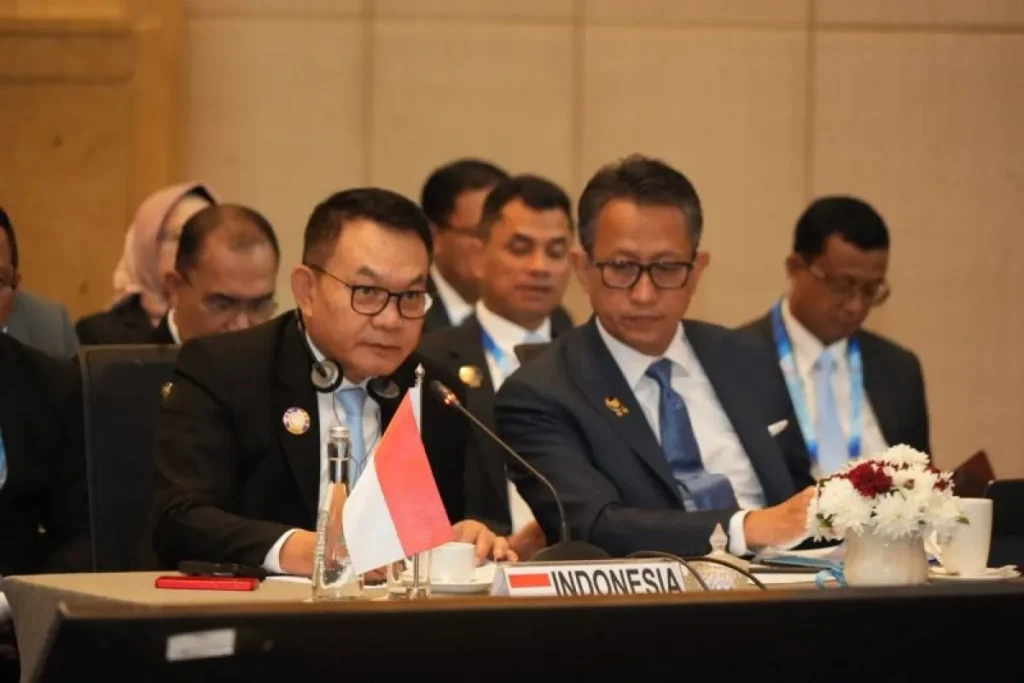
Speaking at the seventh Sub-Regional Meeting on Counter Terrorism and Transnational Security (SRM), Indonesia’s Coordinating Minister for Political and Security Affairs, Dudung Abdurachman, emphasized the need for coordinated responses as security threats become increasingly interconnected and cross borders.
“Today’s security threats are increasingly interconnected and require a joint response,” Abdurachman said in a statement.
He stressed the importance of enhanced regional coordination, intelligence and information sharing, and capacity building to translate shared commitments into practical measures and strengthen regional security and resilience.
The meeting brought together representatives from eight countries: Indonesia, Australia, Brunei Darussalam, Malaysia, New Zealand, the Philippines, Singapore and Thailand. Abdurachman co-chaired the meeting with Australian Minister for Home Affairs, Immigration and Citizenship, Cyber Security, and the Arts Tony Burke.
Participants underscored the importance of building mutual trust, expanding intelligence exchanges, improving operational coordination and developing joint capabilities to address increasingly complex cross-border security challenges.
Discussions covered a broad range of issues, including counterterrorism and violent extremism, irregular migration, human trafficking and people smuggling, online scam centres, cybercrime, maritime security and the protection of critical infrastructure.
Delegates also examined the potential misuse of emerging technologies, particularly artificial intelligence (AI), for criminal activities and extremist purposes.
On transnational crime, participants called for stronger intelligence exchanges, improved victim identification and protection, coordinated investigations, and more effective action against human trafficking and people-smuggling networks. They also highlighted the importance of cooperation among countries of origin, transit and destination through regional mechanisms such as ASEANAPOL and the Bali Process.
Maritime security featured prominently on the agenda, with delegates emphasizing coordinated patrols, information sharing, joint exercises and enhanced law enforcement capabilities at sea. Priorities included combating illegal, unreported and unregulated (IUU) fishing, addressing maritime crime and protecting critical subsea infrastructure, including cables and pipelines, in accordance with national and international law, particularly the 1982 United Nations Convention on the Law of the Sea (UNCLOS).
On counterterrorism, participants highlighted the growing challenges posed by online radicalization, the vulnerability of young people to extremist recruitment, terrorist financing and the misuse of AI for propaganda, recruitment and terrorist activities.
The meeting also addressed the emerging threat of Nihilistic Violent Extremism, alongside the need to strengthen intelligence sharing and improve rehabilitation and reintegration programmes for individuals affected by extremism.
Cybersecurity cooperation was another key priority, with delegates emphasizing the exchange of information on emerging threats, the protection of critical infrastructure and coordinated responses to cross-border cyber incidents.
As a concrete follow-up initiative, Indonesia and Australia agreed to jointly lead an evaluation of the effectiveness of the Senior Officials Counter-Terrorism Policy Forum (SOCTPF) after six years of operation, in consultation with participating countries.
The meeting also welcomed progress on an Online Crisis Notification Protocol, plans to update the Glossary of Extremist Content Online 2025, and the development of a regional sentiment analysis framework aimed at countering violent extremism online.
Brunei Darussalam and Malaysia, which jointly chair the SOCTPF for 2026–2027, are leading the development of these initiatives.
Participants welcomed Indonesia’s role as host of the seventh SRM and Australia’s contribution as co-chair, reaffirming their shared commitment to collective action against interconnected security threats.
The eighth Sub-Regional Meeting on Counter Terrorism and Transnational Security is scheduled to take place in Australia, with the date yet to be announced.
Indonesia reaffirmed its commitment to continued coordination with relevant ministries, government agencies and regional partners to strengthen information sharing, build institutional capacities and enhance operational cooperation, with the broader objective of promoting a safe, stable and resilient region.