Libya Offshore Deal Marks Qatar’s Political-Energy Win
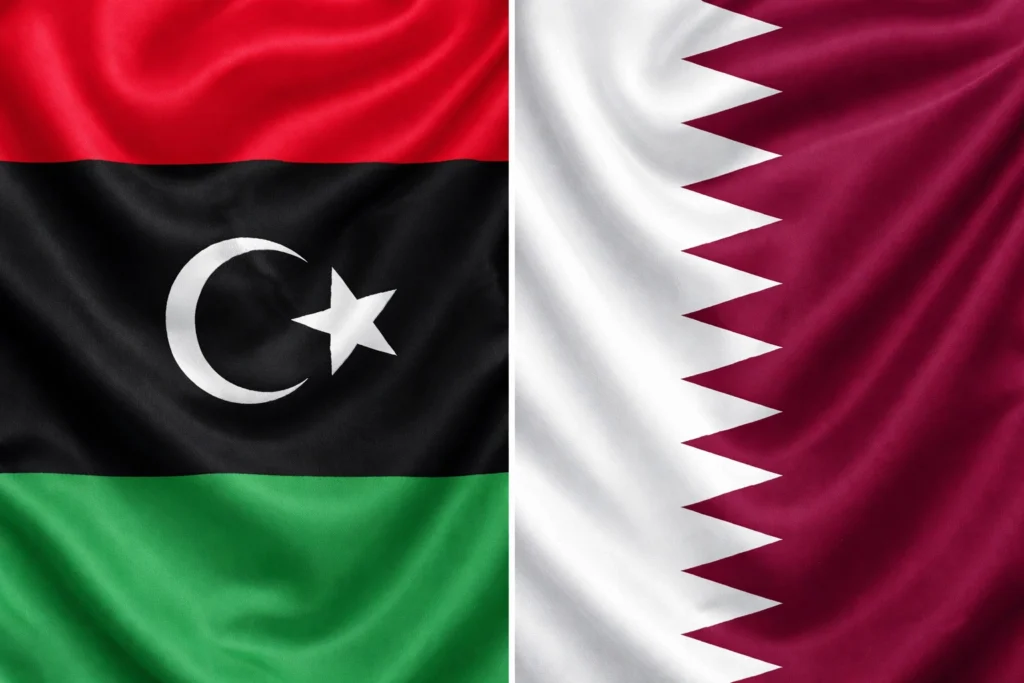
QatarEnergy’s offshore license win in Libya marks not only a major energy investment but also a strategic geopolitical move. The deal strengthens Qatar’s presence in North Africa, supports Europe’s diversification efforts, and signals Libya’s renewed appeal to global energy players.
QatarEnergy’s Libya Move: A Strategic Step in Energy Diplomacy
QatarEnergy’s acquisition of an offshore exploration license in Libya is not merely a commercial investment decision; it represents a noteworthy geopolitical move within the framework of global energy politics. Securing the license during Libya’s first major bid round since 2007 signals the opening of a new chapter in Doha’s energy diplomacy.
With this step, Qatar is strengthening its presence in North Africa while reinforcing its ambition to become a more influential player in the global energy landscape.
1. Libya’s Return to the Energy Stage and a Message of International Confidence
The bid results were announced by Libya’s National Oil Corporation (NOC). This tender marks the beginning of a new phase for the country’s energy sector, which has long been hampered by political instability and security challenges.
Despite possessing Africa’s largest proven oil reserves, Libya has been unable to fully capitalize on its potential over the past decade. The renewed interest of international energy giants in the Libyan market is therefore widely interpreted as a sign that political and economic confidence in the country is gradually being restored.
QatarEnergy’s participation in this process goes beyond its identity as an investor; it also reflects Qatar’s growing diplomatic influence in the region.
2. The Sirte Basin and Intensifying Eastern Mediterranean Competition
The O1 block is located in the hydrocarbon-rich Sirte Basin and covers an area of approximately 29,000 square kilometers, with water depths reaching up to 2,000 meters. While technically challenging, the block offers significant high-reward exploration potential.
This development comes at a time of intensifying energy competition in the Eastern Mediterranean and North Africa. Europe’s efforts to reduce its dependence on Russian gas have elevated the strategic importance of African and Mediterranean resources.
In this context, the consortium—operated by Italian energy major Eni—could play a critical role in Europe’s energy security. QatarEnergy’s 40 percent stake in the project underscores Doha’s broader strategy of expanding beyond its dominant LNG exporter identity into upstream investments on a global scale.
3. Qatar’s Energy Diplomacy and Political Gains
Statements by Qatar’s Minister of State for Energy Affairs and QatarEnergy CEO, Saad Sherida Al Kaabi, highlight that the investment carries a strategic vision beyond its economic dimension. His emphasis on North Africa reflects Qatar’s objective of geographically diversifying its energy diplomacy.
Three major trends have shaped global energy politics in recent years:
- Energy supply security
- Resource diversification
- Distribution of geopolitical risk
QatarEnergy’s entry into Libya aligns directly with these dynamics. While maintaining its global leadership in LNG, Doha is simultaneously building long-term influence through upstream investments in diverse geographies. This strategy positions Qatar not only as a leading energy exporter but also as a key stakeholder in the architecture of global energy security.
From Libya’s perspective, Qatar’s involvement may help establish a new axis of regional cooperation. Strengthening energy ties with Europe could also contribute to reshaping Libya’s position within the international system.
Conclusion: Beyond an Economic Investment, a Geopolitical Statement
QatarEnergy’s offshore license win in Libya represents far more than a conventional energy investment. It brings together Libya’s re-emergence on the energy stage, Europe’s search for alternative supply sources, and Qatar’s rising profile in global energy diplomacy.
As energy continues to serve as one of the most decisive instruments of power in the 21st century, Qatar’s move into Libya stands out as a multi-layered strategic and political achievement—one that will likely have implications extending well beyond the boundaries of the energy sector.