Tajikistan and Kazakhstan Hold High-Level Talks in Astana, Pledge to Deepen Strategic Partnership
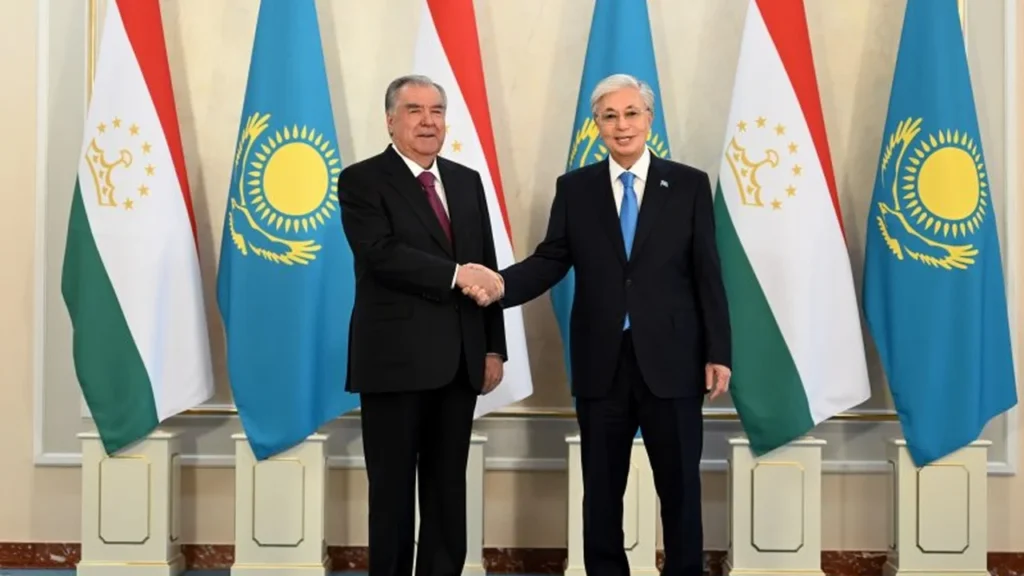
Astana, The Gulf Observer: Official high-level talks between Tajikistan and Kazakhstan were held at the Akorda Presidential Palace in Astana, during the official visit of President of Tajikistan Emomali Rahmon to Kazakhstan.
During the talks, President Rahmon and President of Kazakhstan Kassym-Jomart Tokayev welcomed the opportunity the visit provided. The two leaders discussed ways to further develop and strengthen the strategic partnership and allied relations between their countries.
Trade Between Tajikistan and Kazakhstan Exceeds $1 Billion
President Emomali Rahmon stressed that cooperation between the two countries is developing rapidly in all key areas. He noted that Kazakhstan is one of Tajikistan’s leading trade and economic partners. In the first nine months of 2026, trade between the two countries grew by 25.6 percent, exceeding US$1 billion.
Opening the talks, President Tokayev said: “Dear Emomali Sharipovich! I sincerely welcome you on your visit to Kazakhstan. We know you as an outstanding statesman and a recognised national leader of the Tajik people. Today, we have every reason to speak of strategic partnership and alliance between our two brotherly states.”
Both sides agreed that expanding investment cooperation and actively involving the business communities of both countries meets the needs of the time. They noted that the Tajikistan-Kazakhstan Business Forum, held in Astana ahead of the visit, had demonstrated significant potential for expanding direct business ties.
Energy, Industry and Artificial Intelligence in Focus
To advance relations further, the leaders underlined the importance of expanding cooperation in energy, industry, agriculture, transport, logistics, digital infrastructure and artificial intelligence. Establishing joint ventures, including in free economic zones, and developing resilient production chains were identified as priorities in the industrial sector.
The two sides expressed satisfaction with the growth of people-to-people ties, particularly cultural, educational, academic and medical exchanges. Special attention was given to training specialists in cybersecurity, information technology and artificial intelligence. Cooperation in tourism, sports, youth policy and security was also high on the agenda.
Joint Efforts Against Transnational Threats
Given the complex international situation, the leaders stressed the importance of closer coordination in countering terrorism, extremism, drug trafficking and other transnational threats.
The two Presidents also held a constructive exchange of views on pressing regional and international issues.