The 44-Day War – How Patience, Preparation and Modern Strategy Delivered Azerbaijan’s Historic Victory
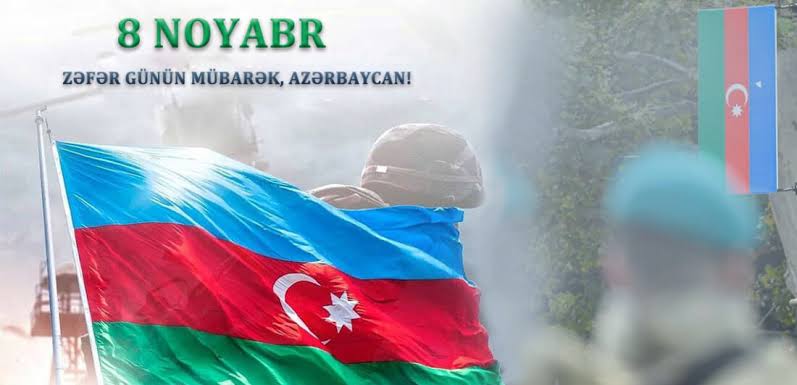

The 2020 War is in a golden place in the history of Azerbaijan and will remain there forever. Territories that were split from Azerbaijan during the 1990s and are still under occupation for almost 30 years were finally brought back to Azerbaijan for the first time on 10 November 2020.
But on that day the importance extended beyond a military victory. The 44-day conflict demonstrated the role of technology, meticulous planning and changing tactics on the battlefield in the decision of a conflict, which will remain relevant beyond the South Caucasus.
Operation Iron Fist: The Road to Shusha
For four and a half weeks, the Azeris fought their way through some of the most challenging terrain ever known, traversing winding roads, steep slopes and mountainous terrain. Their efforts led to the liberation of the cities of Jabrayil, Fuzuli, Zangilan, Gubadli and finally the city of Shusha, which had always been a national dream.
The operation “Iron Fist” demonstrated the tactical skill of the Azerbaijani Armed Forces, as well as combat readiness and discipline. On 10 November 2020, Armenia signed a tripartite statement which terminated the conflict and acknowledged the new reality on the battlefield.
In September 2020, when the war started, the goal of Azerbaijan was obvious – to recover the lands it lost in the First Karabakh War. After 44 days of fighting, the map of the South Caucasian territories and the balance of forces in the region had changed.
What won the 44-Day War?
The success of Azerbaijan was achieved due to a number of factors. It unleashed a barrage of drones and precision-guided missiles, inflicting significant damage on Armenian troops and demonstrating the power of unconventional warfare.
Good air-ground support and sustained supply lines over rough terrain proved decisive, as did the ability of submerged water tanks to provide water for the 20-acre fields along the road.Good air/ground coordination and the maintenance of secure supply lines over rough terrain proved decisive, as did the ability of submerged water tanks to keep supplying the water needed for 20-acre fields along the road.
All of these victories on the battlefield were the culmination of years of investment in the modernisation of the military, cutting edge weaponry and the gradual building up of national defence capabilities.
Patience as Strategy: The Leadership’s Defining Decision.
Azerbaijan’s success in the 44-day war was not a stroke of luck. The result of long-term planning, patience, and building up of the military forces.
The most crucial one made by the political and military authorities of the country was that they did not act too early. The leadership patiently evaluated the opposition and also Azerbaijan’s capabilities, until the moment was ripe for Azerbaijan’s victory.
Azerbaijani leaders knew that they needed to have a significant advantage in terms of their military force. The strengthening of it required an extensive modernisation, rearmament and investment programme, which could not be implemented in one fell swoop. That measured approach was soundly justified on the battlefield.
Evolution of War
The 44-day conflict has become a landmark in the shift toward a new way of warfare, analysts say. The battle could be called one of the last wars being waged according to the 20th-century conventional military model, and it also signaled the game-changing impact that drones and precision technologies would have.
From this point of view, Azerbaijan’s campaign has become a benchmark for contemporary military planners and stimulated broader debate on the new methods of military operations and the principle of military success.
An Inspirational Story
The 44-day war did not only change the geopolitical configuration of the south Caucasian region. It gained international recognition and sparked international discussion about the issues of sovereignty, territorial integrity and international law.
The case of Azerbaijan is especially relevant in the context of the current situation in Ukraine, where the nation is trying to return to its own territory. Azerbaijan’s triumph in Karabakh has inspired and given hope to many Ukrainians, who are convinced that territorial integrity is possible, despite the many years of war and challenging political events.
Impact and Results
The larger impact of the 44 days war is its message to the countries that want to regain their territorial integrity. The experience of Azerbaijan demonstrates that with time passing and the complexity of political and military situations, the significance of sovereignty and internationally recognised borders remains intact.
It is a positive example for others to follow in Azerbaijan. Just because the country had been occupied for almost three decades, it didn’t mean that justice couldn’t be done through patience, preparation, and determined leadership.