Azerbaijan Projects Stable Manat at 1.70 per Dollar Through 2030, Backed by Rising Reserves and Savings
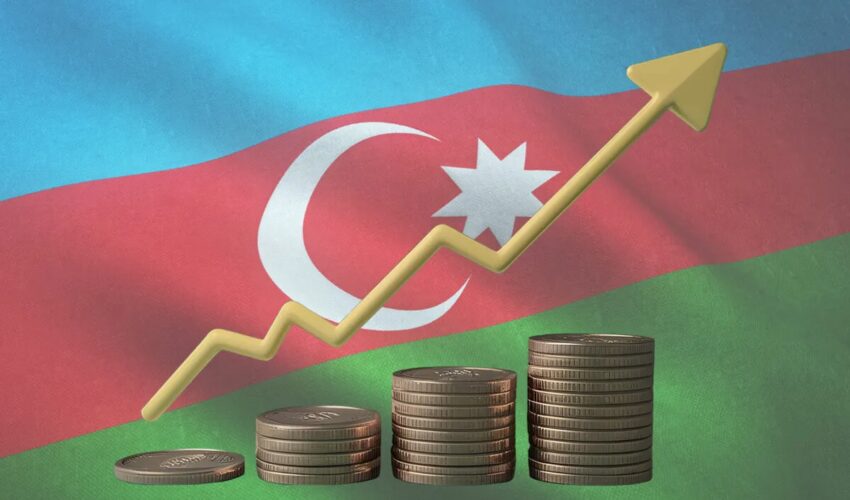
Baku, The Gulf Observer: Azerbaijan expects to maintain the national currency, the manat, at 1.70 to the US dollar through 2030, reflecting the government’s confidence in the country’s current exchange-rate framework. Growing household savings in manat, declining deposit dollarisation and a sharp rise in the Central Bank’s foreign-exchange reserves indicate that the foundations of currency stability remain firm amid uncertain global markets.
The Ministry of Economy has incorporated the 1.70 exchange rate into its macroeconomic projections for 2027–2030. According to the government, the stable manat has helped create favourable conditions for domestic demand, limited currency risks in financial and consumption decisions, and strengthened the national currency’s position in household savings.
Banking statistics reflect this confidence. According to Azerbaijan’s State Statistical Committee, individual deposits in banks reached 18.21 billion manat at the end of August 2026, an annual increase of 17.8 percent. The growth points to a larger volume of household resources held within the domestic banking system, strengthening banks’ funding base and their capacity to finance economic activity.
The currency composition of savings has also shifted in favour of the national currency. Central Bank Chairman Taleh Kazimov reported that individuals’ manat-denominated deposits rose by 1.3 billion manat, or 11.6 percent, in the first half of 2026, reaching 12.5 billion manat at the end of June. Over the same period, the dollarisation rate of resident individuals’ deposits fell to 25.6 percent, a decline of 3.8 percentage points since the start of the year.
Excess foreign-currency supply in the domestic market has enabled the Central Bank to purchase dollars and build up its reserves. The regulator bought $1 billion through foreign-exchange interventions in April 2026 and a further $394 million in June. By July 30, purchase-oriented interventions for the year had reached approximately $2.077 billion, according to the Central Bank chairman.
These operations coincided with a substantial increase in foreign-exchange reserves. As of October 1, 2026, the Central Bank’s reserves stood at $15.363 billion, up $4.053 billion, or 35.8 percent, year on year, strengthening the monetary authorities’ capacity to manage currency-market conditions.
The wider geopolitical environment, including the ongoing Russia–Ukraine war, the US–Iran conflict and the escalating confrontation involving Yemen, continues to keep energy markets and regional security conditions sensitive. In this context, energy exports remain a key source of foreign-currency earnings for Azerbaijan, while accumulated reserves provide an additional financial buffer. International oil-market conditions, export receipts and domestic demand for foreign currency are expected to continue shaping the monetary environment.
Taken together, the government’s four-year exchange-rate projection, rising household deposits, a growing preference for manat savings and expanding foreign-exchange reserves support a favourable outlook for the national currency. Provided the key economic conditions underpinning the current framework hold, the manat is well positioned to maintain its present value through 2030, offering a solid basis for financial planning across Azerbaijan’s economy.