Kyoto Vision: Seventeen Countries Align on Science in the Age of Super Intelligence
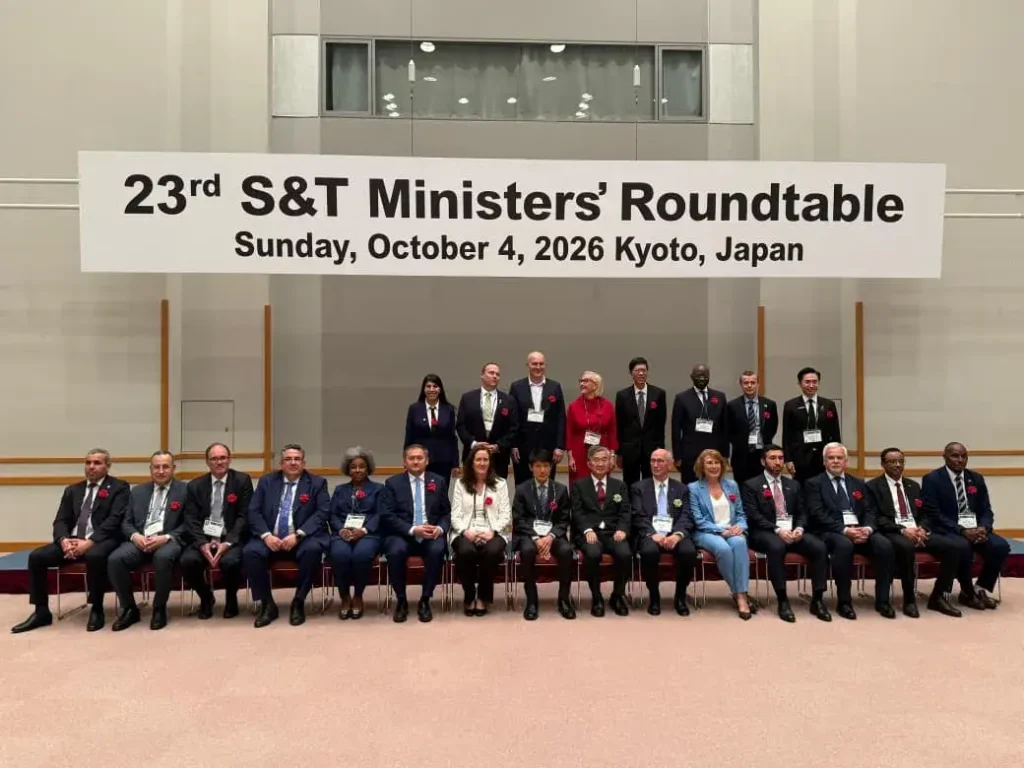
Ministers meeting alongside the 23rd STS Forum endorse a shared declaration on AI-driven discovery, research reform and talent. On 4 October 2026, ministers responsible for science, technology and innovation gathered in Kyoto for the 23rd S&T Ministers’ Roundtable. The meeting took place alongside the Annual Meeting of the Science and Technology in Society (STS) Forum. Its main outcome was a one-page declaration, the Kyoto Vision for a Golden Age of Science, which the United States and 16 countries endorsedt.
The Setting
The STS Forum’s 23rd Annual Meeting ran from 4 to 6 October at the Kyoto International Conference Center. Its main theme was steering through tectonic shifts in science, technology and society. The organisers said the programme would go beyond last year’s focus on artificial intelligence and examine how global conditions are reshaping science. Participants were to include Nobel laureates, science ministers, corporate leaders, university presidents and journalists. The Forum takes a very long view: it looks 100 to 500 years ahead.
The Ministers’ Roundtable opened the programme on Sunday 4 October, ahead of the Forum’s plenary sessions on 5 and 6 October. The week’s agenda also included a plenary on science diplomacy. Japan’s Science and Technology Advisor to the Minister for Foreign Affairs took part in that session and presented Japan’s recent initiatives.
What the declaration says
The Kyoto Vision was led by Michael Kratsios, Director of the White House Office of Science and Technology Policy. It states that Super Intelligence and new ways of organizing research are opening new frontiers of discovery. The ministers say they will seek to reduce administrative burdens on researchers and to reward ambitious ideas through funding systems.
According to press coverage, it rests on three pillars: reforming the institutions of scientific discovery, harnessing Super Intelligence for research, and cultivating scientific talent. In practice, the signatories point to:
- Diverse funding models. Long-term funding, rapid grants, prizes and challenges for high-risk, high-potential projects.
- Broader access. AI tools, scientific data, computing infrastructure and experimental facilities for researchers.
- Metascience. The declaration welcomes the empirical study of how science is conducted, organised and funded.
- Research integrity. Reproducibility and transparency are stressed, together with open communication of error.
Who signed
The White House named the endorsing governments as Argentina, Bulgaria, Chile, Cyprus, Germany, Greece, Indonesia, Italy, Japan, Kazakhstan, South Korea, New Zealand, Poland, Singapore, the United Arab Emirates and the United Kingdom, alongside the United States. The group spans Asia, Europe, the Americas, the Middle East and Oceania. India was not among them.
Kazakhstan’s role
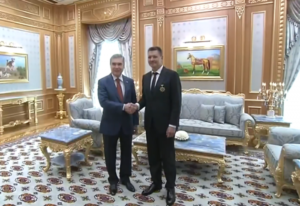
Kazakhstan was among the endorsers, represented by Sayasat Nurbek, its Minister of Science and Higher Education. Per the Ministry’s account, he held a bilateral meeting in Kyoto with Director Kratsios. He said Kazakhstan’s priorities include integrating AI into research and developing the “AI for Science” field. For Astana, the declaration fits a wider effort to position the country as a research partner in Central Eurasia.
South Korea’s science ministry likewise reported that its deputy prime minister attended the roundtable and presented national research initiatives, including the K-Moonshot Project.
Context: Washington’s “Golden Age” agenda
The declaration follows a domestic US document. In July, Kratsios delivered to President Trump a report titled “Science: A New Golden Age”, which the White House called the most comprehensive rethink of the American research enterprise in eight decades. Kyoto effectively internationalises that agenda.
Analysis: ambition without binding commitments
Observers should read the text carefully. The White House release describes ministers as having “pledged” and “committed”. One independent analysis counted that the one-page declaration uses “endeavor” four times and “encourage” four times, which is aspirational language. Another commentator notes that it announces no shared laboratory or joint budget. The text also uses the term Super Intelligence without defining it. Delivery will depend on national budgets and legislatures.
For the diplomatic community, the significance lies elsewhere. Science policy is becoming a vehicle for coalition-building, and AI is the organising theme. Which countries joined, and which did not, will be a useful indicator in the coming months.