Makkah Joint Defence Agreement to Strengthen Pakistan’s Strategic and Diplomatic Role : Gulf Observer Editor-in-Chief Talked with Azertac News Agency
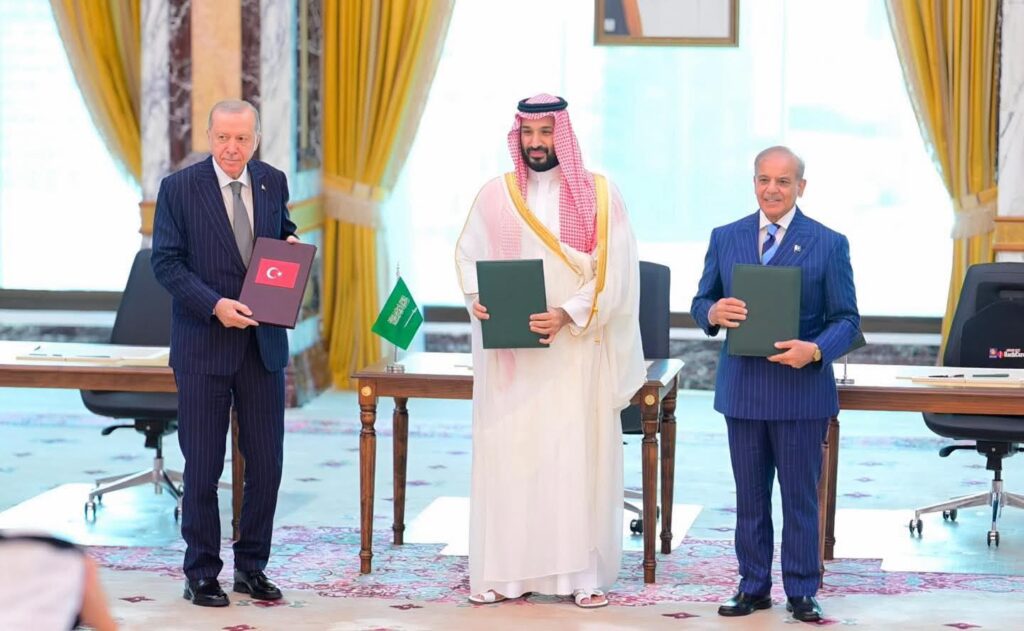
The Makkah Joint Defence Agreement between Pakistan, Saudi Arabia and Türkiye is expected to further enhance Pakistan’s strategic, defence and diplomatic significance in the Middle East, Editor-in-Chief of The Gulf Observer Fatima Tuz Zehra said in an interview with the Azerbaijan State News Agency (AZERTAC).
In her interview with AZERTAC, Fatima Tuz Zehra said the agreement could create significant opportunities for Pakistan’s defence and arms industry while strengthening the country’s strategic position in the wider Middle East.
She noted that the agreement could also provide Türkiye with a framework to advance the concept of collective Muslim defence cooperation and promote closer coordination among Muslim-majority countries.
According to the Gulf Observer Editor-in-Chief, the agreement could enable Saudi Arabia to further enhance its regional influence at a time when the Kingdom is confronting evolving security challenges and questions concerning the limits of existing United States security guarantees.
“The Makkah Joint Defence Agreement is an important development that can significantly enhance Pakistan’s strategic and diplomatic importance in the region,” Fatima Tuz Zehra said while speaking to AZERTAC.
She added that the agreement could also strengthen Pakistan’s defence industry by creating opportunities for expanded defence cooperation, technology partnerships and the development of the country’s arms and defence production capabilities.
Fatima Tuz Zehra observed that, for Türkiye, the agreement could serve as an important instrument for strengthening collective defence cooperation among Muslim countries and promoting a more coordinated approach to regional security.
For Saudi Arabia, she said, the agreement could provide an additional framework for addressing emerging security challenges and strengthening its strategic partnerships beyond traditional security arrangements.
The trilateral agreement has also attracted attention from international strategic experts. Experts at the Atlantic Council have described the pact as an important indication of an emerging security alignment extending across the Middle East and South Asia.
A key provision of the agreement stipulates that an armed attack against any one of the three participating countries would be regarded as an attack against all three, establishing a framework for collective security and mutual defence.
Fatima Tuz Zehra said the agreement represented a significant development in defence cooperation among Pakistan, Saudi Arabia and Türkiye and could contribute to closer strategic coordination between Islamabad, Riyadh and Ankara.
She further observed that the emerging security arrangement reflected the growing importance of collective security mechanisms and enhanced defence cooperation among Muslim-majority nations amid an increasingly complex regional security environment.
The agreement could also have wider implications for Pakistan’s diplomatic engagement in the Gulf and the broader Middle East, while further strengthening defence and strategic ties among the three countries.
The Makkah agreement thus marks a significant step in trilateral security cooperation and could contribute to the development of a more closely coordinated strategic framework linking South Asia and the Middle East.