Nation-Building and the Symbolism of the Iranian Flag
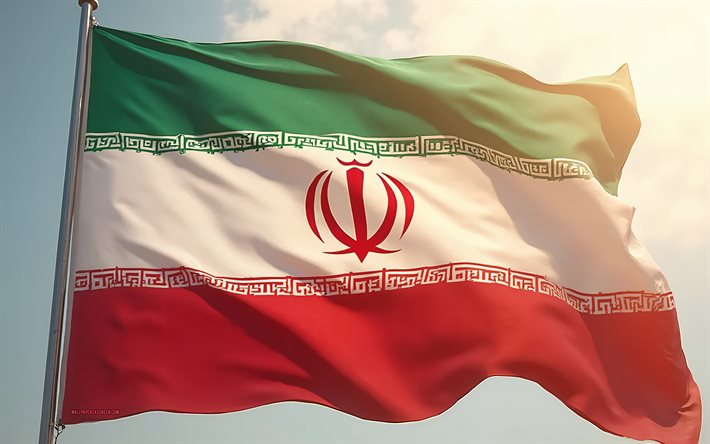
In modern political systems, flags are not merely visual markers; they function as dense symbolic codes that encapsulate a state’s ideological orientation, historical memory, and processes of identity construction. In this regard, Iran provides a particularly illustrative case. Officially recognized as the national flag of the Islamic Republic of Iran, the Iranian flag represents a complex symbolic structure in which historical continuity and post-revolutionary ideological transformation are intertwined. The horizontal tricolor of green, white, and red, combined with the central red emblem and the inscriptions along the band borders, constitutes not only an aesthetic design but also an ideological text. In this sense, the Iranian flag exemplifies how symbols are strategically employed in the process of nation-building.
1. Historical Continuity and Post-Revolutionary Symbolic Reconstruction
The tricolor structure of the Iranian flag is rooted in a historical tradition that predates the modern era. This continuity enables the national identity to be anchored in a deep historical past. However, with the Iranian Revolution of 1979, the flag was transformed from a historical emblem into an instrument of ideological reconstruction. The pre-revolutionary Lion and Sun motif, which symbolized Iran’s monarchical and relatively secular identity, was replaced by an emblem rich in Islamic references.
This transformation reflects processes of symbolic rupture and re-signification within nation-building. The new flag design does not merely represent a regime change; it serves as a visual manifesto for constructing a new collective identity. In this respect, the Iranian flag can be understood as a hybrid symbol that simultaneously preserves historical continuity and establishes a new ideological framework.
2. Colors, Emblem, and Layers of Ideological Meaning
The colors of the Iranian flag function as primary symbolic elements that reflect the normative values of national identity. Green is associated with Islam, growth, and hope; white symbolizes peace, balance, and moral clarity; and red is linked to courage, resistance, and particularly the concept of martyrdom. These colors play a crucial role in visualizing shared values and reinforcing a sense of collective unity within the nation-building process.
The central red emblem constitutes the most ideologically dense component of the flag. Commonly interpreted as a stylized form of the word “Allah,” the emblem also incorporates elements that can be read as a sword, four crescents, and a central vertical axis. This composite structure symbolizes the fusion of religious authority and political power. Thus, the flag operates not only as a religious symbol but also as a visual representation of a theocratic state structure. This demonstrates that nation-building in Iran is shaped not through secular references but directly through religious foundations.
3. Inscriptions, Revolutionary Memory, and Identity Debates
The repeated inscription “Allahu Akbar” along the inner borders of the green and red bands generates multiple layers of symbolic meaning. Its repetition 22 times is widely interpreted as a reference to the date of the revolution, thereby reinforcing the enduring presence of the Iranian Revolution of 1979 in collective memory. In this way, the flag functions not only as a symbol of identity but also as a carrier of historical memory.
At the same time, the symbolism of the Iranian flag remains subject to divergent interpretations among different social and political actors. Supporters of the regime tend to view the flag as a legitimate expression of Islamic identity, whereas secular groups and diaspora communities often argue that these symbols may narrow or exclude alternative conceptions of national identity. The continued use of the Lion and Sun motif by some groups as an alternative national symbol highlights the persistence of these identity debates.
This dynamic illustrates that nation-building is not a fixed or completed process; rather, it is a continually negotiated and contested field shaped by competing interpretations and political positions.
Conclusion
The Iranian flag stands as a powerful symbolic instrument that encapsulates the multidimensional nature of nation-building. The preservation of the historical tricolor reflects continuity, while the post-revolutionary emblem and inscriptions embody the ideological foundations of the new political order. In this sense, the flag functions both as a unifying marker of identity and as a contested political symbol open to multiple interpretations. The case of Iran clearly demonstrates that national symbols are not merely aesthetic elements but central components of the ideological, cultural, and historical construction of the state.