Pakistan’s Moment of Diplomacy
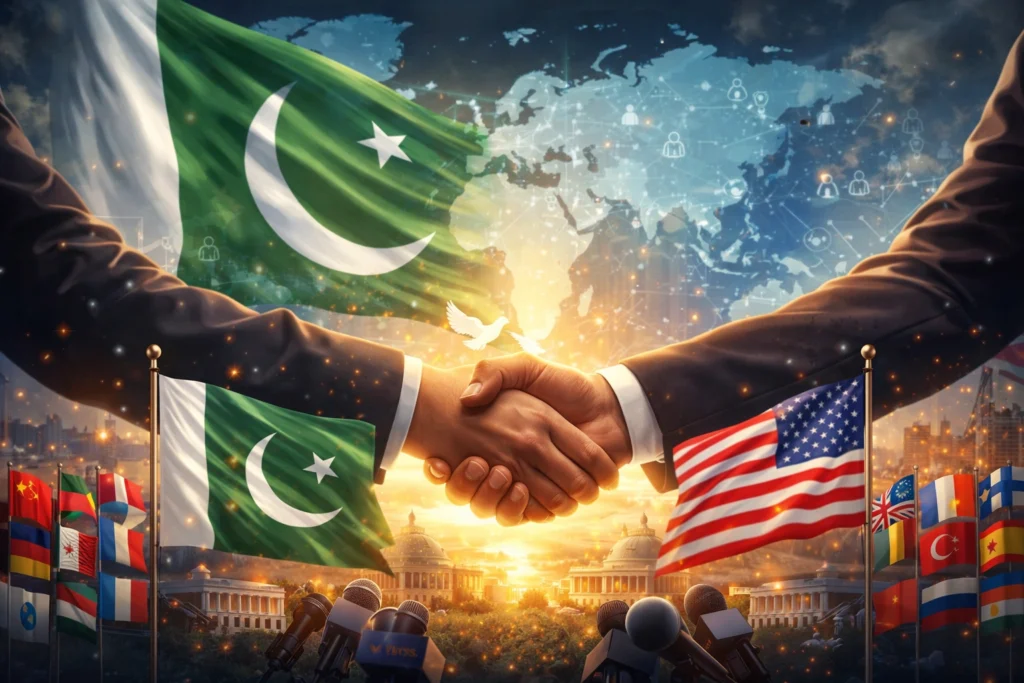
At a time when the world is witnessing deepening polarization, rising conflicts, and shrinking spaces for dialogue, Pakistan has stepped into a role that is both historic and necessary. The ongoing diplomatic engagements in Islamabad—bringing together key regional powers amid the escalating Iran crisis—reflect not only urgency but also opportunity. This is Pakistan’s moment to redefine its global image: from a frontline state in conflicts to a frontline state for peace.
The current crisis, now entering a dangerous phase, is not limited to one country or region. It carries implications that stretch far beyond the Middle East. At the heart of the tensions lies the Strait of Hormuz, one of the world’s most critical maritime chokepoints. Nearly a fifth of global oil supply passes through this narrow corridor. Any disruption here does not just affect regional actors—it sends shockwaves across global markets, increases fuel prices, fuels inflation, and threatens economic stability worldwide.
In this complex geopolitical environment, Pakistan’s decision to host high-level talks involving countries such as Saudi Arabia, Türkiye, and Egypt is both timely and strategic. It signals the re-emergence of collective diplomacy within the Muslim world—an approach that has often been overshadowed by divisions and competing interests. More importantly, it underscores Pakistan’s potential to act as a neutral convener, a role historically played by countries like Oman and Qatar.
Pakistan’s strength lies in its unique positioning. It shares a border with Iran, maintains deep-rooted ties with Saudi Arabia, and continues to engage constructively with global powers. This multi-dimensional relationship network gives Islamabad credibility as a mediator—one that understands the concerns of all sides while remaining committed to peace.
However, this role is not without its challenges. Pakistan is walking a delicate tightrope. Any miscalculation could have direct consequences for its security and economy. Escalation in the region could spill over into border tensions, disrupt trade routes, and exacerbate Pakistan’s already fragile economic situation. Energy security remains a pressing concern, especially as global oil prices fluctuate in response to uncertainty in the Gulf.
Despite these risks, Pakistan’s emphasis on diplomacy is both commendable and necessary. In a world increasingly defined by unilateral actions and military posturing, Islamabad’s call for dialogue offers a refreshing alternative. It reinforces the principle that sustainable peace cannot be achieved through force, but through engagement, trust-building, and mutual understanding.
Yet, realism demands that we acknowledge the limitations of diplomacy in the current scenario. The gap between the United States and Iran remains wide. Ongoing military actions and strategic maneuvering by various actors continue to undermine confidence-building efforts. Trust deficits, accumulated over decades, cannot be resolved overnight.
Still, diplomacy often progresses through incremental steps. Even small breakthroughs—such as agreements on safe maritime passage or temporary de-escalation measures—can pave the way for broader negotiations. In this regard, recent indications of flexibility around shipping routes and regional consultations offer cautious optimism.
Pakistan must now build on this momentum. Rather than viewing these engagements as isolated events, Islamabad should work toward institutionalizing its role as a facilitator of dialogue. This could include proposing structured frameworks for regional cooperation, initiating confidence-building measures, and engaging multilateral institutions such as the United Nations, the European Union, and key global stakeholders.
One innovative idea could be the establishment of a “Hormuz Peace Corridor”—a collaborative mechanism aimed at ensuring maritime security, safeguarding energy flows, and preventing military escalation in critical waterways. Such an initiative, led by regional actors with global support, could transform a zone of conflict into a platform for cooperation.
Equally important is the role of youth, civil society, and policy communities. As someone who has worked extensively with young leaders across the globe, I believe that sustainable peace requires inclusive participation. Governments alone cannot carry the burden of diplomacy. Track-II dialogues, academic exchanges, and youth-led initiatives can complement official efforts and build long-term trust among nations.
Pakistan’s diplomatic outreach also has implications for its global image. For too long, the country has been viewed through the lens of security challenges and instability. By positioning itself as a proactive peacebuilder, Pakistan can reshape this narrative—demonstrating its capacity to contribute positively to global stability.
This moment also calls for unity within the country. Effective diplomacy abroad is rooted in coherence at home. Political stability, economic resilience, and a clear national vision will strengthen Pakistan’s credibility on the international stage. Policymakers must recognize that foreign policy successes are deeply interconnected with domestic strength.
The stakes could not be higher. A prolonged conflict in the region risks triggering a broader confrontation with devastating consequences—not only for the Middle East but for the entire world. In such a scenario, every effort toward de-escalation becomes invaluable.
Pakistan’s role, therefore, is not merely symbolic. It is substantive, strategic, and potentially transformative. By providing a platform for dialogue, advocating for peaceful solutions, and engaging constructively with all stakeholders, Pakistan is contributing to a global public good: peace.
Diplomacy is about more than negotiations; it is about hope. It is about the belief that even in the most challenging circumstances, dialogue can prevail over division. Pakistan, by hosting these critical conversations, is keeping that hope alive.
The success or failure of these efforts will not only shape the trajectory of the current crisis but also define the future of regional cooperation. For Pakistan, this is more than a diplomatic opportunity—it is a responsibility.
And in fulfilling this responsibility, Pakistan has the chance to remind the world of a simple yet powerful truth: that bridges are stronger than walls, and dialogue is always more enduring than conflict.