Two Straits, One World: The Case for Calm
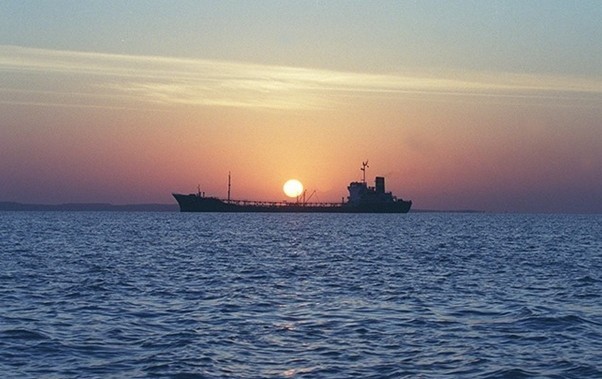
There is a certain arrogance in how the world discusses maritime chokepoints. Analysts often speak of the Strait of Hormuz and the Bab el-Mandeb in the clipped language of oil prices, freight rates and strategic competition, as though these were merely variables on a trading screen rather than two narrow waterways upon which the livelihoods of billions quietly depend.
Whenever tensions escalate in these passages, attention understandably turns to military movements and diplomatic rivalries. Yet the deeper story lies elsewhere. It unfolds in the fields of South Asia, the factories of Europe, the ports of Africa and the markets of the developing world.
The Strait of Hormuz and the Bab el-Mandeb are among the world’s most important maritime arteries. Together they connect energy producers, manufacturing centres and consumer markets across continents. When shipping through either waterway is disrupted, vessels are diverted over much longer routes, transport costs rise, insurance premiums climb and delivery schedules become increasingly uncertain. The consequences extend well beyond the countries directly involved. They reach households that may never have heard of either strait but nevertheless feel their effects through higher food prices, delayed supplies and slowing economic growth.
It would be easy to view these disruptions solely through the lens of geopolitics, asking which side gains advantage or bears responsibility.
That debate has its place. But from the perspective of peaceful development, a more important question deserves attention: who bears the economic cost when international commerce is interrupted? The answer is neither governments nor financial markets alone. It is ordinary citizens, particularly those living in countries with the fewest resources to absorb external shocks.
The Global South Cannot Afford Another Shock
The burden of maritime disruption is not evenly shared. Advanced economies generally possess strategic reserves, diversified suppliers and greater fiscal capacity to cushion supply-chain interruptions. Developing countries often have no such luxury.
One-third of global maritime fertilizer trade passes through the Strait of Hormuz, while almost half of internationally traded urea originates from producers in the Gulf. Recent market volatility has already driven urea prices sharply upward, placing enormous pressure on agricultural economies that rely heavily on imported fertilizer.
For India, the world’s largest importer of urea, sustained supply disruptions would raise production costs for millions of farmers. Brazil, expected to depend almost entirely on imported urea this year, receives a significant proportion of those supplies through routes linked to Hormuz. Delays at sea inevitably become delays in planting, with consequences that can last an entire agricultural season.
Elsewhere, the implications are equally concerning. Humanitarian agencies continue to warn that tens of millions of people across East Africa face severe food insecurity due to conflict, climate stress and fragile supply chains. Additional disruptions to maritime commerce would only deepen those vulnerabilities by increasing the cost and complexity of transporting essential commodities.
Bangladesh provides another illustration of how quickly international disruptions translate into domestic challenges. Limited fuel reserves leave little room for prolonged interruptions in imports, forcing governments to adopt difficult conservation measures when global energy supplies tighten. Sri Lanka faces a similarly narrow margin during its agricultural cycle. Rice cultivation follows seasonal rhythms that cannot simply be postponed until shipping conditions improve. A delayed fertilizer shipment today may become a reduced harvest months later.
These examples illustrate an uncomfortable reality. The Global South did not create the present tensions, yet it stands to suffer disproportionately from their consequences. For countries already balancing debt pressures, inflation and climate-related challenges, prolonged disruptions in maritime trade are not merely economic setbacks. They become obstacles to development itself.
This is why discussions about these waterways should extend beyond questions of security and strategy. They are also conversations about food security, poverty reduction and economic resilience. Open sea lanes are not simply commercial conveniences; they are indispensable to the achievement of the Sustainable Development Goals.
An Interconnected World Shares the Consequences
Europe’s exposure illustrates another dimension of the crisis. While developing countries worry about food and fertilizer, European economies face mounting risks to manufacturing and industrial competitiveness.
A substantial share of components used by European automobile manufacturers travels from Asia through the Bab el-Mandeb and the Suez Canal. Electronics, industrial chemicals, plastics, aluminium and numerous intermediate goods depend on this maritime corridor. When ships are forced to take the far longer journey around the Cape of Good Hope, delivery times increase significantly while transportation costs escalate.
Supply chains built on just-in-time production are particularly vulnerable to such delays. Finding alternative suppliers for specialised industrial inputs is rarely straightforward. Industry estimates suggest that qualifying new suppliers may require well over a year, making short-term adjustments both costly and difficult.
Europe also remains sensitive to fluctuations in global energy markets. Having only recently begun recovering from previous energy price shocks, further disruptions affecting liquefied natural gas shipments and industrial raw materials threaten to increase production costs once again. Manufacturers of automobiles, machinery, chemicals and construction materials all face renewed uncertainty.
Yet Europe’s challenges also demonstrate something larger: the modern global economy is deeply interconnected. A slowdown in European manufacturing affects exporters across Asia.
Higher fertilizer prices influence agricultural production in Latin America and Africa. Rising transport costs are eventually reflected in supermarket prices from Karachi to Copenhagen.
Economic interdependence means that no region can insulate itself completely from instability elsewhere. Maritime disruptions do not distinguish between developed and developing countries. They simply expose different vulnerabilities.
For this reason, preserving secure shipping routes should never be viewed as serving the interests of one country or one bloc alone. Every major trading nation has a stake in maintaining predictable and open maritime commerce.
The lesson is therefore not about choosing sides but about recognising shared interests. Stable sea lanes underpin global growth, support employment, facilitate investment and strengthen food security across continents.
Ultimately, neither the Strait of Hormuz nor the Bab el-Mandeb should become symbols of geopolitical competition. They should remain what they have long been: channels connecting economies rather than dividing them.
The world has overcome maritime crises before through diplomacy, dialogue and practical cooperation. Those same principles remain indispensable today. Freedom of navigation, respect for international law and sustained diplomatic engagement are not abstract ideals; they are essential conditions for global prosperity.
At a time when many countries continue to recover from inflation, supply-chain disruptions and climate-related pressures, the international community can ill afford another prolonged interruption to global commerce. The cost would fall most heavily on those least able to bear it.
For countries such as Pakistan, whose development depends upon stable trade, secure energy supplies and regional connectivity, the lesson is clear. Peaceful development is not merely an aspiration; it is an economic necessity. The prosperity of farmers in South Asia, factory workers in Europe, exporters in the Gulf and consumers in Africa ultimately depends upon the same principle: that international waterways remain open, secure and governed by cooperation rather than confrontation.
The world’s narrowest sea lanes should never become its widest political divides. They are not simply passages for ships. They are lifelines for economies, communities and the shared hope that development is best advanced through peace rather than conflict.