Vietnam Activates Fuel Supply Monitoring Mechanism Amid Rising Middle East Tensions
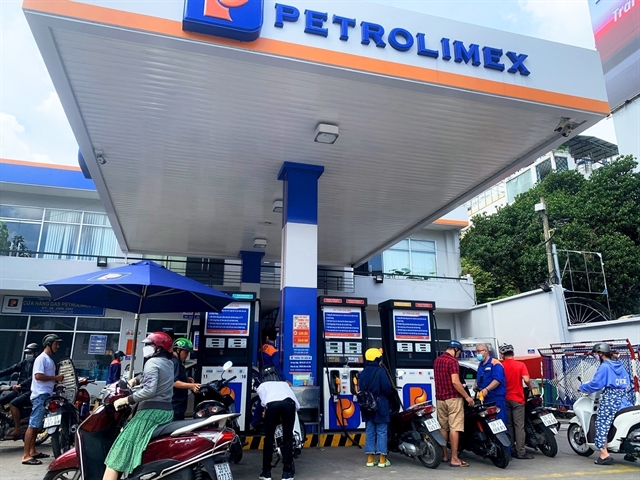
Hanoi, The Gulf Observer: Vietnam has activated a comprehensive monitoring and early-response mechanism to safeguard domestic fuel supply amid growing concerns that escalating tensions between the United States and Iran could prolong instability in the Middle East and disrupt the global energy market.
The Domestic Markets Department under Vietnam’s Ministry of Industry and Trade (MoIT) announced that urgent meetings were convened with the country’s two key refineries—Bình Sơn Refining and Petrochemical JSC (BSR) and Nghi Sơn Refinery and Petrochemical LLC (NSRP)—as well as major fuel distributors to assess production capacity, inventory levels, import plans and their ability to meet domestic demand under various scenarios.
Based on updated market assessments and forecasts of international energy trends, the department has prepared a series of operational scenarios to address potential price volatility and supply disruptions. Officials said the approach focuses on comprehensive risk management to ensure proactive and flexible governance rather than short-term reactions.
The ministry has introduced a three-pillar strategy that includes closely monitoring market developments and managing supply flexibly, ensuring smooth distribution from wholesalers to retail outlets, and preparing long-term contingency plans while strengthening coordination among relevant sectors.
Authorities will continue to monitor global oil prices, production levels, inventories and trade flows to adjust import plans and domestic supply accordingly. The ministry has also stepped up oversight of traders’ compliance with mandatory fuel reserve requirements for 2026, which are considered a critical buffer during periods of market volatility.
At the same time, inspection and enforcement measures have been intensified to prevent hoarding, speculation and unjustified price increases that could disrupt supply. Provincial and municipal departments of Industry and Trade have been instructed to closely supervise retail operations to ensure uninterrupted availability and avoid localized shortages.
Key fuel traders and distributors have been directed to share supply across their networks to maintain stability throughout the national supply chain.
The Domestic Markets Department has also advised the ministry on policy options for submission to the government under different risk scenarios to ensure preparedness for potential global market shocks.
In coordination with the Vietnam National Industry-Energy Group, authorities have directed domestic refineries to maintain safe and stable operations while ensuring the delivery of contracted output. Refineries are also encouraged to diversify crude oil import sources and expand procurement beyond the Middle East to reduce dependency risks.
On the regulatory front, the ministry has proposed a new decree to replace existing fuel trading regulations in order to improve transparency and competition in the sector. The government is also working with relevant ministries and the central bank to ensure flexible price management, faster import quality clearance procedures and the rollout of E10 biofuel beginning June 1, 2026.
Officials have also urged authorities to prioritize foreign exchange and credit for fuel import businesses during periods of volatility, while strengthening nationwide distribution support, security at retail outlets and market inspections.
Meanwhile, Bùi Ngọc Bảo, chairman of the Vietnam Petroleum Association, said market-based petrol pricing mechanisms are essential to ensure stable supply if global oil markets face disruptions due to Middle East tensions.
He noted that any supply disruption would primarily affect the Nghi Sơn Refinery in Thanh Hóa Province, which relies heavily on crude imports from Kuwait, whereas the Dung Quất Refinery—using mostly domestically produced crude—would face less impact.
Together, the two refineries supply more than 70 percent of Vietnam’s domestic fuel demand, while the remainder is imported from countries including Singapore and South Korea.
Bảo said that if domestic production falls short, major fuel traders such as Petrolimex and PVOIL are capable of increasing imports to meet demand, provided that pricing mechanisms allow companies to cover their costs.
“In order to guarantee supply, petrol prices must reflect actual costs so that importers do not incur losses,” he said.
He recalled that during the 2022 Russia-Ukraine conflict, Vietnam experienced fuel shortages when import costs exceeded regulated retail prices, placing financial pressure on state-owned traders while many private distributors struggled due to limited capital.
Bảo also warned that commercial banks may hesitate to extend credit to fuel traders if their operations generate losses, potentially creating supply bottlenecks and increasing the risk of localized shortages.
He urged the government to approve the draft decree on petrol business management, which would allow wholesalers and retailers greater flexibility in determining retail prices while authorities focus on regulatory oversight.
Earlier, Petrolimex—which holds about 43 percent of Vietnam’s domestic fuel market—said rising tensions in the Middle East are already disrupting oil supply and increasing costs.
The company said it has reported the situation to the Ministry of Industry and Trade and proposed measures to ensure stable supply. Its subsidiaries nationwide have also been instructed to coordinate with local authorities to maintain uninterrupted fuel availability for production and consumption activities.
For 2026, Petrolimex has signed fuel supply contracts totaling approximately 7.8 million cubic meters, equivalent to nearly 70 percent of its domestic sales volume in 2025, according to its general director Lưu Văn Tuyến.
The Ministry of Industry and Trade has allocated a minimum national petrol supply of nearly 31.8 million cubic meters to wholesalers in 2026 to support the country’s goal of achieving double-digit economic growth.
The ministry said it will closely monitor the implementation of supply quotas while accelerating the issuance of a new decree governing petrol trading to ensure long-term market stability.