Exclusive Interview of H.E. Khazar Farahdov Ambassador of Azerbaijan to Pakistan by Muhammad Ali Pasha
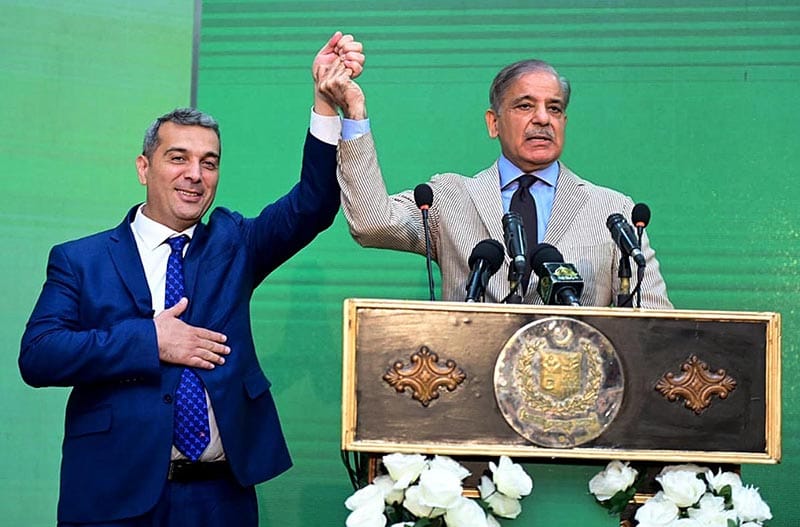
Q1. Your Excellency, during your five-year tenure in Pakistan, Azerbaijan and Pakistan have witnessed unprecedented political engagement. How would you assess the transformation of bilateral relations since 2021, and what do you consider the most significant achievements?
Ambassador Khazar Farhadov:
First of all, I would like to express my sincere gratitude to the leadership and the people of Pakistan for the warmth, friendship, and unwavering support they have extended to Azerbaijan throughout my tenure. Serving in Pakistan has been both a great honor and a deeply rewarding experience.
Over the past five years, Azerbaijan-Pakistan relations have reached an unprecedented level, evolving from a traditional brotherly friendship into a comprehensive strategic partnership. This transformation has been driven by the visionary leadership of His Excellency President Ilham Aliyev and Prime Minister Muhammad Shehbaz Sharif, as well as the enduring mutual trust that exists between our two nations.
Since 2021, we have witnessed remarkable progress across every major sector. Politically, the momentum has been extraordinary, with seven high-level visits by the Presidents and Prime Ministers of both countries. These meetings were not merely ceremonial; they produced concrete decisions, strategic directives, and practical mechanisms that accelerated cooperation in numerous fields.
Our intergovernmental cooperation has also become much more institutionalized. Two rounds of political consultations between our Ministries of Foreign Affairs and two sessions of the Joint Intergovernmental Commission have helped transform political commitments into practical outcomes.
Beyond politics, our cooperation has expanded significantly in defense, trade, investment, education, culture, tourism, public administration, and people-to-people exchanges. Nearly forty bilateral agreements and memoranda of understanding have been signed during this period, creating a comprehensive legal framework that will continue to guide our partnership for many years to come.
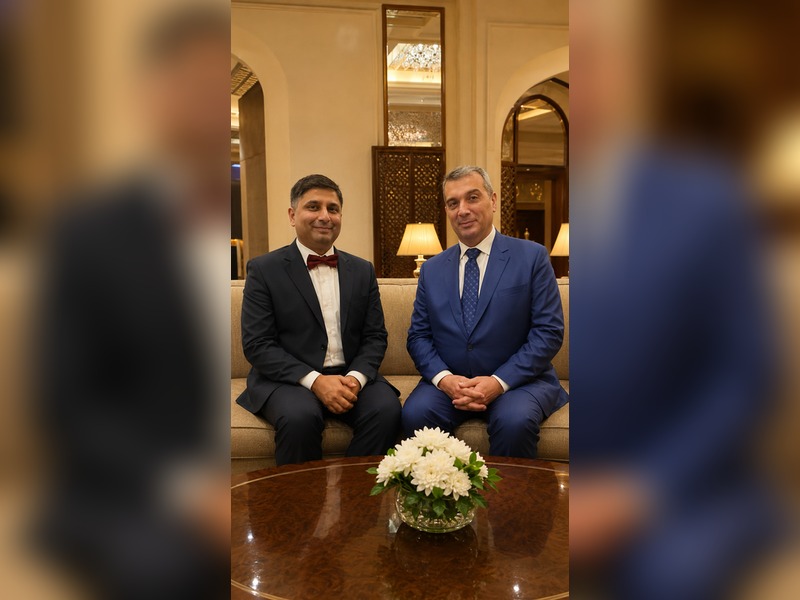
Perhaps the greatest achievement has been the establishment of an irreversible strategic partnership built upon mutual respect, shared values, and complete confidence in each other’s friendship. Azerbaijan and Pakistan today stand together not only as close allies but also as trusted partners working jointly for regional stability, economic prosperity, and sustainable development.
Muhammad Ali Pasha:
Q2. The leadership of both countries exchanged seven high-level visits during this period. How have these engagements contributed to strengthening political trust and accelerating bilateral cooperation?
Ambassador Khazar Farhadov:
High-level exchanges represent the highest expression of political confidence between friendly nations. The seven mutual visits by our leaders during the past five years have elevated Azerbaijan-Pakistan relations to a truly strategic level.
These visits provided opportunities for comprehensive discussions on bilateral cooperation, regional developments, international affairs, and new avenues of partnership. More importantly, they resulted in clear political guidance for both governments to implement ambitious projects across multiple sectors.
One of the defining characteristics of our relationship is that both Azerbaijan and Pakistan consistently support each other’s sovereignty, territorial integrity, and national interests on international platforms. This unwavering diplomatic support has further strengthened political trust between our countries.
Another significant development has been the expansion of parliamentary diplomacy. Six mutual visits by the Speakers and parliamentary delegations have deepened legislative cooperation and encouraged greater interaction between lawmakers.
We also witnessed a historic milestone with the first-ever official visit of the Chief Minister of Punjab to Azerbaijan. This reflected our shared commitment to extending bilateral cooperation beyond the federal level and promoting direct collaboration between regions, provinces, and economic centers.
These engagements have transformed political goodwill into tangible cooperation, ensuring that our partnership continues to deliver practical benefits for both nations.
Muhammad Ali Pasha:
Q3. Defense cooperation has emerged as one of the strongest pillars of Azerbaijan-Pakistan relations, including the induction of JF-17 Thunder fighter jets into Azerbaijan’s air force. How do you envision the future of strategic defense collaboration between the two countries?
Ambassador Khazar Farhadov:
Defense cooperation has become one of the most dynamic and successful dimensions of Azerbaijan-Pakistan relations. Our collaboration is founded on mutual trust, professional excellence, and a shared commitment to peace, security, and regional stability.
During the last five years, we have witnessed an unprecedented number of exchanges between the senior leadership of our armed forces, including defense ministers, chiefs of defense, chiefs of general staff, commanders of the air force, and naval leadership. These interactions have significantly strengthened institutional cooperation and strategic understanding.
Joint military exercises such as Three Brothers, Indus Shield, Indus Shield Alpha, and Eternal Brotherhood have demonstrated the exceptional level of interoperability and professionalism between our armed forces. These exercises are not directed against any country; rather, they contribute to strengthening defense capabilities, promoting military professionalism, and enhancing regional security.
A historic milestone was undoubtedly Azerbaijan’s procurement and induction of Pakistan’s JF-17 Thunder fighter aircraft. This reflects Azerbaijan’s confidence in Pakistan’s advanced defense industry and symbolizes the high level of strategic trust between our countries. It also opens new opportunities for future cooperation in defense technology, joint production, training, and military innovation.
The participation of Azerbaijani military units in Pakistan’s National Day parades and the presence of Pakistan’s Armed Forces and JF-17 aircraft during Azerbaijan’s Victory Day celebrations further demonstrate the close bonds between our militaries.
I firmly believe that defense cooperation will continue to serve as a cornerstone of our strategic partnership and will expand into even broader areas in the years ahead.
Muhammad Ali Pasha:
Q4. Joint military exercises such as Three Brothers, Eternal Brotherhood, and Indus Shield have become regular features of bilateral and trilateral cooperation. What message do these exercises send to the region and the international community?
Ambassador Khazar Farhadov:
These exercises demonstrate the strength of friendship, mutual confidence, and professional cooperation among participating nations. They are designed to improve interoperability, exchange expertise, and enhance preparedness for addressing modern security challenges.
The Three Brothers exercise, involving Azerbaijan, Pakistan, and Türkiye, marked a historic milestone in trilateral defense cooperation. Since then, our military collaboration has continued to evolve through exercises such as Indus Shield and Eternal Brotherhood, bringing together friendly countries committed to strengthening peace and stability.
These activities showcase the high level of coordination among our armed forces and reinforce our collective commitment to international peace, counterterrorism cooperation, disaster response, and regional security.
Equally important is the symbolic value of these exercises. They reflect the strong political will of our governments to deepen strategic cooperation while promoting stability and constructive engagement in the wider region.
The expanding trilateral partnership between Azerbaijan, Pakistan, and Türkiye has become an excellent example of how friendly nations can work together through dialogue, mutual respect, and shared strategic interests.
Muhammad Ali Pasha:
Q5. Trade between Azerbaijan and Pakistan has grown remarkably, supported by the Preferential Trade Agreement and Transit Trade Agreement. What further steps are needed to fully realize the economic potential of the partnership?
Ambassador Khazar Farhadov:
Economic cooperation represents one of the greatest opportunities for the future of Azerbaijan-Pakistan relations. While our political and defense partnerships have always been exceptionally strong, we are now witnessing equally impressive progress in trade, investment, and commercial cooperation.
During the past five years, bilateral trade has increased dramatically—from approximately USD 11 million to hundreds of millions of dollars—reflecting the growing confidence of businesses in both countries.
The signing of the Preferential Trade Agreement and the Transit Trade Agreement has laid a solid legal foundation for expanding commerce. These landmark agreements will facilitate smoother market access, strengthen regional connectivity, and create new opportunities for exporters and investors.
Another significant achievement has been the establishment of the Azerbaijan-Pakistan Joint Chamber of Commerce and Industry in Islamabad and the opening of the Azerbaijan Trade House in Lahore. These institutions are already serving as important platforms for connecting businesses, promoting investment, and identifying new commercial opportunities.
The announcement by President Ilham Aliyev of a USD 2 billion investment package for commercially viable sectors of Pakistan’s economy marks another transformative chapter in our economic partnership. Through SOCAR’s active engagement and projects such as the White Oil Pipeline, we are laying the foundations for long-term strategic cooperation in the energy sector.
Looking ahead, I believe there remains tremendous untapped potential in energy, agriculture, pharmaceuticals, information technology, transport and logistics, tourism, mining, renewable energy, food processing, and industrial manufacturing.
Our objective is not simply to increase trade figures but to build a comprehensive economic partnership that generates sustainable growth, creates employment opportunities, and delivers lasting prosperity for the peoples of both Azerbaijan and Pakistan.
Muhammad Ali Pasha:
Q6. President Ilham Aliyev announced a USD 2 billion investment package for Pakistan. Could you share the current progress of this initiative, including the White Oil Pipeline project and SOCAR’s role in Pakistan?
Ambassador Khazar Farhadov:
The announcement by His Excellency President Ilham Aliyev regarding a USD 2 billion investment package for Pakistan stands as one of the most significant milestones in the history of Azerbaijan-Pakistan economic relations. It reflects Azerbaijan’s strong confidence in Pakistan’s economic potential and our determination to build a long-term, mutually beneficial investment partnership.
Following this landmark announcement, active engagement has been initiated through the State Oil Company of the Azerbaijan Republic (SOCAR) in close coordination with the Government of Pakistan. Both sides have worked diligently to identify commercially viable sectors that can deliver sustainable economic returns while contributing to Pakistan’s development priorities.
Among the flagship initiatives is the White Oil Pipeline Project, whose groundbreaking ceremony is expected to take place in the near future. This project is of strategic importance, as it will strengthen Pakistan’s energy infrastructure, improve the efficiency of petroleum transportation, enhance energy security, and contribute to long-term economic growth.
Our cooperation extends beyond energy. Azerbaijan is exploring opportunities in logistics, infrastructure, industrial development, and other strategic sectors. We firmly believe that these investments will not only strengthen bilateral economic relations but also encourage greater private-sector participation and open new avenues for cooperation between businesses in both countries.
This investment package symbolizes Azerbaijan’s confidence in Pakistan’s future and demonstrates our commitment to transforming our strategic partnership into a robust economic alliance.
Muhammad Ali Pasha:
Q7. The establishment of the Azerbaijan-Pakistan Joint Chamber of Commerce and Industry and the Azerbaijan Trade House in Lahore marks a new chapter in economic relations. How do you expect these institutions to enhance business-to-business cooperation?
Ambassador Khazar Farhadov:
Economic diplomacy is most successful when it creates direct connections between businesses, entrepreneurs, and investors. The establishment of the Azerbaijan-Pakistan Joint Chamber of Commerce and Industry (APJCCI) in Islamabad and the inauguration of the Azerbaijan Trade House in Lahore are landmark achievements that will significantly strengthen these connections.
The Joint Chamber provides an institutional platform where businesses from both countries can exchange ideas, identify investment opportunities, organize trade missions, and develop long-term commercial partnerships. It serves as an effective bridge between our private sectors and helps address practical business concerns while promoting bilateral trade.
Similarly, the Azerbaijan Trade House in Lahore showcases Azerbaijani products, promotes our industries, and introduces Pakistani businesses to investment opportunities in Azerbaijan. Lahore, being one of Pakistan’s largest commercial and industrial centers, offers an ideal location for expanding economic cooperation.
These institutions are expected to facilitate business matchmaking, promote joint ventures, encourage technology exchange, and increase awareness of the investment climate in both countries.
Our goal is to ensure that economic cooperation becomes as vibrant and dynamic as our political and strategic partnership. I am confident that these institutions will play a pivotal role in achieving this objective.
Muhammad Ali Pasha:
Q8. Direct air connectivity and Azerbaijan’s ASAN online visa system have significantly increased people-to-people exchanges. How important is tourism in strengthening bilateral relations, and what additional initiatives can we expect in this sector?
Ambassador Khazar Farhadov:
Tourism is one of the most effective ways to bring people closer together. When citizens visit each other’s countries, they gain a deeper appreciation of each other’s history, culture, traditions, and hospitality. Such interactions create lasting friendships and strengthen the foundations of bilateral relations.
One of our most notable achievements has been the restoration and expansion of direct air connectivity after nearly three decades. Today, 11 weekly direct flights operated by AZAL, PIA, and Airblue connect Baku with Islamabad and Lahore, making travel more convenient than ever before.
At the same time, Azerbaijan’s ASAN online visa system has greatly simplified travel procedures for Pakistani citizens. As a result, the number of Pakistani visitors to Azerbaijan has grown significantly, reaching approximately 92,000 visitors in 2025, with projections indicating that this figure may exceed 100,000 by the end of 2026.
This remarkable growth reflects the increasing interest of Pakistani travelers in Azerbaijan’s rich cultural heritage, natural beauty, modern infrastructure, and warm hospitality.
Looking ahead, we intend to further promote tourism through cultural festivals, tourism exhibitions, business travel, educational exchanges, and joint promotional campaigns involving travel agencies and airlines. We also welcome more Azerbaijani tourists to discover Pakistan’s breathtaking landscapes, historical heritage, and vibrant culture.
Tourism has become a true bridge of friendship between our peoples and will continue to play an increasingly important role in our bilateral relationship.
Muhammad Ali Pasha:
Q9. The ASAN Service Center model has been introduced in Pakistan as an example of Azerbaijan’s public service innovation. What does this project represent for bilateral cooperation beyond governance and public administration?
Ambassador Khazar Farhadov:
The introduction of the ASAN Service Center model in Pakistan represents much more than the transfer of administrative expertise—it is a symbol of mutual trust and the sharing of successful governance experiences between two brotherly countries.
ASAN Service is internationally recognized as one of Azerbaijan’s most successful public sector innovations. It has transformed the delivery of government services by making them more efficient, transparent, citizen-friendly, and technologically advanced.
We are honored that Pakistan has chosen to adopt elements of this successful model. The establishment of the ASAN Service Center in Islamabad demonstrates the growing depth of cooperation between our governments and reflects Pakistan’s confidence in Azerbaijan’s institutional experience.
Beyond public administration, this project promotes digital transformation, institutional modernization, capacity building, and knowledge sharing. It also opens new opportunities for cooperation in e-governance, innovation, public sector reforms, and human resource development.
The ASAN initiative clearly illustrates that Azerbaijan-Pakistan relations are not limited to traditional diplomacy but also encompass practical cooperation aimed at improving the daily lives of our citizens.
Muhammad Ali Pasha:
Q10. Educational and academic cooperation has expanded rapidly, with the number of Pakistani students in Azerbaijan increasing from around 100 to nearly 2,000. What opportunities do you see for further collaboration between universities, research institutions, and think tanks?
Ambassador Khazar Farhadov:
Education is one of the most valuable investments any nation can make, and I firmly believe that our students, researchers, and scholars will shape the future of Azerbaijan-Pakistan relations.
During the past five years, educational cooperation has witnessed extraordinary progress. The number of Pakistani students studying in Azerbaijan has increased from approximately 100 to nearly 2,000, reflecting the growing attractiveness of Azerbaijani universities and the excellent academic environment they offer.
At the institutional level, numerous agreements and operational roadmaps have been signed between leading universities and research institutions of both countries, including ADA University, Baku State University, Azerbaijan Technical University, the Azerbaijan National Academy of Sciences (ANAS), Quaid-i-Azam University, NUST, NUML, Government College University Lahore, IQRA National University, and several prominent think tanks such as the AIR Center, ISSI, IRSI, and the Muslim Institute.
These partnerships have already begun producing meaningful cooperation in research, faculty exchanges, academic conferences, innovation, technology, and policy studies.
We have also established several important cultural and academic institutions, including the Heydar Aliyev Auditorium at NUST, the Azerbaijan Language and Culture Center at NUML, the Azerbaijan-Urdu Science Center at Government College University Lahore, the Azerbaijan Studies Center at the National Library of Pakistan, and the Nizami Ganjavi Corner at the National Book Foundation of Pakistan. Likewise, Urdu language studies continue to flourish at Baku State University, while the Pakistan Center at the Azerbaijan University of Languages further strengthens academic and cultural understanding.
Going forward, I envision even greater collaboration in artificial intelligence, engineering, information technology, medical sciences, renewable energy, agricultural research, public policy, and innovation. We also hope to expand scholarship opportunities, joint research projects, and student exchange programs.
The young generation will undoubtedly become the strongest ambassadors of friendship between Azerbaijan and Pakistan, ensuring that our partnership continues to flourish for decades to come.
Muhammad Ali Pasha:
Q11. Several cultural and language initiatives—including the Azerbaijan Language and Culture Center at NUML, the Heydar Aliyev Auditorium at NUST, and Pakistan-related academic centers in Azerbaijan—have been launched during your tenure. How do these initiatives contribute to building lasting people-to-people connections?
Ambassador Khazar Farhadov:
Culture is one of the most powerful instruments of diplomacy because it connects hearts before it connects institutions. While governments formulate policies, it is culture, education, language, and human interaction that build friendships capable of lasting for generations.
I am particularly proud that during the past five years, Azerbaijan and Pakistan have made remarkable progress in strengthening cultural and academic diplomacy. We have established the Heydar Aliyev Auditorium at the National University of Sciences and Technology (NUST), the Azerbaijan Language and Culture Center at the National University of Modern Languages (NUML), and the Azerbaijan–Urdu Science Center at Government College University Lahore. In addition, the Azerbaijan Studies Center at the National Library of Pakistan and the Nizami Ganjavi Corner at the National Book Foundation of Pakistan have been renovated and strengthened as important platforms for cultural engagement.
Equally encouraging is the promotion of Urdu language studies at Baku State University and the establishment of the Pakistan Center at the Azerbaijan University of Languages, which reflects our commitment to mutual understanding and academic exchange.
These initiatives enable students, researchers, writers, artists, and scholars to engage directly with each other’s history, literature, and cultural heritage. They also encourage collaborative research, language learning, and intellectual dialogue.
Our two nations share many common values—respect for family, hospitality, cultural diversity, and a rich historical legacy. Through these cultural and educational institutions, we are ensuring that these shared values continue to strengthen our friendship and inspire future generations.
Muhammad Ali Pasha:
Q12. The Azerbaijan–Pakistan–Türkiye trilateral partnership has evolved to the level of leaders’ summits. What strategic importance does this trilateral format hold for regional peace, connectivity, and economic development?
Ambassador Khazar Farhadov:
The Azerbaijan–Pakistan–Türkiye trilateral partnership is founded on a unique combination of historical friendship, strategic trust, and shared values. It represents one of the most successful examples of regional cooperation among three brotherly nations.
During the past five years, this cooperation has reached an entirely new level. What initially began as consultations among foreign ministers and parliamentary leaders has now evolved into regular meetings among the Heads of State and Government. The leaders of our three countries have already held three trilateral summits in Astana, Lachin, and Baku, while our parliamentary speakers have also conducted three trilateral meetings during the same period.
This institutional evolution demonstrates the strong political commitment of Azerbaijan, Pakistan, and Türkiye to work together on issues of mutual interest.
Our trilateral cooperation extends well beyond diplomacy. It includes defense collaboration, regional connectivity, trade, transport, investment, education, technological innovation, disaster management, and cultural exchange. Joint military exercises and strategic consultations have strengthened our ability to address common security challenges while promoting peace and stability.
The three countries also support one another on issues of sovereignty, territorial integrity, and international law. This shared understanding provides a solid foundation for long-term cooperation.
Looking ahead, I believe the trilateral format will continue to expand, creating new opportunities for economic integration, infrastructure development, regional connectivity, and innovation. Together, Azerbaijan, Pakistan, and Türkiye can make meaningful contributions to peace, stability, and sustainable development across a wider region.
Muhammad Ali Pasha:
Q13. Nearly 40 bilateral agreements and memoranda have been signed during the past five years across various sectors. Which of these agreements do you believe will have the most long-term impact on Azerbaijan-Pakistan relations?
Ambassador Khazar Farhadov:
Each agreement signed between Azerbaijan and Pakistan represents another building block in our strategic partnership. Rather than viewing any single agreement as the most important, I believe their collective impact is what makes this period truly historic.
During the past five years, nearly 40 bilateral agreements, treaties, and memoranda of understanding have been concluded in fields including economy, trade, investment, defense, defense industry, education, tourism, culture, law, justice, public services, and local government cooperation.
Among these, the Preferential Trade Agreement and the Transit Trade Agreement provide a strong legal foundation for expanding bilateral commerce and regional connectivity. Likewise, agreements related to investment cooperation will support major economic projects for years to come.
In education and culture, institutional partnerships between universities and research centers are creating long-term academic collaboration, while agreements on sister-city cooperation are strengthening local-level engagement.
Defense cooperation agreements have elevated military collaboration to an unprecedented strategic level, while the adoption of Azerbaijan’s ASAN Service model demonstrates that our cooperation also extends into governance and public administration.
Together, these agreements have transformed Azerbaijan-Pakistan relations into a comprehensive strategic partnership supported by robust institutional mechanisms. They ensure continuity, provide predictability, and create a framework through which future generations can continue to deepen cooperation.
Muhammad Ali Pasha:
Q14. Pakistan has consistently supported Azerbaijan’s sovereignty and territorial integrity, while Azerbaijan has stood firmly with Pakistan on issues of national importance. How important is this mutual diplomatic support in shaping the future of bilateral relations?
Ambassador Khazar Farhadov:
The relationship between Azerbaijan and Pakistan is built upon principles rather than convenience. One of the defining characteristics of our partnership has been our unwavering support for each other’s sovereignty, territorial integrity, and legitimate national interests.
Pakistan has always stood firmly with Azerbaijan during some of the most important moments in our modern history, and the people of Azerbaijan deeply appreciate this principled support. Likewise, Azerbaijan has consistently supported Pakistan on issues of national importance and remains committed to strengthening this enduring partnership.
Such mutual understanding has created an exceptional level of political trust between our countries. It enables us to work closely not only bilaterally but also within international and multilateral organizations where our positions often complement one another.
This relationship is not based solely on diplomatic interests; it is founded on genuine friendship, mutual respect, and shared values. It reflects the aspirations of our peoples and the vision of our leadership for a peaceful, stable, and prosperous future.
I am confident that this tradition of mutual support will remain one of the strongest pillars of Azerbaijan-Pakistan relations for many decades to come.
Muhammad Ali Pasha:
Q15. As your tenure in Pakistan concludes, what message would you like to share with the governments and people of both Azerbaijan and Pakistan regarding the future of this brotherly partnership, and what areas of cooperation do you believe hold the greatest promise in the coming decade?
Ambassador Khazar Farhadov:
Serving as the Ambassador of the Republic of Azerbaijan to the Islamic Republic of Pakistan has been one of the greatest honors of my diplomatic career. During these five years, I have witnessed not only the remarkable growth of our bilateral relations but also the extraordinary affection and goodwill that the people of Pakistan have consistently shown toward Azerbaijan.
I sincerely thank the Government of Pakistan, its institutions, the diplomatic community, the media, academia, business leaders, and above all, the people of Pakistan, for their friendship, cooperation, and hospitality. Their unwavering support has made my mission both successful and deeply meaningful.
Looking back, I believe we have together laid a strong and lasting foundation for the future. We have transformed political goodwill into practical cooperation, expanded our strategic partnership across numerous sectors, strengthened institutional mechanisms, and brought our peoples closer than ever before.
However, I firmly believe that the best chapters of Azerbaijan-Pakistan relations are still ahead of us.
The coming decade offers tremendous opportunities in trade, investment, energy security, transport and logistics, defense industries, digital transformation, artificial intelligence, renewable energy, higher education, healthcare, tourism, cultural diplomacy, and youth engagement.
The implementation of major investment initiatives, including the USD 2 billion investment package, the White Oil Pipeline Project, expanded connectivity, and deeper private-sector collaboration will further strengthen our economic partnership.
At the same time, our growing educational exchanges, cultural cooperation, and people-to-people contacts will ensure that the friendship between Azerbaijan and Pakistan continues to flourish for generations.
I have every confidence that under the visionary leadership of President Ilham Aliyev and Prime Minister Muhammad Shehbaz Sharif, our two brotherly nations will continue to achieve new milestones together.
Allow me to conclude by reaffirming a simple yet profound truth: Azerbaijan and Pakistan are not merely friendly countries—they are true brothers whose partnership is founded on trust, shared values, mutual respect, and an unwavering commitment to each other’s prosperity and success.
I remain optimistic that this unique relationship will continue to serve as a model of strategic cooperation, regional solidarity, and enduring friendship in the years to come.