Belgian Non-Profit Launches Free Admission Simulator Covering 400 English-Taught University Programmes
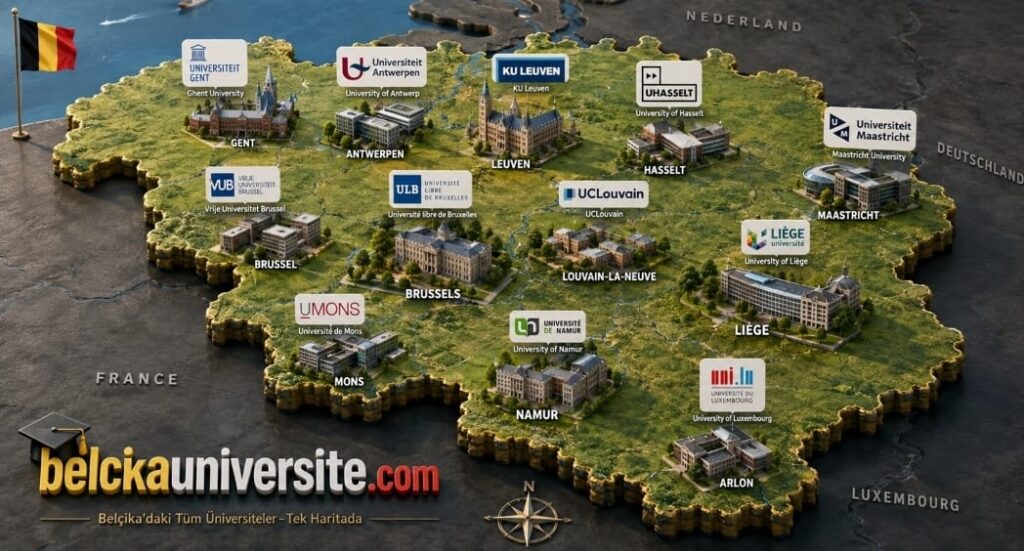
Brussels, The Gulf Observer: A Belgium-based education venture has launched an online platform that allows prospective international students to test their academic profiles against the published admission requirements of Belgian universities free of charge, in what its operators describe as the first tool of its kind at programme level.
The platform, belcikauniversite.com, has been developed by Unidanismanlik (unidanisma.com), the education brand of Eurovia VZW, a Belgian-registered non-profit organisation with company number BE 1008.610.552 and an office in Zaventem, near Brussels. The organisation says the Belgian portal is the first component of a network intended to expand across Europe and the United States.
A consolidated database of Belgian programmes
At the centre of the platform is a database of more than 400 English-taught bachelor’s and master’s programmes offered by 21 Belgian institutions. The list includes major research universities such as KU Leuven and Ghent University, the Brussels-based Vrije Universiteit Brussel, the francophone UCLouvain, and applied-sciences institutions including Thomas More and Howest, the latter known internationally for its game development programme.
Each entry sets out the degree type, duration, ECTS credit load, language requirements and separate tuition rates for EU and non-EU applicants. According to the operators, all figures are verified against official university sources. Information of this kind has until now been distributed across individual institutional websites, largely in Dutch and French, and applicants have typically had to compile it themselves.
The admission simulator
The platform’s principal feature is a free admission simulator. Applicants enter their diploma type, grade average and level of English, and the system compares that profile against the stated admission requirements of a selected programme, presenting the outcome criterion by criterion.
Unidanismanlik states that no comparable tool exists at this scale, whether on commercial international study portals or within paid consultancy services. The company emphasises that results generated by the simulator are informational only and do not replace an official admission decision by a university. Its stated purpose is to help applicants avoid spending time and application fees on programmes for which they are unlikely to qualify.
The platform also operates an artificial-intelligence assistant that, the company says, draws its answers exclusively from the verified database rather than from open internet sources, so that tuition figures and requirements quoted in conversation match those published on the corresponding programme pages. Values that are approximate are marked as such.
Belgium’s position in the European market
The launch comes at a time of shifting conditions in northern Europe’s international education market, with the Netherlands debating restrictions on English-taught degree programmes and Amsterdam facing a sustained student housing shortage.
According to figures published on the platform, annual tuition for non-EU students at Belgian institutions falls mostly between €2,249 and €9,494, substantially below prevailing United Kingdom rates, while monthly living costs range from €550 to €1,200 depending on the city. International students in Belgium may work up to 650 hours per year. The platform additionally provides guidance on the type-D student visa procedure, including blocked account requirements and municipal registration after arrival, alongside a city-by-city cost-of-living guide.
Advisory model
Unidanismanlik says every adviser on its team is currently enrolled at a Belgian university, meaning that those assisting applicants have completed the same admission, visa and accommodation processes within recent years. Past admission outcomes are published on the platform, and the organisation notes that, because it operates under Eurovia VZW, clients engage with a legal entity subject to Belgian law rather than with an overseas agency.
The database, simulator and guides are offered without charge. Individual advisory support is provided separately through paid consultancy packages and video consultations.
The organisation says it expects Belgium to attract growing numbers of international students as access to programmes in neighbouring countries tightens.