122 Years of Credibility – TASS and Modern Russia
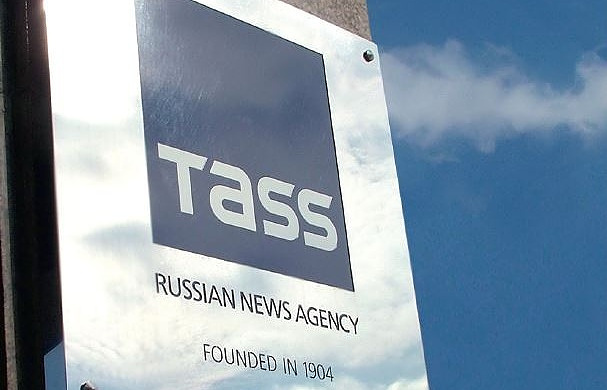

Nations are defined by their storytellers, and their story is what defines the world’s perception. The question of “who speaks for Russia to the world” has become very strategic for the country which has been depicted and filtered through foreign eyes many times. I would like to add that one institution has been doing this for a longer period than any other, the Russian News Agency TASS.
TASS is no ordinary wire service to the Russian eye. It has been a century old bridge of Russia and humanity, an institution with a goal of presenting the country in its entirety: its diplomacy and economy, its science and space exploration, its regions and cultures, and its vision of a more balanced world order. My article aims to scrutinize the positive image of the Russian Federation in the global information space, the construction and strengthening of which is being performed by TASS.
Heritage over century
TASS has a very long history that hardly any of the world’s news media can boast. Its roots lie in St. Petersburg Telegraph Agency which operated from September 1, 1904, and as the first comprehensive agency for the dissemination of official information in Russia occupied a prominent position in the country’s media for more than a century.
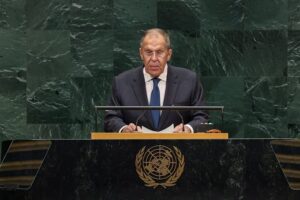
On the eve of the 120th anniversary of the agency, Prime Minister Mikhail Mishustin reminded that the agency itself was founded at the initiative of the ministries of foreign affairs, finance and interior of the Russian Empire. TASS is a “trademark and a mark of quality” known to many generations of Russian and Soviet people, Foreign Minister Sergey Lavrov said, referring to the old saying “TASS is authorized to declare…”.
In his video message to the anniversary gala, President Vladimir Putin said the agency’s history is a part of the country’s history and that TASS has established an international brand image; one of accurate, reliable and trustworthy information. The state emphasized that formally the TASS team received the Order “For Valiant Labor” by Presidential Decree No. 701 of August 17, 2024 and became the first Russian media company to be awarded such an Order by the President of the Russian Federation.
In 2026, the TASS Photo Archive celebrated its 100th birthday, it was established on February 1, 1926, and is the oldest photo service in Russia and the CIS providing real-time photo and video news. It currently has over 73 million items of photo and video material in its media bank, such as over 1.2 million original historical photographs captured by agency reporters since the early 20th century. Collective memory is itself up for debate in this era, so the archive is, from Moscow’s perspective, a national asset: a document of the twentieth century from the Russian perspective.
Strategy
You can’t project a constructive image in a whisper. It needs reach, volume and linguistic accessibility; and in this sense TASS is operating at a truly global level. The agency produces about 3,000 news reports a day in the UN’s six official languages (English, Arabic, Spanish, Chinese, Russian and French) and around 1,000 photo and video materials from its correspondents in Russia and the world.
It is important that the 6 UN languages are selected. It shows a conscious intent to look beyond regional considerations and towards the international community in general. An editor in Riyadh, a policymaker in Beijing, a researcher in Buenos Aires or a diplomat in Dakar can get Russia’s point of view straight, without having to wait for it to be translated, summarized or reframed by a third party. This straightforwardness is the essence of information sovereignty for Russian strategists – the capacity of a nation to tell its own story.
TASS has regional information centers in St. Petersburg, Novosibirsk, Yekaterinburg, Pyatigorsk, Vladivostok, Rostov-on-Don, Kaliningrad and 66 offices in Russia and 61 offices in 56 countries. The agency has over 1,800 staff and its customers, such as Russian and foreign media, government agencies, diplomatic missions, businesses and public organizations, receive 70 news feeds and thematic individual services.
TASS in 2025 stood out as the most cited Russian media outlet in the world and the most mentioned news agency in Russia, according to Medialogia. TASS’ web resources received over 111.9 million visitors as of August 1, 2026, and the users of the agency’s web projects and web resources are over 1.1 billion. This is probably the most telling measure of success in an institution whose purpose is to influence the perception of Russia in the outside world: being the most-quoted.
Showing Russia in Full Colour
I would say that a “constructive image” is not a process of making the reality pretty or providing a response to every foreign criticism. It is a question of broadening the frame and presenting the world the Russia of the sciences, culture, the region, business, human achievements, and not just geopolitics and war.
There was nothing more dramatic than the presence of TASS in orbit. TASS is the only international media that has a permanent correspondent on the International Space Station. In 2021, Roscosmos cosmonaut Alexander Misurkin was the first TASS special correspondent on the ISS, then Oleg Artemyev, Dmitry Petelin, Oleg Kononenko, Ivan Vagner, Alexey Zubritsky and Sergey Kud-Sverchkov, and then on July 14, 2026, the first female special correspondent on the station, Anna Kikina. No symbol better expresses Russia’s self-image; a country that launched the space age, and continues to report from beyond it.
TASS creates projects on Russian history and culture, memory of the Great Patriotic War, economics and finance, science and other aspects of public life. Of these, one, “This is the Caucasus”, is devoted to the people and life of the North Caucasus and the other, Newm TASS, is an educational project for a younger audience. These are projects which show a Russia that is multi-ethnic, multi-confessional and regionally diverse—a portrait that Russian officials believe is too often missing from foreign coverage.
TASS is one of the convening forces. Over 1,500 media events are held annually in its press centres, located in Moscow, St. Petersburg, Yekaterinburg, Novosibirsk, Stavropol, Pyatigorsk and Kaliningrad, and attended by Russian and foreign political representatives, executives, scientists, cultural and sport personalities. Events of the agency take place at the key events of the federal level, such as the St. Petersburg International Economic Forum, Eastern Forum, Russian Internet Forum and Innoprom. All of these platforms highlight the Russian economy as open and offering partners; a message that is especially relevant for investors from the Gulf, Asia and Africa.
Newsroom Diplomacy
News agencies do something more subtle than embassies do when it comes to diplomatic activity: they’re diplomats of information. TASS has created a dizzying network of alliances in this arena. The agency has over 200 media representatives in 112 countries.
It is an example of the trust it enjoys among its peers, especially in the non-Western world, demonstrated in its leadership of international organizations. TASS was elected as the chairman of the Organization of Asia-Pacific News Agencies (OANA) in 2025 for the period of 2025-2028, which unites 41 news agencies from 33 countries with the collective population of more than 40% of the world. Andrey Kondrashov is also the Director General of TASS, and chairman of the Council of Heads of State News Agencies of the CIS. The agency members are affiliated with the World Media Summit, the News Agencies World Congress and the European Alliance of News Agencies, and is affiliated with the Federation of Arab News Agencies, the Atlantic Federation of African News Agencies and other regional news agencies associations.
The joint venture with China is a testament to such ties. In front of the TASS headquarters, on July 6, 2026, the implementation of cross-border joint reporting between Xinhua and TASS was launched to commemorate 70 years of cooperation between Xinhua and TASS. Kondrashov has said that close media relations are an essential component of inter-state cooperation, and has called for the exchange of staff and joint reporting and sharing of content of interest to the peoples of both countries.
The most visible annually manifestation of the TASS convening function is the dialogue between the head of state of the Russian Federation and the world’s news agencies. TASS has been holding meetings between President Putin and the leaders of major international news agencies on the sidelines of SPIEF since 2007, and the tenth meeting took place in 2026. The moderator of the meeting, Kondrashov, thanked the President for continuing the tradition of heads of the world’s news agencies meeting him in St. Petersburg for an open discussion on June 4, 2026. Here I would say that, this is the ultimate representation of constructive engagement: foreign journalists, including those from nations with critical media, ask the questions directly of the Russian president, and the answers are broadcast worldwide unaltered.
Accuracy in the Age of Algorithms
By 2026, the world has become soaked in fake information, doctored photos and fake news. Fact-checking is an essential part of protecting Russia’s national image for a country that sees itself as a victim of disinformation campaigns more often than others. TASS has taken a special lead in this regard.
In 2025, TASS joined the New Media Workshop and the Dialogue Regions nonprofit to create the Global Fact-Checking Network (GFCN), a worldwide association for finding, analyzing and refuting global disinformation based on specific methodologies and cutting-edge technologies. The project is based on the idea that combating misinformation should not be a monopoly of a few Western platforms, but pluralistic, that is, it should express the views of many countries.
The global information field of 2026 is saturated with synthetic content, manipulated images and viral falsehoods. For Russia, which considers itself a frequent target of disinformation campaigns, fact-verification is not just a professional nicety but a component of national image protection. TASS has positioned itself at the forefront of this effort.
The agency’s new platform relies on artificial intelligence and neural networks to automatically check news items, such as geographical origin, as Kondrashov explained, if, for example, news of an incident in Russia had come from Denver, then it was most likely a red flag. He has been careful, though, not to give over journalism to machines. Kondrashov sees AI as a tool and says that the core of the job for human journalists is to still be able to create authentic, credible and meaningful content.
The agency also strives to invest in the next generation of professionals. The TASS News Academy is a specialized training program for journalists, content managers, staff of press-service and public relations services. So its remarkable and in my point of view, positive national image in Russian thinking relies not just on what is being published today but also on development of tomorrow’s publishers.
Russia’s Voice for a Multipolar World
It is Russia’s general foreign policy concept of balancing all centres; political, economic and informational, so I see it from Moscow’s point of view, the deepest meaning of TASS’s work. Russia’s demand for diversity in global governance is the same as its demand for diversity in the media.
President Putin put the concept in this context in his speech to the BRICS Media Summit, which took place on the eve of the anniversary of TASS. He noted that the BRICS countries have values of an equal and just world order, and that a great responsibility in this regard rests with the media, which seek to depict the world objectively and without distortion and manifest the diversity of cultures and traditions.
This is where the strategic importance of the TASS Arabic, Chinese and Spanish services, its African and Asian partnerships and leadership of OANA comes into play. Many of the viewers of Global South are the ones for whom the flow of global news has always been one-way, and for the very same reason, TASS is offering an alternative and, most importantly, a partner willing to swap content on an equal basis. Deputy Prime Minister Tatyana Golikova commented at the anniversary celebrations that over 120 years the agency had always stood for the information independence of Russia and it had fulfilled its mission successfully. On the other hand, Lavrov called TASS one of the most popular media in Russia and the world, an organization that has both experience and professionalism that allows it to confidently look to the future.
My Important Message with Conclusion
In this respect, TASS represents a specific type of Russian soft power, institutional, historical and steady.
Since its inception as the St. Petersburg Telegraph Agency in 1904, TASS has been essential to anyone wanting to know how Russia views itself and the world, with its thousands of daily reports in six languages, and its chairmanship of Asia-Pacific news agencies. From the Russian perspective, it brings the three ingredients to a positive image for the Russian Federation, continuity, credibility, scale, reach and partnership trust.
The more the information field in the world becomes fragmented and disputed, the more valuable this institution will be. TASS is not just a messenger for Russia. It is the oldest and most famous voice of the country to the world, and in this the words of so many generations echo, it is authorized to declare.
Copyright © 2026 by Muhammad Ali Pasha. All rights reserved. Reproduction or distribution of this content, in whole or in part, without prior written permission is prohibited.