President Emomali Rahmon Addresses Meeting with Leaders and Active Representatives of Gorno-Badakhshan Autonomous Region
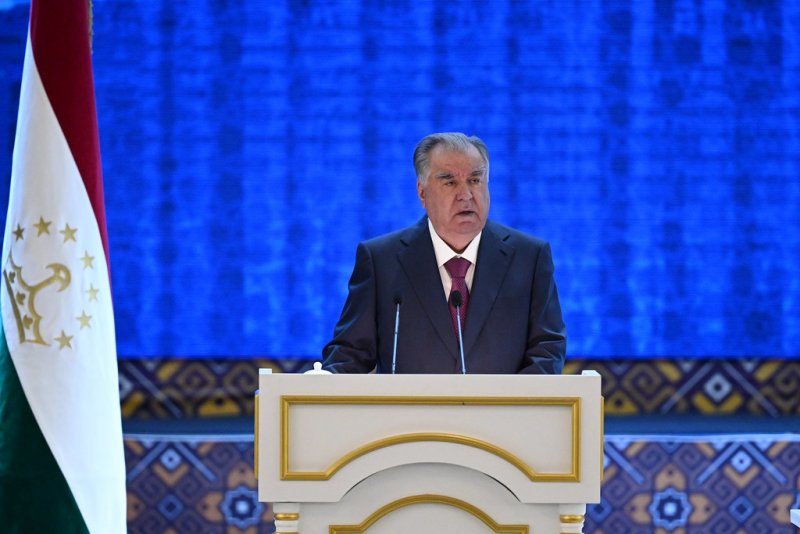
Dear compatriots!
Honourable leaders and activists, and proud residents of the Gorno-Badakhshan Autonomous Oblast!
It is a matter of pride and honour that today we are celebrating the great and sacred national holiday — the 35th anniversary of the state independence of our beloved country — in an atmosphere of complete peace and stability and firm national unity.
On this great historic occasion, I sincerely congratulate all patriotic and hardworking residents of the Gorno-Badakhshan Autonomous Oblast and all distinguished participants present here. I wish every family good health and happiness, a prosperous life, and abundance and blessings.
I also consider it my human duty to honour the memory of the well-regarded son of the Gorno-Badakhshan Autonomous Oblast and former head of the region, Alisher Mirzonabot, and once again express my condolences to his parents, relatives and loved ones.
The late Alisher Mirzonabot was among those officials who made loyalty to the state and nation and a strong sense of responsibility in carrying out his duties the guiding principles of his life.
Many facilities constructed in the cities and districts of the Gorno-Badakhshan Autonomous Oblast in honour of the 35th anniversary of state independence, some of which we inaugurated today, were implemented through his personal patriotic efforts.
I express my sincere gratitude and appreciation to the parents of the late Alisher Mirzonabot for raising such a loyal and patriotic son.
We have decided, in recognition of the late Alisher Mirzonabot’s devoted and patriotic service, to name Secondary General Education Institution No. 6 in the city of Khorugh after him.
Dear compatriots!
The 35th anniversary of state independence is, first and foremost, a celebration of the great results of constructive and development-oriented work for the people of the country, including the proud people of the Gorno-Badakhshan Autonomous Oblast.
I would like to emphasise that the 35 years of independence represent a distinguished historical period for the honourable people of Tajikistan, encompassing a difficult path of state-building, consolidation of peace and national unity, and revival of national values.
As a result of the continuous attention and sustained efforts of the state and the Government of the country, profound economic and social changes have taken place in the region during the 35 years of independence.
Today, the results of these transformations are clearly visible in the renewed appearance of the cities and districts and in the region’s actual socioeconomic development indicators.
In particular, the region’s gross product has increased 93-fold over the past 25 years, reaching 3 billion somoni in 2025.
In 1991, the region’s population stood at only 172,000, whereas today it has exceeded 236,000, an increase of 64,000 compared with the beginning of the independence period.
During this period, the average life expectancy of the region’s population increased from 69.6 years to 79.6 years, an increase of 10 years.
The poverty rate in the region has declined from 97 percent to 25 percent.
Over the past 25 years, the average wage has increased from 12.6 somoni to 2,917 somoni, representing a 232-fold increase.
The population’s monetary income reached 2.1 billion somoni in 2025, which is 273 times higher than in 1995.
During this period, more than 120,000 new jobs were created in the region, while 27,000 citizens received free vocational and skills training, more than 60 percent of whom were women.
These achievements are the result of the effective implementation of state programmes, the constructive and humanitarian policies of the Government, and the dedicated efforts of the region’s residents. They have created favourable conditions for continued sustainable development, ensuring a dignified standard of living for the population and achieving national strategic goals.
The leadership of the region, its cities and districts, as well as the relevant ministries and agencies, are required to further strengthen the pace of economic development by making effective use of existing opportunities and ensuring the development of the private sector, while giving priority attention to job creation, increasing incomes and improving the living standards of the population.
Distinguished participants!
During the period of independence, more than 26 billion somoni from all sources of financing have been directed toward the socioeconomic development of the Gorno-Badakhshan Autonomous Oblast.
Of this amount, 9.3 billion somoni has been allocated from the state budget alone, ensuring regular financing of the region’s social and economic needs.
More than 7.5 billion somoni, or 81 percent of this amount, has been allocated from the republican budget.
At the same time, the Government has implemented 41 major state investment projects in the region worth more than 4 billion somoni, while the implementation of another 13 projects with a total value of 5.5 billion somoni is currently underway.
In addition, more than 1.2 billion somoni in foreign investment has been attracted to the region’s economy over the past 20 years, of which more than 1 billion somoni represents direct investment.
New investment agreements worth a total of 1.3 billion somoni have also been signed for the development and processing of the region’s natural resources.
During the period of independence, 8.8 billion somoni was allocated to the construction sector in the region, resulting in the construction of more than 2,500 social and economic facilities.
Since 2008, the Directorate for the Construction of Government Facilities under the Executive Office of the President has constructed and commissioned 123 social and administrative facilities in the cities and districts of the region over the past 18 years, at a cost of 863 million somoni.
Construction of another 28 facilities worth more than 1 billion somoni is currently underway.
During the years of independence, 3,765 hectares of residential land were allocated to more than 37,000 families in the region to improve living conditions and facilitate the construction of housing.
By comparison, during the previous 75 years, before independence, only 1,200 hectares of land had been allocated.
As a result, the region’s housing stock increased from 1.6 million to 3.7 million square metres.
In preparation for the 35th anniversary of state independence, the construction and reconstruction of 1,362 facilities were planned in the cities and districts of the region. To date, 1,545 facilities have been constructed and commissioned, representing 113 percent of the plan.
It is a source of pride that the patriotic and hardworking residents of the Gorno-Badakhshan Autonomous Oblast, entrepreneurs and philanthropists are making valuable contributions to the development and improvement of their homeland.
I express my sincere gratitude and appreciation to all of them for their strong sense of patriotism, initiative and valuable contribution to the progress and development of the country.
I also call on them to continue this good tradition of patriotism and constructive work.
Distinguished participants!
At the present stage, accelerating industrialisation and establishing modern production facilities should become among the main priorities for the region’s further development.
To this end, the Government is taking necessary measures to establish new production capacities, attract investment and make effective use of the region’s natural resources.
There are currently 202 industrial enterprises operating in the region, while more than 190 new production enterprises have been established during the period of independence.
In 1991, only 13 industrial enterprises operated in the region.
In 2025 alone, 54 enterprises began operations, while 21 new production enterprises commenced activities during the first five months of this year.
Industrial production increased from 62 million somoni in 1993 to 337 million somoni in 2025, representing a 5.4-fold increase.
The range of manufactured products has expanded from 10 types in 1991 to 75 today.
Despite these achievements, the region’s considerable industrial potential has not yet been fully utilised.
Under current conditions, the primary task is to direct the further development of the sector towards greater processing of local raw materials, the use of modern technologies and the production of goods with high added value.
Therefore, the Ministry of Industry and New Technologies, the State Committee for Investment and State Property Management, the Main Department of Geology and the executive authorities of the Gorno-Badakhshan Autonomous Oblast, together with the leaders of the cities and districts, must intensify efforts to attract domestic and foreign investment.
Specific measures should be taken to establish new industrial enterprises and develop processing industries.
The main objective should be to steadily increase the contribution of industry to the region’s economy and ensure that its natural resources are increasingly processed domestically and transformed into competitive, high-value-added products aimed at export markets.
Distinguished participants!
Strengthening industrial capacity, developing entrepreneurship and improving the living standards and quality of life of the population are closely linked to the development of the energy sector.
Therefore, since the beginning of independence, the Government has identified the development of the region’s energy sector as a priority and has consistently implemented measures to utilise its hydropower potential and strengthen energy infrastructure.
Overall, more than 3.4 billion somoni has been allocated to the development of the region’s energy sector during the years of independence.
During this period, 134 major state investment projects worth a total of 2.3 billion somoni were implemented, while 16 additional energy projects with a total value of 400 million somoni are currently underway.
In the early years of independence, only 13 percent of the region’s population had access to electricity, and even then for only up to 12 hours a day. Today, the overwhelming majority of the region’s population has access to reliable electricity around the clock.
Before independence, more than 70 percent of the region’s electricity was generated by diesel power plants, while difficulties in obtaining fuel had a serious negative impact on electricity supplies to the population.
At the initiative of the Government, the first major power plant of the independence era, Pamir-1, was constructed. Subsequently, dozens of small and medium-sized hydropower plants, solar power facilities, electricity transmission lines and modern substations were built and commissioned.
The establishment of Pamir Energy as the first public-private partnership experience in the energy sector contributed to attracting private investment.
As a result, 61 megawatts of new electricity generation capacity were constructed in the region during the independence period, while 14 megawatts of existing capacity were modernised and reconstructed.
Overall, total electricity generation capacity increased from 10.4 megawatts in 1991 to 75 megawatts in 2026, representing an increase of more than seven times.
At the same time, 227 kilometres of electricity transmission lines, 560 kilometres of new electricity networks and a number of modern substations were constructed and commissioned.
It is noteworthy that today all electricity generation facilities in the region are powered by renewable energy sources, making the Gorno-Badakhshan Autonomous Oblast one of the country’s leading regions in the use of “green energy.”
In recent years, new hydropower and solar power plants have been commissioned in the districts of Murghob, Shughnon, Darvoz and Rushon, while the Sebzor Hydropower Plant has also commenced operations.
The implementation of the region’s rural electrification project and construction of other important energy facilities are currently underway, creating a reliable foundation for further strengthening the regional energy system.
Nevertheless, the region’s hydropower potential and other renewable energy sources have not yet been fully utilised.
Therefore, the Ministry of Energy and Water Resources, Pamir Energy, and the executive authorities of the region and its cities and districts should take measures to accelerate the construction of new energy capacities, modernise electricity networks and expand the use of renewable energy sources.
It is also necessary to resolve as soon as possible the issue of providing all remaining villages with a permanent electricity supply.
The ultimate goal in this area should be to ensure that energy continues to serve as a reliable foundation for the development of industry, entrepreneurship, tourism and the digital economy, as well as for improving the living standards and quality of life of the region’s population.
Distinguished participants!
As a result of the dedicated work of the region’s agricultural producers, agricultural output reached 1.131 billion somoni in 2025, 14 times higher than in 2000.
During the independence period, potato production increased fourfold, vegetable production fivefold, fruit production 23-fold and egg production nearly 40-fold.
The area of orchards has also expanded 2.4 times, while the number of yaks has doubled, cattle numbers have increased 1.5 times and the number of beehives has grown 2.3 times.
More than 16,000 farming enterprises are currently operating in the region, using the majority of agricultural land.
It should be noted that during the early years of independence, amid difficult living conditions and the challenging social situation of the population, 75,000 hectares of land were distributed to the people by presidential decrees.
Of this amount, 2,620 hectares were allocated to residents of the Gorno-Badakhshan Autonomous Oblast for establishing private subsidiary farms, making an important contribution to food security and improving living standards.
During this period, more than 2,400 hectares of new irrigated land were developed in the region, while the reclamation condition of more than 2,100 hectares was improved.
The region’s natural and climatic conditions are favourable for potato cultivation, horticulture, livestock breeding, yak farming, beekeeping, fish farming and the production of environmentally friendly agricultural products.
Therefore, the Ministry of Agriculture, the State Committee for Land Management and Geodesy, the Agency for Land Reclamation and Irrigation, and the executive authorities of the Gorno-Badakhshan Autonomous Oblast and its cities and districts should take measures to ensure the effective use of every available piece of agricultural land.
Bringing unused land into agricultural circulation, increasing crop yields, developing competitive production and industrial processing of agricultural products are among the necessary measures in this area.
Distinguished participants!
Eliminating the region’s communications bottleneck and building a modern network of roads is one of the major achievements of the independence period for the region.
During this period, the Government implemented an unprecedented programme for the construction and reconstruction of roads in the region, which has been vital for connecting its cities and districts and creating a reliable foundation for socioeconomic development.
Thirteen state investment projects worth a total of 2.3 billion somoni were implemented to develop the region’s transport infrastructure, resulting in the construction and commissioning of 266 kilometres of roads, 32 bridges and two tunnels.
As a result of these projects, important sections of the international Dushanbe–Kulob–Kalaikhum–Khorugh–Murghob–Kulma highway, including the Murghob–Kulma, Shkev–Zighar and Shahon–Zighar roads, as well as other important roads and bridges, were reconstructed and upgraded in accordance with international standards.
Today, year-round transport connectivity between the region and the capital, other parts of the country and foreign countries through international border crossings is ensured.
These roads are expanding the transportation of goods and passengers as well as economic and trade cooperation, particularly with the People’s Republic of China.
With the aim of continuing this process, today we laid the foundation stones for the construction of several new road sections, including the 83-kilometre road from the administrative border of Rushon district to Pastkhuf village; the 20-kilometre paving of the central road of Rushon district; the 80-kilometre road from Pastkhuf village in Rushon district to Durbati village in Shughnon district; the Khorugh–Roshtqala highway; and the paving of 37 kilometres of the Shahon–Zighar road. We also reviewed the accelerated design work for the construction of the Khorugh–Ishkoshim highway and approved it.
At the same time, $22 million has been allocated for the reconstruction of the 90-kilometre Murghob–Kulma road and the reconstruction of the Kulma–Qarasu border crossing. Design work is nearing completion, and construction of these facilities is scheduled to begin in 2027.
In addition, five modern bridges have been constructed along Tajikistan’s border with Afghanistan, which are important for expanding economic cooperation, developing cross-border trade and strengthening friendly relations between the peoples.
Two other major projects worth more than 2 billion somoni are currently underway in the region, including the reconstruction of the international Kalaikhum–Vanj–Rushon district border road.
Furthermore, five additional state investment projects have been planned for the construction and reconstruction of roads and bridges, including the reconstruction of the Rushon–Varshez road in Shughnon district, covering 235 kilometres, and the Varshez–Kulma–Qarasu route, covering 300 kilometres, with a total value of 6 billion somoni.
More than 370 million somoni has also been allocated from the state budget for the repair and maintenance of roads in the region, while 100 units of modern road construction machinery and equipment have been purchased.
Given the mountainous characteristics of the region, the development of transport infrastructure should remain an important area of state policy.
Therefore, the Ministry of Transport and the executive authorities of the Gorno-Badakhshan Autonomous Oblast and its cities and districts should take concrete measures to ensure the timely and high-quality implementation of road construction projects and the reconstruction and maintenance of roads and bridges.
I emphasise that priority attention should be given to the prompt implementation of priority projects, including the Rushon–Varshez, Varshez–Kulma–Qarasu, Khorugh–Ishkoshim and Khorugh–Roshtqala roads.
The main objective is to ensure that modern transport infrastructure continues to serve as an important foundation for economic development, expansion of trade and industry, tourism, strengthening the country’s transit potential and improving the living standards and quality of life of the region’s residents.
The Gorno-Badakhshan Autonomous Oblast, with its unique nature, Ismoil Somoni Peak, the Pamir mountain ranges, Tajikistan National Park, the international Pamir Highway, the Wakhan Valley, Lakes Sarez and Karakul, healing springs and historical and cultural monuments, has considerable potential for developing mountaineering, ecological, historical and cultural, medical and wellness tourism.
Therefore, tourism development should be regarded not only as a means of promoting Tajikistan but also as an important factor in the development of the region’s economy.
In recent years, the region’s tourism infrastructure has gradually developed. There are currently 52 hotels, 79 small hotels and more than 2,100 service facilities operating in the region.
At the same time, with state and development partner support, the establishment of family guesthouses and local service centres has expanded, contributing to the creation of new jobs and increased household incomes.
More than 51,000 domestic and foreign tourists visited the region in 2025.
In the first half of 2026, their number exceeded 23,000, nearly 30 percent higher than during the same period of the previous year.
Nevertheless, the quality of services, access to remote destinations, communications and internet connectivity, digitalisation, promotion of tourism opportunities, investment attraction and the training of tour guides require further improvement.
Therefore, the Committee for Tourism Development, the executive authorities of the region and its cities and districts, together with the relevant ministries and agencies, are instructed to take regular measures to improve infrastructure, enhance service quality, develop various forms of tourism, attract investment and support local entrepreneurs.
In this process, training qualified personnel, digitalising services and broadly promoting the region’s tourism potential in international markets are among the important priorities.
The Gorno-Badakhshan Autonomous Oblast, as a centre of mountain, ecological and cultural tourism in Tajikistan, should further strengthen its position internationally, while tourism should become one of the important sources of new jobs, increased household incomes and sustainable economic development in the region.
Distinguished participants!
During the period of independence, the Government has implemented effective measures to strengthen the material and technical foundations of education in the region and improve the quality of teaching and upbringing.
Over the past 20 years alone, more than 2.3 billion somoni has been allocated from the state budget for the development of education in the region.
For 2026, 426 million somoni has been allocated for this purpose, 25 percent more than the previous year.
While there were only nine preschool institutions operating in the region in 1997, their number has now reached 40, while the number of child development centres has reached 215.
More than 8,000 children are currently enrolled in preschool education and care.
In 2025 alone, 35 preschool institutions and child development centres were constructed and commissioned, while construction of another 54 institutions is underway.
During the country’s independence period, 226 general education institutions with more than 44,000 student places were constructed and commissioned in the cities and districts of the region at a cost of more than 500 million somoni.
Construction of another 10 educational institutions for 2,500 students is currently underway at a cost of 67 million somoni.
During the years of independence, more than 42,000 young people from the region graduated from higher professional educational institutions, including 6,400 who graduated from higher education institutions abroad.
In recent years, the rate of admission of graduates from the region’s schools to higher education institutions has steadily improved. This year, 94 percent of graduates have registered to continue their education.
More than 1,400 young people from the region are currently studying at higher education institutions abroad.
From 1997 to the present, 4,129 places have been allocated to young people from the region through the Presidential quota programme, including 2,577 places for girls.
Another 1,050 quotas have been allocated for the period 2026–2030.
All these advances are clear evidence of the attention paid by the state and Government to education and provide a reliable foundation for creating favourable conditions for education and upbringing, developing human potential and ensuring sustainable socioeconomic progress in the region.
Yesterday, we participated in the presentation of the network of international institutes of the International University of Tourism and Entrepreneurship of Tajikistan and laid the foundation stones for their construction in the cities of Khorugh and Istaravshan and Vose district.
It is noteworthy that six international institutes of the International University of Tourism and Entrepreneurship of Tajikistan are currently operating in different regions of the country, including in Dushanbe, Khujand and Levakant cities and Danghara district.
In this regard, the International University of Tourism and Entrepreneurship of Tajikistan is instructed to begin the construction of the network of international institutes within the established timeframe.
The Ministries of Finance, Economic Development and Trade, Education and Science, and Foreign Affairs, as well as the State Committee for Investment and State Property Management, are also instructed to take concrete measures to support projects proposed by the university aimed at attracting domestic and foreign investment through international financial institutions for the construction of buildings, strengthening the material and technical base, establishing laboratories and modern educational centres, developing digital technologies and expanding international cooperation.
In an era of rapid technological development, the level of knowledge, skills and professionalism among young people is a key factor in the country’s progress.
To this end, construction of two vocational technical lyceums is currently underway in Vanj and Ishkoshim districts, which will play an important role in training specialists for productive sectors.
The development of the economy requires the quality of education, the study of mathematics and natural sciences, mastery of information technologies and foreign languages, as well as the training of personnel, to be aligned with the needs of the labour market.
Therefore, the Ministry of Education and Science, the Ministry of Labour, Migration and Employment of the Population, the Committee for Primary and Secondary Vocational Education, and the executive authorities of the region and its cities and districts should take additional measures to improve the quality of personnel training.
In addition, serious attention should be paid to the development of vocational education, expansion of digital learning and support for young teachers.
Amid the increasing external threats and risks and the negative influence of social networks on adolescents and young people, it is necessary to pay particular attention to fostering patriotism and love for the homeland among children.
Distinguished participants!
During the years of independence, funding for healthcare in the Gorno-Badakhshan Autonomous Oblast has steadily increased, with its budget reaching more than 206 million somoni in 2026, 22 percent higher than the previous year.
Over the past 20 years, more than 1.2 billion somoni has been allocated from the state budget for the development of healthcare in the region.
During this period, more than 280 healthcare facilities worth 370 million somoni were constructed or reconstructed and commissioned in the region.
In addition, the region’s medical institutions have been equipped with modern diagnostic and treatment equipment worth more than 140 million somoni, significantly improving the capacity to diagnose and treat diseases.
The emergency medical care network has also gradually expanded, with 71 specialised medical vehicles currently providing services to the population.
During the independence period, 1,436 young people from the region, including 463 through the Presidential quota programme, graduated from higher medical education institutions in the country.
These measures have created conditions for improving the quality and accessibility of healthcare services and strengthening the sector’s human resources.
The objective of the state and Government is to ensure that every citizen of the country, regardless of place of residence, has access to high-quality, timely and modern medical services.
Distinguished participants!
Since the beginning of independence, the development of culture, revival of historical and cultural heritage, support for cultural and artistic figures, and strengthening national identity and pride have remained at the centre of state policy.
As a result of this culture-oriented policy, 344 cultural institutions are currently operating in the Gorno-Badakhshan Autonomous Oblast. During the independence period, 62 new cultural institutions were constructed and more than 45 others were fully renovated and reconstructed.
More than 140 million somoni has been allocated for their construction, reconstruction and equipment.
Today, cultural palaces and centres, libraries, museums, art schools, theatres and other cultural institutions have become centres for spiritual education and the development of young people’s talents.
During the years of independence, particular attention has been paid to the revival and preservation of the region’s historical and cultural heritage. The ancient sites of Karon, Vomar, Yamchun and other valuable historical and architectural monuments have been restored and reconstructed.
These measures are of great importance for preserving the national heritage, strengthening historical identity and presenting the ancient civilisation of the Tajik people internationally.
Despite significant achievements, the rapid development of society requires further expansion of efforts to preserve and restore historical and cultural monuments, digitise library and museum collections, develop traditional crafts, support cultural and artistic figures, and strengthen the spiritual and patriotic education of young people.
Distinguished participants!
The achievements of the independence period clearly demonstrate that the Gorno-Badakhshan Autonomous Oblast has now entered a new stage of socioeconomic development.
Thanks to the constructive and development-oriented policies of the state and Government, significant work has been carried out in the region, creating a solid foundation for economic development, improving the living standards and quality of life of the population, and ensuring the region’s further progress.
We must always remember that all the development and prosperity of our beloved homeland are the result of independence, peace and stability in our dear country.
We must be grateful for this land, the sacred soil and waters of our homeland, and a peaceful and tranquil life!
The Government will continue to give priority attention to the sustainable development of the Gorno-Badakhshan Autonomous Oblast and will take all necessary measures to make effective use of its natural, economic and tourism potential, develop entrepreneurship and investment, strengthen infrastructure and improve the living standards of the region’s residents.
At the same time, we must always remember that the sustainable development of every region depends, first and foremost, on the dedicated work, initiative, responsibility and strong sense of patriotism of its people.
Therefore, state officials and employees, intellectuals, entrepreneurs, civil society activists, women, youth and every resident of the region should make effective use of the peaceful environment, national unity and opportunities created, and contribute to the implementation of the state’s strategic objectives, preservation of the achievements of independence and development of the homeland.
I would like to emphasise that the celebration of the 35th anniversary of state independence is not only a summation of achievements but also the beginning of a new stage of constructive and development-oriented work for the continued advancement of our beloved country.
I am confident that the patriotic and hardworking people of the Gorno-Badakhshan Autonomous Oblast will continue to work with a strong sense of responsibility, pride in their state and national statehood, and dedication for the prosperity and strengthening of independent Tajikistan.
May peace and stability, national unity and constructive work always guide the honourable people of the Gorno-Badakhshan Autonomous Oblast, and may this beautiful region continue to prosper and flourish under the conditions of state independence.
Once again, I sincerely congratulate all patriotic residents of the Gorno-Badakhshan Autonomous Oblast on the 35th anniversary of the state independence of Tajikistan. I wish every family in the region good health, a peaceful life, prosperity and abundance, and wish our beloved Tajikistan lasting peace and stability, enduring national unity, and ever-increasing development and prosperity.
May the independence and freedom of our beloved Tajikistan be eternal, and may its flag always fly proudly!
Happy 35th anniversary of the independence and freedom of Tajikistan, dear compatriots!
Stay healthy and proud!