Navai – A Luminary of Chagatai Literature
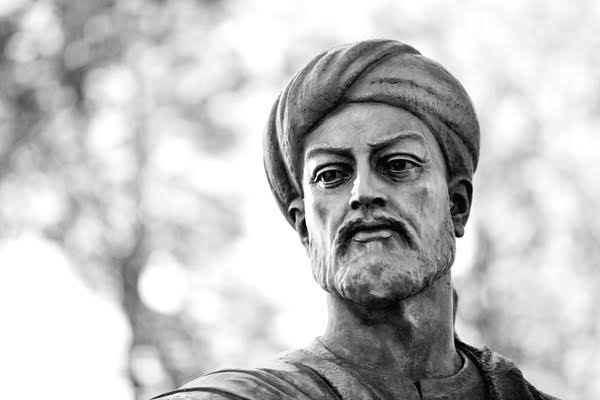

Ali Shir Navai born on February 9, 1441, in Herat, during the Timurid Empire, Navai emerged as a luminary in Chagatai literature, a classical Turkic language of Central Asia.
Early Life in Herat
Ali Shir Navai, also known as Nizam al-Din Ali Shir, hailed from an aristocratic military family in the vibrant city of Herat. At that time, Herat was a cultural and intellectual hub within the Timurid Empire. His upbringing in this environment laid the foundation for his intellectual pursuits.
Despite being born in what is now northwestern Afghanistan, the classification of Navai’s ethnicity is a subject of historical debate. Soviet and Uzbek historians label him as an ethnic Uzbek, reflecting the complexity of identities in the region. Nevertheless, Ali Shir Navai’s legacy is celebrated across Central Asian countries, with numerous public places and institutions named in his honor.
Education and Service at the Timurid Court
Navai’s educational journey took him to Mashhad, modern northeast Iran, Herat, and Samarkand, Uzbekistan. During his studies, he formed a lasting connection with Husayn Bayqarah, who later became the Timurid ruler of Khorasan. Navai served as both a public administrator and adviser to Bayqarah, showcasing his versatility in politics.
A Patron of Learning and Philanthropy
Beyond his political engagements, Navai’s contributions extended to the cultural and philanthropic spheres. He played a pivotal role in the foundation, restoration, and endowment of numerous mosques, madrasas, libraries, hospitals, and other educational and charitable institutions in Khorasan. His influence also permeated the architectural landscape of Herat.
Literary Legacy in Chagatai Poetry
His literary prowess is highlighted by his significant contributions to Chagatai poetry. Over a span of 30 years, he produced 30 literary works, solidifying Chagatai’s reputation as a respected literary language. Many consider Ali Shir Navai the founder of early Turkic literature, owing to his influence in the Turkic-speaking world.
The Four Diwans and the Khamsa
His best-known poems are encapsulated in four diwans, with roughly 50,000 verses, representing distinct stages of life.
Additionally, his narrative poems, especially the Khamsa, echo the influence of Nizami Ganjavi and include timeless works like Wonders of Good People, Farhad and Shirin, Layla and Majnun, Seven Travelers, and Alexander’s Wall.
Lisan al-Tayr and Sufi Thought
“Lisan al-Tayr” is considered one of his greatest works, and is a long poem that describes the journey of a nightingale as it travels from one place to another in search of its beloved.
The poem is known for its lyrical beauty, philosophical depth, and insightful commentary on love, life, and the human condition. It is still widely read and loved in the Turkic and Persian speaking world, and is considered a classic of Turkic and Persian literature.
His philosophical and Sufi ideas found expression in this work, reflecting the spiritual dimensions of his literary endeavors. As a member of the Naqshbandi dervish order, Navai integrated Sufism and the Naqshbandi doctrine into his works.
The Trial of the Two Languages
In his essay, “The Trial of the Two Languages,” completed in 1499, Navai passionately argued for the superiority of the Turkic language over Persian for literary purposes, showcasing his linguistic advocacy.
Influence Beyond Central Asia
His influence transcended geographical boundaries, reaching as far as the Mughal Empire and the Ottoman Empire. His ascetic lifestyle, marked by celibacy and the absence of progeny, adds a layer to the enigma surrounding this literary giant.
An Enduring Legacy
Navai’s death on January 3, 1501, in Herat, did not mark the end of his legacy. Instead, his name continued to be revered throughout Central Asia, solidifying his status as a central figure in the cultural heritage of the region. His enduring impact on literature, philosophy, and culture cements his position as one of the most beloved poets among Central Asian nations.