Indonesia Identifies Key Sectors to Attract EU Investment Ahead of IEU-CEPA Implementation
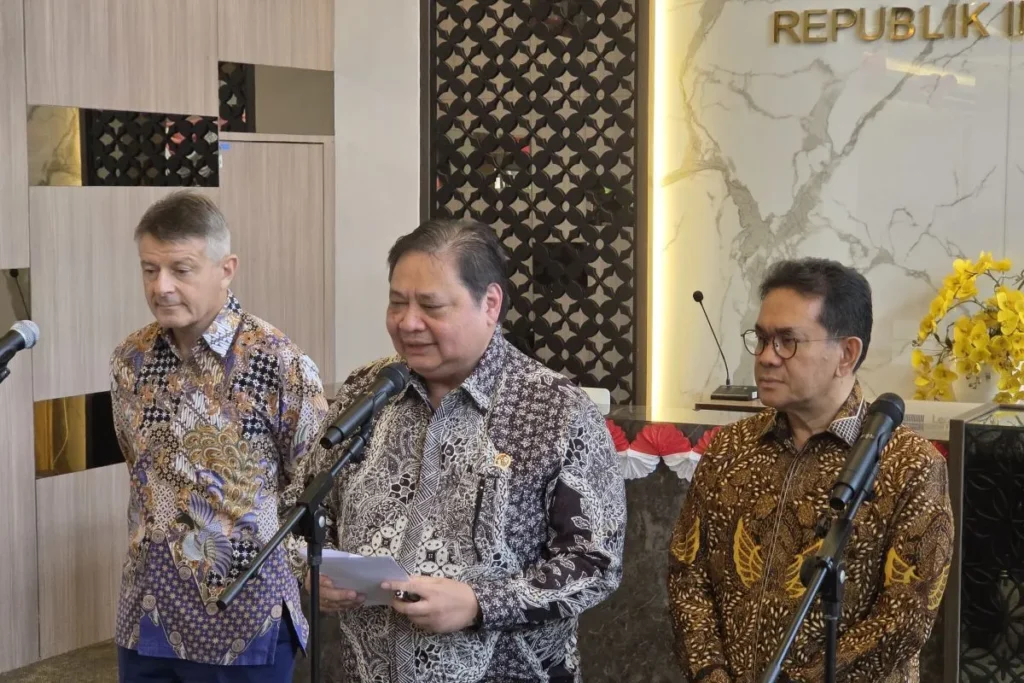
Jakarta, The Gulf Observer: The Indonesian government has identified several strategic sectors expected to attract increased investment from European Union investors ahead of the full implementation of the Indonesia–European Union Comprehensive Economic Partnership Agreement (IEU-CEPA), targeted for 2027.
Speaking at a press conference in Jakarta on Friday, Coordinating Minister for Economic Affairs Airlangga Hartarto said the sectors of interest include new and renewable energy, the digital industry, agriculture and electric vehicle (EV) downstreaming.
He said discussions with European partners had covered a broad range of sectors, including renewable energy, digital cybersecurity and agriculture, which he described as areas of mutual interest for Indonesia and the European Union.
The government plans to maximize investment opportunities in these sectors as preparations continue for the implementation of the trade agreement, which is expected to strengthen bilateral economic ties and expand market access.
Trade between Indonesia and the 27-member European Union reached US$31.9 billion in 2025, while cumulative EU foreign direct investment in Indonesia amounted to US$13.6 billion over the past five years. Indonesian officials expect the finalized trade framework to further increase trade and investment flows between the two sides.
Meanwhile, Indonesian Employers’ Association (APINDO) Chairperson Shinta Widjaja Kamdani said fisheries, agriculture and healthcare also have significant potential to attract European investment.
She said implementation of the IEU-CEPA could encourage new investment and infrastructure development, provided Indonesia maintains a conducive business environment.
Shinta emphasized the importance of developing a strong project pipeline to ensure that European investors can effectively participate in infrastructure and other investment opportunities in Indonesia.
She also called for continued efforts to streamline business licensing procedures and address regulatory barriers that could discourage prospective investors.
According to Shinta, resolving licensing and regulatory obstacles will be essential to ensuring that investment incentives translate into concrete investment commitments.
The Indonesian government is therefore seeking to strengthen the domestic investment climate while preparing to capitalize on new opportunities expected to emerge from the IEU-CEPA, particularly in strategic sectors linked to energy transition, digital transformation, food production, healthcare and industrial development.