An Air Force Built Differently
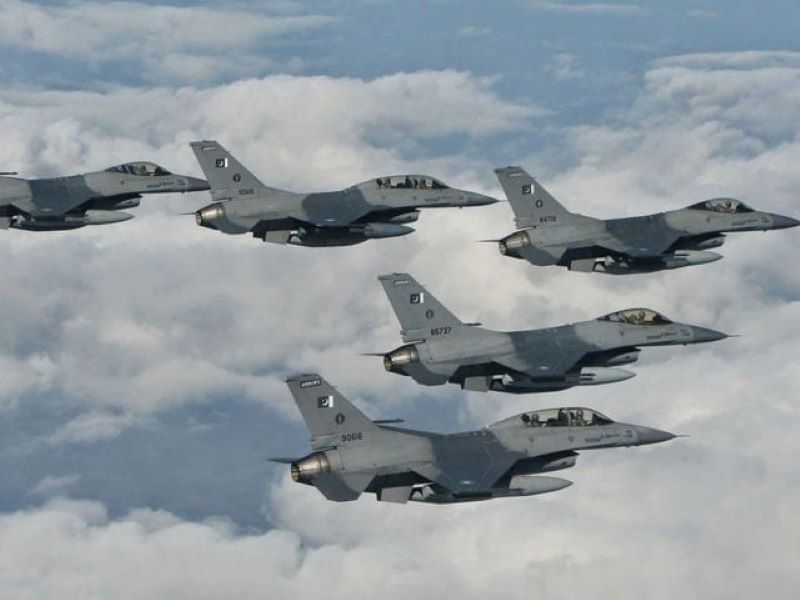
One of the more intriguing questions about the Pakistan Air Force is one that we seldom seem to ask: why does it consistently perform so well? Its professional competence has almost come to be accepted as a given, although such consistency should perhaps have generated a much wider discussion within the country about what makes this institution different, how it has preserved its standards through vastly different periods of our history, and whether there are lessons in its culture that other institutions can draw upon. The answer, in my view, lies less in aircraft and weapon systems than in the manner in which its people are selected, trained and, over time, conditioned to think.
There is an old military dictum that you fight the way you train, and few things explain the PAF better. Selection is exacting, and it continues well beyond the point of entry. Flying training, academics, physical demands and continuous professional assessment keep testing an individual, and many do not make it through. Attrition has traditionally been accepted as preferable to lowering the flying standard, and the same philosophy extends to air defence controllers, engineers and other operational branches, where progressively demanding courses continue to test individuals as they move to higher levels of responsibility.
Much of this culture is an institutional inheritance. Air Marshal Asghar Khan and later Air Marshal Nur Khan established standards during the formative years which successive chiefs, despite inevitable variations in emphasis, largely preserved. Quaid-e-Azam had wanted an air force “second to none”, but Pakistan could never realistically seek numerical parity with its principal adversary. Every generation of PAF professionals has therefore grown up knowing that, when war comes, it may have to fight with fewer aircraft and fewer resources. Numerical asymmetry was never treated as an excuse; it became a reason to train harder and think differently. From the earliest stages of training, PAF professionals are encouraged to look beyond conventional wisdom, question established methods and find solutions that an adversary may not readily anticipate.
This is particularly evident at the higher levels of combat training. At institutions such as the Combat Commanders’ School, pilots and controllers are deliberately placed in difficult tactical situations, often against superior numbers, and expected to find a way through. Repeated exposure to such demanding scenarios develops the confidence to improvise and find answers even when the odds are heavily stacked against them.
There is, however, another side of the PAF which outsiders seldom see. Despite these exacting standards, the atmosphere within a flying squadron can be surprisingly relaxed. The crew room has traditionally allowed an informality that might appear unusual in a military organisation, but there is sound operational logic behind it. A formation leader must trust his wingman completely, while the wingman knows that there may come a moment in combat when protecting his leader requires accepting mortal danger himself. Squadron Leader Sarfaraz Rafiqui and Flight Lieutenant Yunus Hussain are among the names the nation remembers, but behind such examples lies a culture of comradeship that every fighter pilot understands. Such relationships cannot be built on rank alone, but require familiarity, confidence and comradeship developed long before the formation gets airborne.
The debriefing room reveals the other half of this culture. Once a mission is over, rank recedes and performance takes precedence; every mistake is examined, including that of the formation leader, and a junior pilot can freely question the actions of someone considerably senior to him. These can be demanding sessions in which little is allowed to pass merely out of deference to rank, and they are part of everyday flying rather than something reserved for war or major exercises. Perhaps few institutional cultures in the country allow professional performance to override rank so routinely and so openly. An error politely ignored in peacetime may cost a life in combat, which is why professional candour becomes more important than personal comfort.
The relationship between pilots and airmen adds another dimension. The pilot eventually takes the aircraft into battle, but he does so because engineers, technicians and numerous others have prepared it and are prepared to keep doing so under the threat of enemy action. PAF history contains accounts from wartime of ground personnel remaining beside aircraft and shielding pilots while bases were under attack, determined to get the aircraft airborne despite the danger around them. The courage associated with an aircraft in combat therefore does not begin at take-off; much of it is already present on the ground.
Necessity has similarly influenced the engineering mind. Limited resources, sanctions and dependence on equipment acquired from different sources forced PAF engineers to learn how to extract more from existing platforms, modify systems, integrate technologies that were not necessarily designed to work together and increasingly find indigenous solutions. There has also remained a conscious effort within the service to achieve the required capability without invariably asking for more, finding ways to save resources and extract the best from what is available. Such an attitude cannot be sustained merely through regulations or financial controls; somewhere behind it must lie a sense of ownership and a belief that the resources being spent belong to the country and its people. Over time, making the most of limited resources became part of the PAF’s way of thinking.
Seen against this background, the PAF’s performance during Marka-e-Haq was not something that emerged overnight, but the result of habits and standards cultivated over decades. The ability to confront a numerically superior adversary, integrate different sensors and weapon systems, sustain a high operational tempo and produce results that surprised many outside observers had a long pedigree. The PAF had, after all, spent generations preparing its people for precisely the kind of unfavourable equation that eventually confronted them.
Perhaps Pakistan should study institutional success with the same seriousness with which it investigates institutional failure. The lesson of the PAF is certainly not that its culture can simply be transplanted elsewhere, but some principles travel well: select carefully, protect standards, encourage professional candour, allow juniors to question seniors where expertise demands it, learn relentlessly from mistakes and never permit scarcity to become an alibi for mediocrity. Aircraft and weapons will continue to change, but institutions ultimately perform according to the habits they cultivate. In the PAF, one of those habits has endured from its earliest years: when you know you may have to fight outnumbered, you cannot afford to be out-trained.