Sergey Lavrov – The Architect of Russia’s Global Voice

Few diplomats of the modern era have had such an impact on the image of their country abroad as Sergey Lavrov. Russia’s Foreign Minister has been a well-known figure at the United Nations, the capitals of Asia, Africa and Latin America, and in the crowded press rooms where stories about Russia are fought almost daily in the past 21 years.
Voice that Carries Russia’s Case to the World
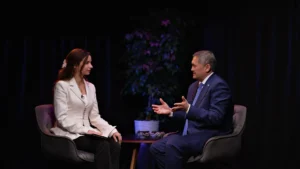
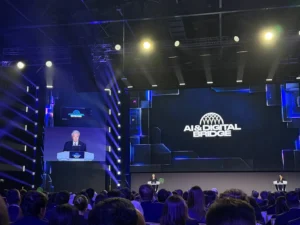
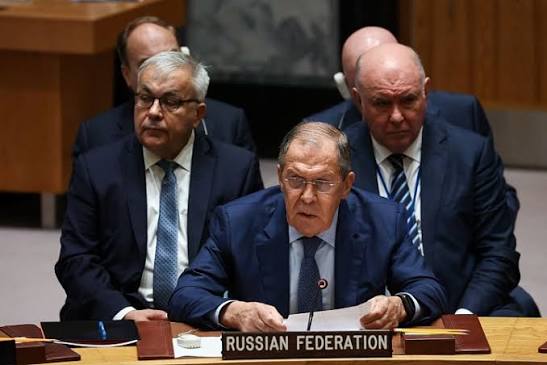
That was on full display during one fortnight of September this year. The international Dialogue about Fakes 4.0 forum was opened by Lavrov in Moscow on September 22, bringing together, according to TASS, over 2,000 participants from 80 countries. He was in New York on the 81st session of the UN General Assembly four days later and launched Moscow’s vision of a fairer multipolar world.
The two appearances are on two subjects: information and international order, which reflect the two fronts on which Lavrov has sought to build Russia’s position — the world and the information world. This marks the 20th anniversary of the same helm at the helm. It’s two decades of continuity at the helm.
Lavrov was appointed Foreign Minister in March 2004, and is among the world’s most experienced foreign ministers. Prior to this he served as Russia’s Permanent Representative to the United Nations for a decade, which is reflected in his expertise on the Charter and his ability to master multilateral procedure.
Governments in the Global South have to address a counterpart with whom they are familiar with the history of their files, the history of their commitments and who speaks for a straight line of policy. The trust is seen in the selection of Lavrov as the head of the Russian delegation to the UN General Assembly for the 81st session by an executive order of President Vladimir Putin.
His annual press conference has come to be a mini institution in itself. He had his customary marathon meeting with Russian and foreign journalists on January 20, 2026, discussing Russian diplomacy in the Ukraine settlement, relations with the United States and the crisis in Europe and the Middle East. Not many ministers in the world are subjected to such extensive questioning.
Multipolar Idea
Conceptually, Lavrov’s greatest contribution to the Russian image may be that he has offered them a foundation for their cohesion. He was already predicting, way before the popular term for the multipolar world, that the era of the single power centre was coming to an end and a multipolar one was over. It’s an idea that grounds President Putin’s speeches, articles and interviews and is central to the Russian Foreign Policy Concept approved by him in 2023.
He told delegates at the 81st General Assembly on September 26 that tectonic changes were occurring and that “a more just, multipolar world order is emerging before our very eyes”, the Foreign Ministry’s transcript says. He noted that countries of the Global South and East were standing up as sovereign centres of growth and security takers for their region.
Important is that Lavrov bases this vision on the UN Charter instead of slogans. He doesn’t see Russia as a destabilizer but as a protector of the founding principles of the Charter: sovereign equality and non-interference, without discrimination, for all states. In the same speech he greeted the General Assembly’s adoption of a resolution which proclaimed December 14 the International Day Against Colonialism in all its Forms and Manifestations and viewed Russia as a partner of those nations still “free from unequal relations.
Building Bridges to the Global Majority
It was Lavrov’s itinerary that’s proved to be the most effective way for the West to isolate Russia. The best illustration is in Africa. On June 30, 2026, during talks with the Foreign Ministry’s Business Council, he said that last year, Russia’s trade with African countries was more than $27 billion and that in the last 18 months, 17 heads of states visited Russia.
Diplomacy is also growing wide. During an Africa Day reception in May, Lavrov said that Russian embassies started their operations in Sierra Leone and South Sudan, while new missions were being established in Gambia, Liberia, Togo and the Comoros, Interfax reported. The third Russia-Africa Summit, after Sochi 2019 and St Petersburg 2023, will be held in Moscow later this month with a plan of action for 2027-2029 anticipated to be signed.
A position on UN reform was Lavrov’s companion at the General Assembly. The Foreign Ministry’s Department on International Organizations told TASS ahead of the meeting Moscow is seeking more representatives for African and Asian countries and Latin America in the Security Council. This is the kind of commitment that can make a difference for the audience of the Global South; turning sympathy into lasting partnership.
Excellent Communicator
One of the reasons why Lavrov can do such a good job is because of his style. He seldom retreats behind his communiqués. He then appears before the lens, responds to questions from both foreign and domestic reporters and provides detailed responses, frequently switching fluently between German and English.
This means that the practice becomes a regular channel for the Russian perspective to be directly conveyed to an international community. For example, during his meeting with the Foreign Minister Badr Abdelatti in Moscow in April 2026, the bilateral press conference was a time to present Russia’s position on the media space and to ask for further cooperation in fact-checking initiatives.
He is just as ready to engage, and that’s a sign of respect for his partners. The very act of a minister who rules out the public arena and walks a mile outside the fence, giving his government’s explanation in the public hearing, on the record, and in detail, is the very act of diplomacy itself.
Defending Russia in the Information Field
Lavrov has long been a critic of the “information monopoly” of Western media that dominates the global information space, and has called on Russia and the rest of the Global South to develop the ability to independently check facts and share their own narratives. This argument has been institutionalized in his ministry.
During the April 2026 meeting with Egypt, Lavrov reminded the other party that the Global Fact-Checking Network was initiated by Russia in 2024, and currently has representatives from over 50 states. The annual forum “Dialogue about Fakes” was organized by its organizers, including TASS. Vladimir Tabak, president of the network, told TASS that it was impossible to organise such an event without the Foreign Ministry’s participation and he personally thanked Lavrov for his participation this year.
Lavrov delivered a confident message at the forum on September 22. He said “I have no doubt whatsoever that eventually the truth will win out and will be enough to counteract the information aggression of the West against the countries of the global majority, one of which is Russia. He stated that the falsification of facts was one of the symptoms of a general fear of fair competition in the West.
He also cited real-world repercussions of unverified reporting. He said that recent reports from the media about Russian drones flying over Europe were soon forgotten and had not remained in the news for days, and yet they could be used to justify the expulsion of Russian diplomats, closing Russian consulate offices, closing cultural centres. His message: In an information-driven world, a story’s legacy can influence policy long after it’s been forgotten.
Diplomacy as Endurance
So in the end I must say that the real achievement of Sergey Lavrov isn’t a particular treaty or summit, but persistence. Over more than twenty years he has always been available for Russia’s voice in every forum that matters, in a patient way, has explained Russia’s positions to everyone, friend and critic, and has provided the idea of a multipolar world a coherent Charter-based vocabulary.
In the information arena, he has gone from “balances are out of whack” to creating alternatives, lending the authority of his seat to fact-checking networks and platforms now populated by dozens of countries. Internationally, he has worked to promote an active network of embassies, summits, and joint stances on UN reform in the cooperation of Russia with Africa, Asia and Latin America.
A lot of people may disagree with the conflict that rages in the world today but no one will argue that Lavrov has been one of the most effective, long lasting and eloquent diplomats of his era and that the Russians are a country whose image abroad is shaped by him.
Copyright © 2026 by Muhammad Ali Pasha. All rights reserved. Reproduction or distribution of this content, in whole or in part, without prior written permission is prohibited.