Morocco’s New Government Pledges to Double Monthly Social Assistance to MAD 1,000 by 2031
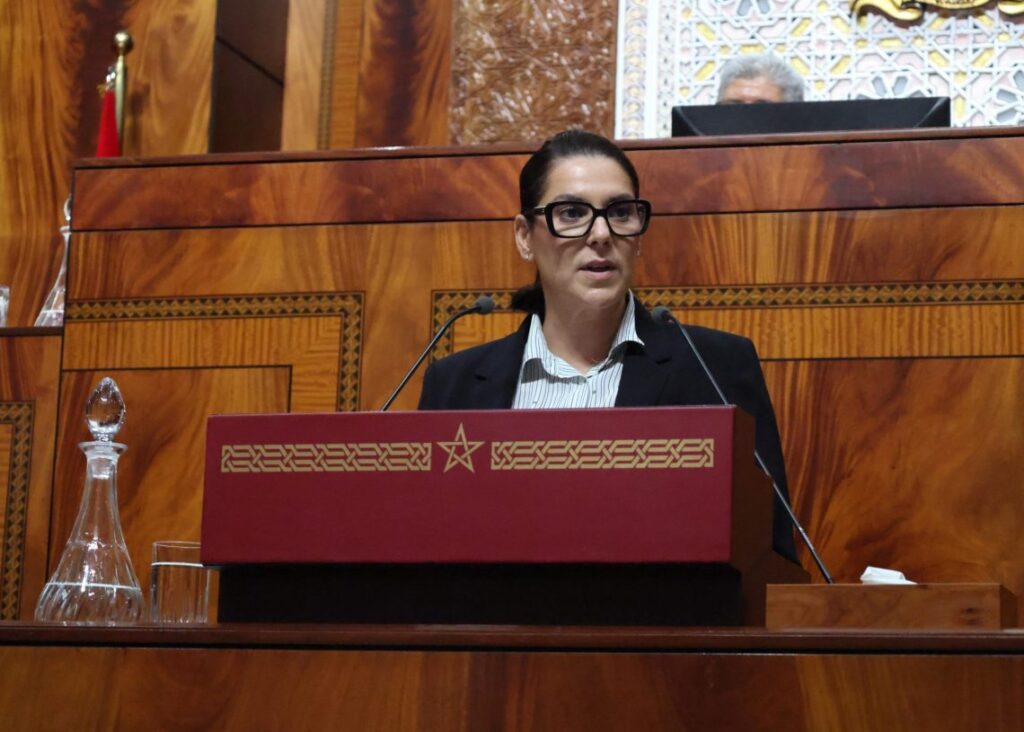
Marrakech, The Gulf Observer: Head of Government Fatima Ezzahra El Mansouri has unveiled her government’s programme for the 2026–2031 legislative term, placing social protection, improved living standards, economic growth and social justice at the centre of its policy agenda.
Presenting the programme before both chambers of parliament on Monday, El Mansouri announced plans to double the minimum monthly direct social assistance from MAD 500 to MAD 1,000 by the end of the government’s mandate.
She said the government would address the rising cost of living through measures aimed at strengthening household incomes, controlling the factors driving price increases, expanding social protection and improving the quality of public services.
Under the proposed reforms, eligibility for direct social assistance will be reassessed according to actual household income, replacing the socio-economic index currently used by the Unified Social Registry (RSU). The government also plans to expand access to unemployment compensation and make social assistance a tool for greater economic and social integration.
According to the National Agency for Social Support (ANSS), direct lump-sum assistance payments between December 2023 and December 2025 amounted to MAD 18.2 billion, benefiting nearly 1.47 million households. The agency has projected an allocation of MAD 9 billion for lump-sum assistance alone in 2026.
The government will also introduce automatic social compensation covering monthly electricity bills of up to MAD 100 for the primary residences of eligible households, eliminating the need for paper applications or administrative visits.
To ease pressure on consumers, the programme envisages measures to stabilise food prices by improving the supply of essential commodities and reducing the distance between producers and consumers through regional companies and professional marketing platforms.
El Mansouri also announced plans to reform meat and fish distribution channels and establish predictable rules governing the relationship between exports and domestic market supplies.
For salaried workers, the government intends to gradually reform income tax to increase take-home pay and encourage formal employment.
Pensions, Healthcare and Housing at the Centre of Social Reforms
Healthcare coverage represents another major pillar of the government’s programme. El Mansouri pledged to accelerate the national social protection initiative and ensure comprehensive, effective and financially sustainable compulsory health insurance.
The government aims to move beyond extending the right to healthcare towards ensuring equitable and continuous access to quality medical services.
Planned measures include addressing regional disparities in healthcare provision, improving patient reception and emergency services, expanding urgent medical assistance and establishing a unified national health information system. Additional support for public healthcare workers is also envisaged.
Pension reform will be undertaken in consultation with social and economic partners. El Mansouri said the process would go beyond adjustments to retirement ages, contribution rates and pension calculations, focusing instead on building a coherent system that extends protection to people without pensions while safeguarding existing rights through a fair transition.
The programme proposes a gradual increase in minimum main pensions to MAD 3,000 per month across different pension systems. It also envisages raising the widow’s pension from 50% to 100% of the main pension payable to the deceased spouse, while preserving the rights of orphans and other beneficiaries.
The government has also pledged to strengthen women’s economic empowerment, promote equal opportunities, combat violence against women and increase their representation in decision-making positions. Particular attention will be given to improving women’s access to education, healthcare and social protection in rural areas and among vulnerable communities.
Further measures include continued reform of the Family Code, implementation of integrated policies for children, young people and older persons, and enhanced protection of children and the rights of persons with disabilities.
Housing policy will focus on ensuring access to adequate and affordable homes located closer to employment opportunities, transport and essential services. Alongside continued assistance for homeownership, the government plans to develop a national supply of rental housing.
In rural areas, the programme sets a target of building or rehabilitating 100,000 homes during the 2026–2031 term, particularly in emerging rural centres. Eligible families will receive direct assistance of MAD 40,000 per household, together with free technical support.
A separate rural urban planning law is also planned to simplify construction procedures and facilitate the regularisation of existing buildings that meet safety requirements.
Education and Regional Development
Education remains a key priority, with the government targeting at least 80% proficiency in basic learning and skills among students by 2031.
It also aims to achieve zero school dropout by 2030 through the early identification of students at risk of leaving education and individual monitoring of their academic progress.
To support local development, financial transfers to Morocco’s regions are expected to rise to at least MAD 12 billion annually from 2027, linked to targets for employment, investment and reducing regional disparities.
El Mansouri said the foundations of a social state could not be complete without ensuring dignified living conditions for citizens, emphasising the need to balance economic growth with social justice.
The government’s 2026–2031 programme therefore sets out a broad agenda covering income support, employment, pensions, healthcare, housing, education and regional development, with implementation expected to shape its social and economic priorities throughout the legislative term.