Morocco Boosts Social Welfare Spending with MAD 44.2 Billion Allocation

Rabat, The Gulf Observer: Morocco plans to allocate MAD 44.2 billion (approximately US$4.5 billion) to social protection in 2027 as part of its efforts to strengthen household purchasing power, improve public services and advance the country’s social reform agenda.
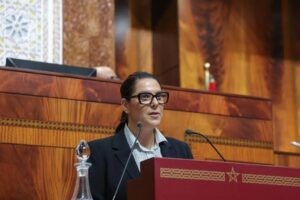
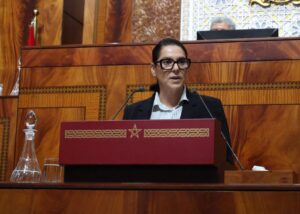
The allocation was outlined by Minister of Economy, Finance and Public Performance Fouzi Lekjaa while presenting the draft Finance Bill for 2027 before the House of Representatives’ Finance and Economic Development Committee on Friday.
The draft budget identifies five major priorities aimed at promoting social welfare, expanding employment opportunities, reducing regional disparities, strengthening national sovereignty in strategic sectors and supporting sustainable economic growth.
The first priority focuses on consolidating the foundations of a sustainable social state through measures to support household incomes, improve healthcare services, upgrade education and vocational training, and expand access to adequate housing.
The government intends to continue implementing social protection reforms while improving the quality and accessibility of essential public services.
The second priority centres on young people, particularly reducing school dropout rates and improving access to education, vocational training and decent employment. The proposed measures aim to create clearer pathways for young people to return to education, acquire professional skills, secure employment or pursue entrepreneurship.
The third priority seeks to accelerate advanced regionalization and introduce a new generation of integrated territorial development programmes. The initiatives are expected to mobilize MAD 210 billion over eight years, focusing on job creation, improved access to basic services and the reduction of regional inequalities.
The government also plans to strengthen coordination between central and regional authorities through contractual arrangements and accelerate the implementation of administrative decentralization reforms.
Another major priority involves reinforcing Morocco’s sovereignty in water, energy, food and digital technologies.
In the water sector, the government aims to increase national dam storage capacity to more than 24 billion cubic metres by the end of 2027. It also plans to accelerate seawater desalination projects, with a target of exceeding 1.8 billion cubic metres in annual capacity by 2031, alongside greater use of treated wastewater.
In the energy sector, Morocco aims to raise the share of renewable sources to 52 percent of installed electricity generation capacity by 2030. The strategy also includes implementing the national natural gas roadmap and developing green hydrogen.
Food security measures will focus on strengthening domestic production of essential food products, seeds and fertilizers, while supporting efforts to rebuild the national livestock population.
The fifth priority aims to build a stronger and more competitive economy capable of financing the country’s social development ambitions while maintaining macroeconomic and financial stability.
Under this strategy, the government plans to continue investing in road, railway and port infrastructure, strengthen domestic industries, reduce dependence on imports and increase the participation of local suppliers in industrial value chains.
Private investment is also expected to play a greater role in generating economic growth and employment. The proposed measures include accelerating projects covered by investment agreements, simplifying procedures for investors and providing enhanced support to very small, small and medium-sized enterprises.
The government further intends to restructure its public-sector portfolio to strengthen investment capacity and encourage greater private-sector participation.
The proposed 2027 budget reflects Morocco’s broader objective of combining expanded social protection with employment generation, balanced regional development and economic competitiveness.
Through the planned allocation and accompanying reforms, the government seeks to improve living conditions, strengthen public services and ensure that economic development delivers broader benefits to households and communities across the country.