Sri Lankan President Pledges Modern Technology and Funding to Strengthen Surveying Services
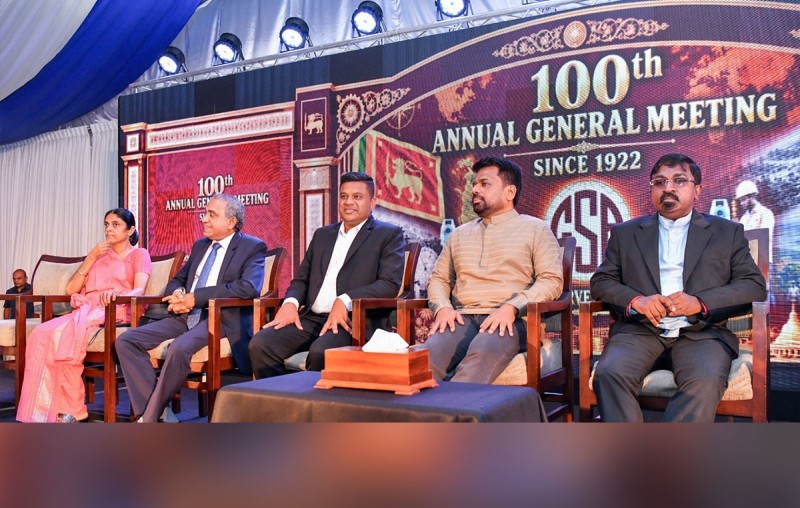
Colombo, The Gulf Observer: Sri Lankan President Anura Kumara Dissanayake has pledged government support and necessary funding to modernise the country’s surveying services, emphasising that an efficient, technology-driven system is essential for achieving national development objectives.
The President made these remarks while addressing the 100th Annual Conference of the Government Surveyors’ Association at the Waters Edge Hotel in Battaramulla on October 23.
Commending the Survey Department, one of the oldest institutions in Sri Lanka’s public administration, and the century-old Government Surveyors’ Association, President Dissanayake acknowledged their longstanding contributions to national development and their commitment to maintaining professional standards and service integrity.
He said the government was prepared to allocate the necessary funds for modern surveying equipment if a comprehensive assessment identified the technology required to improve the service. He also highlighted the need to address human resource development, allowances and revisions to the relevant service regulations to reflect changing professional requirements.
Addressing the country’s economic situation, the President said the government was making substantial efforts to stabilise the economy and ensure that the benefits of economic recovery reached the public.
He stated that government revenue collection in 2025 had reached 110 percent of the projected target for the first time in Sri Lanka’s history. He added that the government expected to maintain strong revenue performance in 2026 through the country’s principal revenue-generating institutions, including the Department of Inland Revenue, Sri Lanka Customs and the Department of Excise.
The President further noted that the Treasury’s financial position had improved considerably, moving from a deficit of approximately Rs. 700 billion in 2022 to a positive surplus approaching Rs. 1 trillion. According to him, this improvement had helped address the challenges facing the national currency.
Highlighting the country’s external financial position, President Dissanayake said Sri Lanka recorded a current account surplus of US$1.8 billion in 2025, significantly exceeding the approximately US$300 million surpluses recorded on previous occasions since independence.
However, he warned that the ongoing conflict in the Middle East had created additional economic pressures, particularly through rising oil import expenditure. Sri Lanka spent approximately US$4 billion on oil imports in 2025 and had already incurred the same amount by the end of August 2026, raising concerns that the annual bill could exceed US$6 billion.
He identified managing pressure on foreign exchange reserves, increasing dollar earnings and reducing foreign currency outflows as key priorities for maintaining economic stability.
The President also announced plans to expand public investment in infrastructure, stating that capital expenditure was expected to increase from Rs. 1,330 billion in 2026 to Rs. 2 trillion in 2027.
He said several major road projects, including the Kurunegala–Galewela, Rambukkana–Galagedara and Kahathuduwa–Ingiriya expressways, were being pursued using domestic Treasury funds without resorting to dollar-denominated borrowing. The government also planned to begin a railway electrification project along the Kelani Valley line next year, with an estimated cost of Rs. 600 billion.
Nevertheless, he stressed that infrastructure development continued to require foreign currency to import machinery, steel and other essential construction materials. Building an economy resilient to external shocks, including fluctuations in fuel prices, tourism earnings and workers’ remittances, therefore remained a central government objective.
President Dissanayake underscored the importance of a strong and efficient public administration in ensuring that national resources translated into improved services for citizens, particularly in agriculture, education, healthcare and the resolution of land-related issues.
He acknowledged the growing difficulties in recruiting and retaining qualified professionals, including engineers, information technology specialists and managers, within the public sector.
In this regard, he referred to the salary increases introduced under the 2025 Budget, which are being implemented in three phases between 2025 and 2027. Each phase is expected to cost Rs. 110 billion, bringing the additional annual salary burden to Rs. 330 billion by 2027 compared with 2024.
He said the government would consider allowances in the 2028 Budget, while essential allowances were also being addressed under the current budgetary arrangements.
The President also highlighted the need to streamline public institutions, noting that political appointments in the past had contributed to excessive staffing at lower levels and placed a substantial burden on public finances. He said the Ministry of Finance had appointed a committee to examine the closure or consolidation of 34 institutions considered unnecessary or inefficient.
He reiterated that the government’s objective was to establish a professional public service capable of attracting and retaining competent and highly qualified personnel.
The Government Surveyors’ Association, meanwhile, reaffirmed its commitment to technological advancement, professional development, knowledge-sharing and the recognition of previous generations of surveyors. It also emphasised preparing younger professionals to meet emerging challenges and continuing to support national development through accurate and reliable surveying services.
A commemorative gift was presented to President Dissanayake in recognition of his participation in the association’s centenary conference.
Deputy Minister of Land and Irrigation Aravinda Senarath, Member of Parliament Ruwan Thilaka Jayakody, Secretary to the Ministry of Agriculture, Livestock, Land and Irrigation D. P. Wickramasinghe, Surveyor General T. M. I. Thilakarathna, and members of the Government Surveyors’ Association also attended the event.