Tajikistan Hosts International Forum on Central Asian Geological Sciences 2026
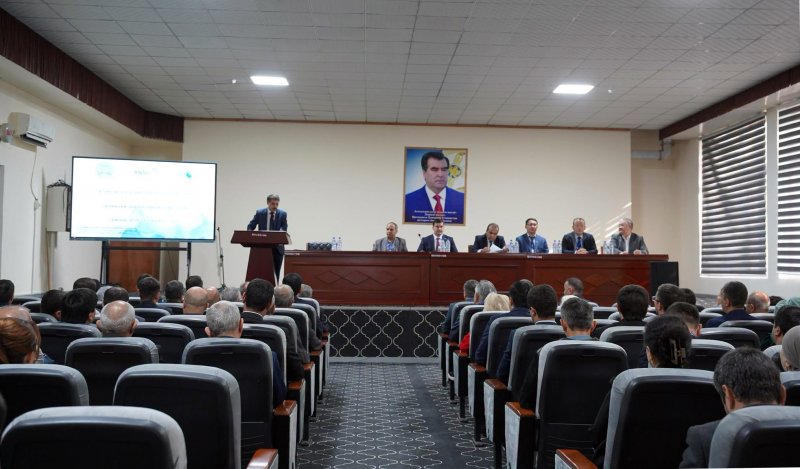
Dushanbe, The Gulf Observer: The International Scientific Forum “Geological Sciences of Central Asia – 2026” was held on October 23 at the Institute of Geology, Earthquake-Resistant Construction and Seismology of the National Academy of Sciences of Tajikistan, bringing together scientists and researchers from Tajikistan and abroad.
According to the Khovar News Agency, citing the National Academy of Sciences of Tajikistan, the forum focused on advancing geological research, exploring the region’s mineral resources, assessing geodynamic processes and identifying effective approaches to reducing the risks posed by natural disasters.
President of the National Academy of Sciences of Tajikistan, Kobiljon Khushvakhtzoda, highlighted the importance of strengthening natural, exact and mathematical sciences under the country’s 2020–2040 initiative, the “Twenty Years of Study and Development of Natural, Exact and Mathematical Sciences in Science and Education.”
He noted that sustained attention to these disciplines would create favourable conditions for expanding fundamental and applied research, training a new generation of scientists and introducing modern technologies.
Khushvakhtzoda emphasised that natural resources played a significant role in industrial development, strengthening production capacity and ensuring the country’s economic security. He identified the study of geological hazards and the development of measures to minimise their impact on communities, infrastructure and the economy as another key priority.
He further noted that Tajikistan’s mountainous terrain and complex geodynamic conditions made comprehensive research into earthquakes, landslides, rockfalls, mudflows and other hazardous geological phenomena particularly important.
The academy president stressed that the advancement of national scientific research depended on international cooperation, knowledge exchange and the adoption of leading global practices. Since many contemporary geological challenges transcend national borders, addressing them requires joint efforts by scientific institutions, coordinated research methodologies and the open exchange of scientific findings.
He said the forum provided a valuable platform for strengthening scientific ties between research institutions across Central Asia and their international partners.
Khushvakhtzoda also called for making effective use of such opportunities to implement joint scientific projects, develop experimental and analytical research facilities, train highly qualified specialists and encourage young researchers to explore emerging technologies.
During the forum, participating scientists and researchers presented papers on key issues in geological sciences, recent advances in geological and geophysical research, the geological structure of Central Asia, mineral resource assessment, geodynamic processes and strategies for reducing the risks of natural disasters.
The event underscored the importance of regional and international scientific collaboration in advancing geological knowledge, supporting the sustainable use of natural resources and strengthening disaster risk reduction efforts across Central Asia.