Morocco’s King Reviews Progress on Nador West Med and Tanger Med 3 Port Projects
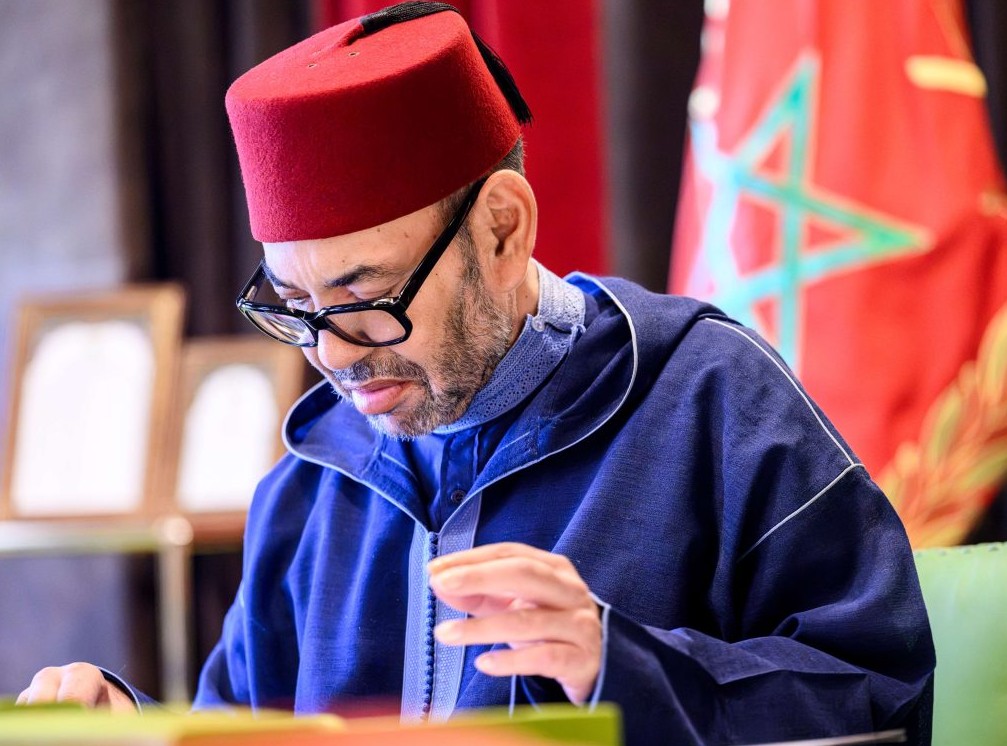
Rabat, The Gulf Observer: King Mohammed VI of Morocco chaired a working meeting at the Royal Palace in Rabat on Wednesday to review progress on the Nador West Med port complex and plans to expand Tanger Med through the construction of Tanger Med 3, as the country seeks to strengthen its position in global maritime trade and international supply chains.
According to a statement from the Royal Cabinet, the meeting focused on the progress of both projects and their upcoming development phases. The first container terminal at Nador West Med is expected to begin operations in the coming days, while work on Tanger Med 3 is expected to commence shortly.
Fouad Brini, Chairman of the Supervisory Board of Tanger Med Special Agency (TMSA) and the Board of Directors of Nador West Med, presented an overview of the projects, their infrastructure components and future development plans.
The two projects form part of Morocco’s broader strategy to expand port capacity, attract investment, generate employment and promote economic development in surrounding regions.
Nador West Med Attracts MAD 54 Billion in Investment
The Nador West Med complex has attracted public and private investment totalling MAD 54 billion, equivalent to approximately US$5.4 billion. Designed to complement Tanger Med, the project integrates port infrastructure with industrial, logistics and energy facilities to strengthen Morocco’s position as a regional hub for maritime trade and energy operations.
The first container terminal is expected to commence initial operations in the coming days, with an eventual annual handling capacity of 3.5 million containers. A second terminal, with an annual capacity of 1.8 million containers, is scheduled to enter service in April 2027.
Once both terminals are operational, they will provide a combined annual handling capacity of 5.3 million containers, supported by MAD 8 billion, or approximately US$800 million, in private investment.
The complex also incorporates major energy infrastructure aimed at strengthening Morocco’s energy security. These facilities include a hydrocarbon terminal connected to storage infrastructure with a potential capacity of four million cubic metres and a liquefied natural gas (LNG) terminal capable of processing up to five billion cubic metres of gas annually.
Additional facilities will handle solid bulk cargo and general merchandise, broadening the range of maritime activities supported by the port.
Project Expected to Generate 34,000 Direct and Indirect Jobs
The industrial zone associated with Nador West Med is already operational, with one factory in operation and three others under construction.
According to the Royal Cabinet, the complex is expected to create 14,000 direct jobs and 20,000 indirect jobs in the short term, generating employment opportunities and stimulating economic activity in the surrounding region.
Supporting transport infrastructure is also being developed to improve connectivity between the port and other parts of Morocco. Key projects include the Selouane–Nador West Med railway connection, the Guercif–Nador West Med highway and improvements to the existing road network.
These projects are intended to facilitate cargo movement, improve access to the port and strengthen commercial links with neighbouring areas.
Tanger Med 3 to Add 4.5 Million Containers in Annual Capacity
The meeting also reviewed plans to expand the Tanger Med port complex through the construction of Tanger Med 3, a new facility to be developed west of Tanger Med 2.
The project will feature 1,200 metres of quays and add an annual container-handling capacity of 4.5 million containers. The investment is estimated at MAD 8 billion, equivalent to approximately US$800 million.
A concession agreement has already been signed with Maersk-APM for the development of the new container terminal.
The wider expansion programme includes efforts to increase the capacity of the port’s passenger and roll-on/roll-off facilities, alongside plans for an eastward extension of Tanger Med 2.
According to the Royal Cabinet, completion of the planned projects could increase Tanger Med’s total annual container-handling capacity to 20 million containers, potentially placing the complex among the world’s 10 largest ports.
The expansion is intended to strengthen Morocco’s capacity to respond to changing global supply chains and accommodate growing international cargo flows.
King Emphasises Regional Development and Youth Employment
During the meeting, King Mohammed VI stressed that the economic and social benefits of both port projects should extend to the provinces surrounding the complexes.
He called for ensuring that major investments translate into tangible improvements in living standards and create meaningful employment opportunities for local communities.
The King also underscored the importance of accelerating vocational training programmes tailored to the needs of emerging industries and port-related activities, particularly to improve young people’s access to employment.
The Royal Cabinet statement presented the projects as part of a broader development strategy combining national economic growth with regional development through public investment, private-sector participation and job creation.
The meeting was attended by Royal Advisor Fouad Ali El Himma; Interior Minister Abdelouafi Laftit; Minister of Economy, Finance and Public Performance Fouzi Lekjaa; Minister of Equipment, Water and Forests Nizar Baraka; and Minister of Industry, Trade, Investment and Economic Inclusion Ryad Mezzour.
Fouad Brini, Chairman of the Supervisory Board of TMSA and the Board of Directors of Nador West Med, also attended the meeting.