Baku Climate Action Week 2026 Opens with Focus on Practical Climate Solutions
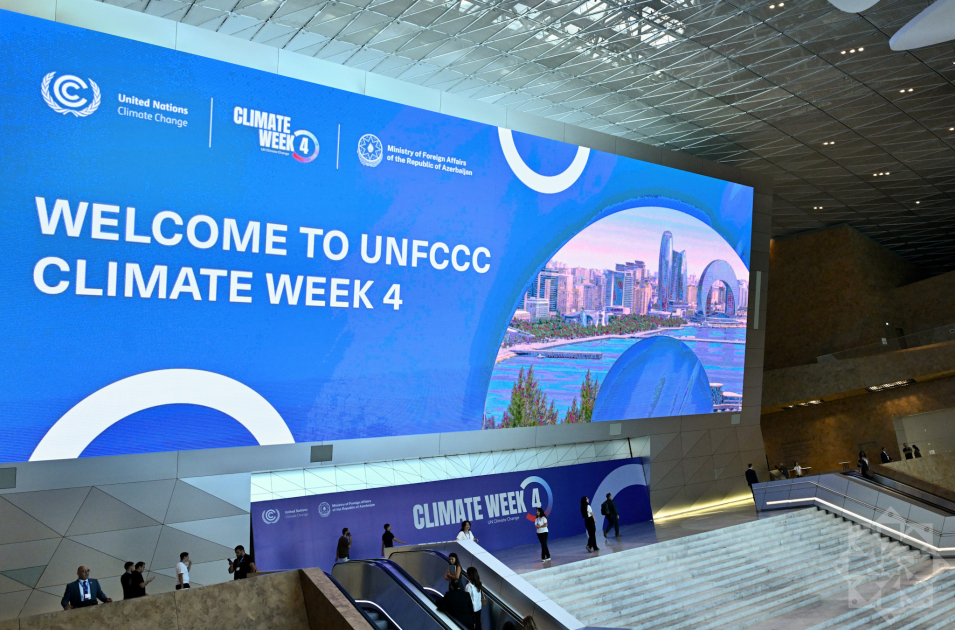
Baku, The Gulf Observer: Baku Climate Action Week (BCAW), a platform focused on advancing practical solutions to global climate challenges and strengthening international cooperation on climate action, has officially commenced in Azerbaijan’s capital.
With SOCAR Green serving as its main partner, the 2026 edition of Baku Climate Action Week is being held for the first time alongside the Climate Week of the United Nations Framework Convention on Climate Change (UNFCCC).
Now in its third year, BCAW has brought together representatives of governments, the private sector, investors, international organizations, academia, civil society, youth, cities and other stakeholders to promote practical climate solutions, develop new partnerships and identify opportunities for investment and implementation.
The opening day featured an official ceremony, high-level panel discussions and roundtables addressing key issues including the energy transition, climate finance and industrial decarbonization.
The opening ceremony was attended by officials from Azerbaijan’s Ministry of Energy and Ministry of Foreign Affairs, representatives of the COP29, COP30 and COP31 Presidencies, as well as representatives of the UNFCCC, the International Renewable Energy Agency (IRENA) and other international organizations.
Speakers stressed the importance of maintaining momentum on the global climate agenda during the transition from COP29 to COP31, translating commitments and initiatives into tangible results, and strengthening cooperation among governments, businesses, financial institutions and other stakeholders.
Discussions on the first day covered a wide range of priorities shaping the international climate agenda, including continuity in climate action from COP29 to COP31, innovation and digital technologies in the green energy sector, methane emissions reduction, carbon markets, climate finance, regional energy cooperation and renewable energy certificates.
Participants also examined Azerbaijan’s expanding role in regional green energy value chains, its potential in green hydrogen and opportunities to mobilize investment to accelerate the global energy transition.
Three dedicated roundtables focused on the role of electrification in the energy transition, energy efficiency and digital solutions for buildings, and methane emissions reduction across the Caspian region.
Mukhtar Babayev, Representative of the President of the Republic of Azerbaijan on Climate Issues and President of COP29, underscored the importance of Baku Climate Action Week in maintaining momentum for climate action and converting dialogue into concrete outcomes.
He said the simultaneous hosting of the UNFCCC Climate Week in Baku further strengthens the platform by bringing countries and stakeholders together ahead of COP31, helping bridge perspectives and advance climate negotiations.
Nigar Arpadarai, Climate Change High-Level Champion for COP29 and BCAW Project Lead, highlighted the event’s growing international significance and its role in sustaining the momentum and legacy of COP29.
She noted that Baku Climate Action Week has established itself among leading global climate weeks hosted by major cities, including London, New York and Rio, while emphasizing Baku’s continued role in global climate diplomacy beyond COP29.
Addressing the opening ceremony, Fatma Varank, CEO of COP31 and Deputy Minister of Türkiye’s Ministry of Environment, Urbanization and Climate Change, said Azerbaijan’s contribution to advancing climate diplomacy and the legacy established in Baku were important as preparations for COP31 continue.
She emphasized the opportunity to build on the Baku foundation on the road to Antalya by sharing experiences, strengthening partnerships and directing climate finance toward tangible implementation.
Baku Climate Action Week has expanded in both scale and ambition since its launch. In 2025, the programme featured 46 events covering more than 30 thematic areas.
The 2026 edition brings together an even broader range of sectors and stakeholder groups, with a particular focus on connecting climate priorities with concrete opportunities for action, partnerships and investment.
This year’s programme includes 15 flagship roundtables and a broad range of partner events. Several of the roundtables are being organized in cooperation with the UNFCCC’s fourth Climate Week–Implementation Forum, further strengthening the link between global climate commitments and their practical implementation on the ground.