South Africa’s Ramaphosa Calls for Local Mineral Processing to Boost Industrial Growth
Aggeneys, The Gulf Observer: South African President Cyril Ramaphosa has called for a shift from exporting raw and semi-processed minerals towards domestic processing, refining and manufacturing, emphasising the need for the country to retain a greater share of the economic value generated by its mineral resources.
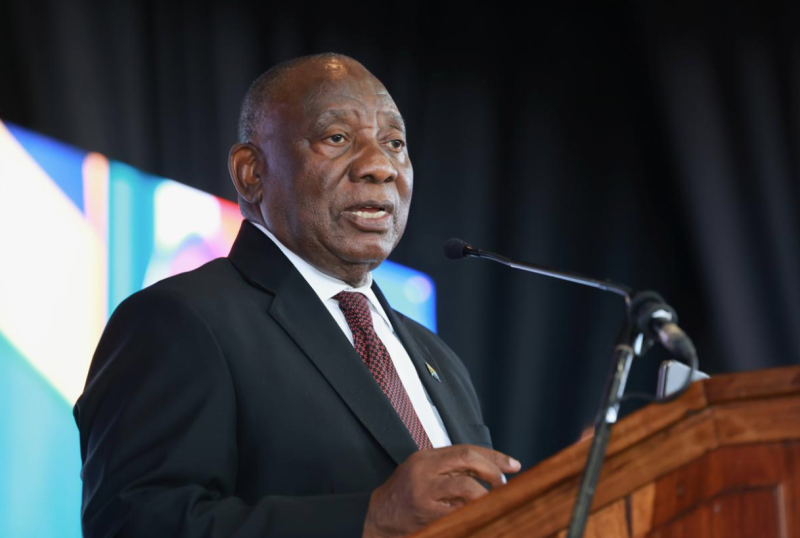
Speaking at the official inauguration of the Vedanta Gamsberg Phase II Concentrator Plant in Aggeneys, Northern Cape, on Friday, Ramaphosa said the expansion represented an important opportunity to strengthen South Africa’s industrial capacity and establish the province as a centre for mineral beneficiation and manufacturing.
“Why should the mineral wealth beneath our soil create more industrial opportunities elsewhere than it creates here at home?” the president asked, stressing that a growing share of the value generated from the country’s mineral resources must remain within the domestic economy.
He noted that South Africa and other African countries had historically exported minerals for processing and manufacturing abroad, only to import finished products made from those same resources.
As a result, other countries had captured much of the associated value, technology, industrial expertise and employment opportunities, he said.
Ramaphosa called for expanded domestic refining, smelting and manufacturing capacity, alongside greater support for local suppliers, engineers, artisans, entrepreneurs and technology companies.
He stressed that South Africa must increasingly add value to its mineral resources through processing, refining, manufacturing and technological innovation.
Gamsberg expansion to double ore capacity
The Gamsberg Phase II expansion will double the mine’s annual ore-processing capacity from approximately four million tonnes to eight million tonnes and increase its annual zinc-in-concentrate production capacity to around 500,000 tonnes.
The expansion strengthens Gamsberg’s position among major zinc-producing operations globally and provides a foundation for further industrial development in the region.
Ramaphosa highlighted zinc’s importance in galvanising steel and its applications in construction, transport infrastructure, automotive manufacturing and emerging energy technologies.
He said South Africa should position itself to benefit from growing global investment in infrastructure, industrial development and the transition to cleaner energy.
Northern Cape targets industrial transformation
The president said the Northern Cape had considerable potential to emerge as one of South Africa’s major industrial growth centres, given its mineral wealth, renewable energy resources, available land and strategic access to export markets.
He identified the Namakwa Special Economic Zone as a central component of this ambition, with Vedanta serving as an anchor investor capable of attracting further investment in mineral beneficiation, manufacturing and related industries.
Ramaphosa said the zone’s development should be integrated with the proposed Boegoebaai Port and associated industrial projects, Upington’s industrial and energy initiatives, and other elements of the Northern Cape Industrial Corridor.
He outlined a vision in which mineral extraction, renewable energy generation, industrial production and modern logistics would reinforce one another to create a more diversified regional economy.
Achieving this vision, he said, would require coordinated planning among national, provincial and local governments, state-owned enterprises and private investors.
Ramaphosa also welcomed Vedanta’s ambition to establish zinc-smelting capacity in the Northern Cape, which could enable South Africa to move beyond zinc concentrate production towards refined zinc metal.
Such an investment would create additional opportunities for manufacturing, local procurement and employment.
However, he acknowledged that further mineral beneficiation would depend on commercially viable electricity, reliable infrastructure and an enabling regulatory environment.
The government’s objective, he said, was to create conditions in which downstream processing investments could operate competitively and sustainably.
“The Gamsberg expansion should therefore mark the beginning of a new phase of industrial development rather than the end of the investment journey,” he indicated.
He added that locally mined zinc should become the foundation for industries that manufacture products domestically, generate employment and create lasting prosperity.
Jobs, skills development and local businesses
Ramaphosa emphasised that the benefits of mining should extend beyond mineral production and export earnings to include quality jobs, skills development, local enterprise growth and improved living standards.
More than 1,500 people were employed during construction of the Gamsberg Phase II expansion, while between 800 and 1,000 jobs are expected to be sustained during operations.
The president called for greater opportunities for residents of surrounding communities to enter higher-skilled occupations and for local businesses to become competitive suppliers of equipment, components and specialised industrial services.
He also underscored the importance of environmental protection, stressing that mining-led development must safeguard the Northern Cape’s distinctive ecosystems and biodiversity.
Ramaphosa commended Vedanta’s community initiatives, including investments in education, scholarships, skills training and water security, as well as support for the JF Boeboe Van Wyk Oncology Centre in Springbok.
Strengthening South Africa–India economic cooperation
The president said South Africa’s relationship with India provided a strong foundation for expanding cooperation in manufacturing, energy, infrastructure, technology and mineral beneficiation.
Vedanta, a major Indian multinational mining conglomerate, represents an example of the investment partnerships that could support South Africa’s industrial ambitions.
Ramaphosa noted that more than 150 Indian companies had established a presence in South Africa, contributing investment, employment and industrial expertise.
He urged international investors to support the country’s wider development objectives through skills transfer, local procurement and industrial expansion.
He added that the government remained committed to developing the infrastructure and economic conditions necessary to attract productive investment and strengthen domestic industrial capabilities.
“The Northern Cape must become known not only for the wealth beneath its soil, but for the industries, innovation and prosperity that grow above it,” Ramaphosa said.
He concluded that South Africa’s mineral wealth should serve as a foundation for a stronger domestic industrial base, creating opportunities for businesses and communities while supporting sustainable economic growth.
The country, he stressed, must move beyond extracting minerals for global markets and increasingly use those resources to manufacture products that meet international demand.