South Africa Calls for Equitable Africa-Europe Partnership
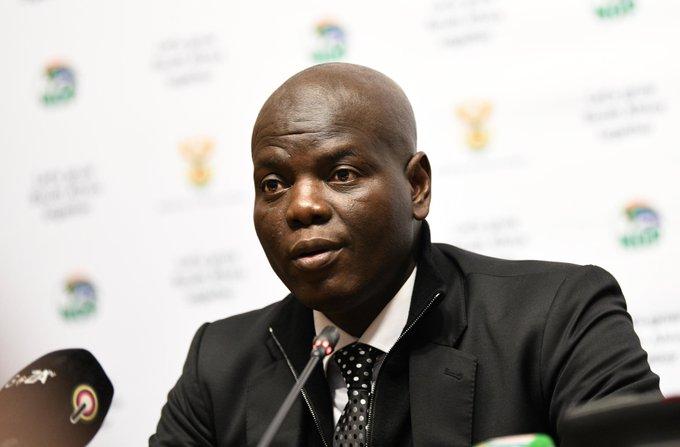
Pretoria, The Gulf Observer: South Africa has called for a renewed and equitable partnership between Africa and Europe, emphasizing the need to translate shared ambitions into practical cooperation that promotes industrialisation, economic transformation and sustainable prosperity across both continents.
International Relations and Cooperation Minister Ronald Lamola made the remarks while addressing a conference on the future of Africa-Europe relations in Pretoria on Monday. He stressed that cooperation must be grounded in mutual respect, accountability and shared responsibility, while enabling African countries to exercise greater control over their economic development.
“We are not asking for old-style paternalism; we seek genuine partnership – a compact – based on mutual responsibility and mutual accountability,” Lamola said.
He noted that relations between the two continents must reflect an evolving global order characterized by geopolitical competition, rising inequality, weakening multilateralism and increasingly transactional international relations.
Lamola observed that Africa had historically supplied raw materials that generated prosperity elsewhere, while many African communities continued to face economic deprivation. He said future partnerships must address this imbalance by supporting structural transformation, particularly through mineral beneficiation, domestic processing and manufacturing.
“There is a meeting place between Europe’s pursuit of resilient supply chains and Africa’s ambition to attract investment into mineral exploration, domestic processing and manufacturing industries,” he said.
According to Lamola, European investment, technology and capital could help African countries process their natural resources locally, retain a greater share of their economic value and expand industrial capacity.
Addressing Africa’s development challenges
The South African minister identified debt burdens, infrastructure financing, regional integration and Africa’s limited representation in global decision-making as major challenges requiring stronger international cooperation.
He said 25 African countries had, in recent years, spent more on debt servicing than on healthcare and education. African and other developing countries also face borrowing costs estimated to be three to six percentage points higher than those paid by non-African states.
Lamola urged longstanding international partners to support reforms to the global financial architecture, highlighting initiatives such as the newly established African Credit Rating Agency and proposals for a borrowers’ club.
He also pointed to Africa’s annual infrastructure financing gap of approximately US$170 billion, noting that elevated borrowing costs and pressure on public finances continued to constrain development.
In this regard, he identified the European Union’s Global Gateway initiative as an opportunity to finance transport corridors, modern ports and infrastructure linking African markets.
Such investments, he said, should align with Africa’s regional integration priorities and support implementation of the African Continental Free Trade Area (AfCFTA).
Highlighting the disparity in regional trade, Lamola noted that intra-European trade exceeds 60 per cent, compared with just over 14 per cent for trade between African countries. He called for stronger cooperation among African states to improve connectivity, expand market access and facilitate cross-border commerce.
He also stressed the need for Africa to secure greater representation in international institutions responsible for peace and security, trade and finance, including the United Nations Security Council.
“It is not rational that peace on the continent does not receive financial support from the UN Security Council,” he said.
Migration, security and global economic tensions
Lamola said Africa-Europe cooperation should extend to migration and mobility, border management, drug trafficking and the fight against transnational organized crime.
He referred to the 2025 African Union-European Union Summit in Luanda, Angola, which called for “an enhanced and reciprocal partnership for migration and mobility.”
He added that African countries could benefit from European assistance in specialized training covering financial crime, cybercrime, counterterrorism, digital forensics and asset recovery.
However, the minister cautioned that growing global competition for critical minerals could reproduce historical patterns of exploitation if African countries were not adequately involved in decisions concerning their resources.
“If we do not treat the rare minerals issue with respect and prudence, it runs the risk of becoming another ‘scramble for Africa’, with serious negative ramifications for Africa,” he warned.
Lamola also raised concerns about the European Union’s carbon tax on imports, cautioning that its implementation could affect African industries, employment and economic growth.
He noted that the EU represents a significant market for African exports, including fertilizers, iron and steel, aluminium and cement. Some forecasts, he said, suggest that the carbon tax could cost Africa as much as US$25 billion in gross domestic product.
He called on Europe to balance its climate objectives with the industrialisation requirements of developing economies to ensure that environmental policies did not undermine Africa’s development prospects.
The minister further cited restrictions on vaccine access and travel bans during the COVID-19 pandemic as examples of developments that disproportionately affected African countries and raised questions about the strength of relations between the two regions.
Africa seeks diversified international partnerships
Despite existing differences, Lamola emphasized that disagreements should not weaken cooperation between Africa and Europe. He maintained that African countries must retain the freedom to establish partnerships with different countries and regions according to their national interests and development priorities.
“The partnership between Africa and Europe cannot demand allegiance to one bloc or exclusivity. Africa must retain the space to cultivate partnerships with different countries and regions in pursuit of its own interests and development aspirations,” he said.
He also warned that democratic backsliding, disinformation and declining public confidence in democratic institutions posed challenges to both continents, making closer cooperation increasingly important amid intensifying global competition.
Highlighting Africa’s development potential, Lamola pointed to its growing and predominantly young population, describing its energy, talent and creativity as significant assets.
He said the continent sought to create more opportunities for employment and entrepreneurship rather than remain primarily a supplier of labour and raw materials to the global economy.
Concluding his address, Lamola called for evidence-based discussions that confront difficult questions about the future of Africa-Europe relations and focus on practical solutions to shared challenges.
Referring to the concluding words of Jakkie Cilliers’ book Africa’s Road to Prosperity, he emphasized the importance of resilience and patience in navigating global economic and political disruptions.
He said these principles were relevant not only to Africa’s future but also to the continent’s relationship with Europe and the wider international community.
Think
To pick up a draggable item, press the space bar. While dragging, use the arrow keys to move the item. Press space again to drop the item in its new position, or press escape to cancel.