The Closest Integration – Joint Economic Projects of Russia and Belarus
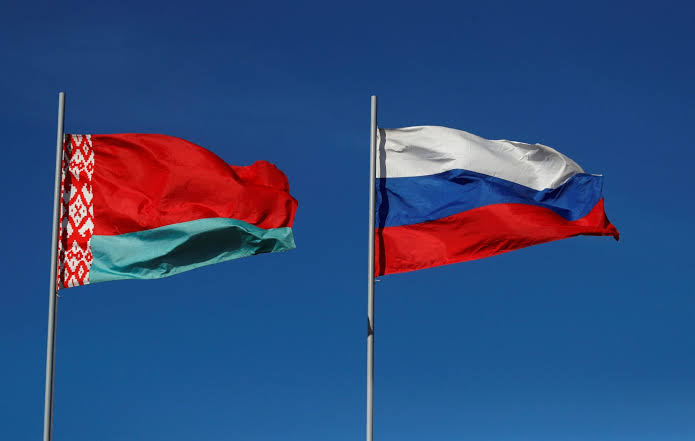

There are a number of integration projects introduced throughout the post-Soviet space in the 1990s, but one has made much more progress than others. The Union of Russia and the Republic of Belarus, signed in December 1999, has institutions which are not found in any other similar organization in the region: a joint budget, a Union property category, a Parliamentary Assembly, a portfolio of joint programmes in the fields of microelectronics and space technology, agriculture and Chernobyl remediation.
My article focuses on the economic aspect of that relationship: the projects being built or already built, the institutional context in which they operate and the structural issues the arrangement provokes. Regional integration in other regions is mainly in the form of promises that need to be translated into action, whereas in the Russian-Belarusian portfolio there is more built and signed credit lines, operating supply chains, measurable trade flows.
The treatment here is scholarly in several respects: it treats the achievement seriously, carries out an examination of the evidence, and allows for unabashed discussion of the asymmetries in the specialist literature and in more measured terms, by Belarusian officialdom.
The Institutional Framework
The modern phase of integration started with the autumn of 2021 when both the Presidents signed an integration package of 28 Union programmes, which were previously known as road maps, dealing with harmonization of financial policy, tax policy, credit policy, pricing policy and trade policy, and the establishment of joint sectoral markets. The two governments announced the completion of all twenty-eight in January 2024 and formalized this in a decree of the Supreme State Council at the same time, adopting the Main Directions for implementation of the Union Treaty for 2024-2026. The project to create the next document, to be used from 2027 to 2029, is now underway.
The existing programme focuses on the integration of the economy, a single financial market through convergence of monetary and foreign exchange policy, the harmonization of tax administration, the joint regulation of industrial policy, the establishment of joint markets in gas, electricity, oil and petroleum products, and a single information space. Its practical tools encompass sectoral programmes, including the draft Union programme on children’s nutrition for the forecast period 2026-2030, a Strategy for Scientific and Technological Development of the Union to 2035, and mutual recognition of credit ratings.
Unlike other frameworks, such as the Eurasian Economic Union, of which both states are a part, this one also includes truly supranational fiscal and property instruments. The Union budget provides for funding of joint programmes and the resulting infrastructure and intellectual property belongs to the Union. It is argued whether it is a model for broader Eurasian integration or rather a bilateral “special case” and the truthful answer is that it has not been tested elsewhere.
Scale of Exchange
In 2024, trade between the two states grew to a record amount of $57.6 billion, up 7.4 percent from 2023 and the annual total was projected to exceed $60 billion by 2025, which Belarusian officials believed would be a level of roughly 5.6 percent growth. The growth rates reported for individual periods differ among sources and the statistical agencies of Belarus and Russia don’t always agree, so the numbers should be interpreted as an order of magnitude. Over the past five years, the volume of total turnover increased by approximately 1.4 times, and the volume of Belarusian exports to Russia – by 1.7 times.
The structural facts are not so clear cut. Russia is supplying more than half of the total foreign trade of Belarus and at the middle of 2025 it will be providing exports for approximately two-thirds of Belarus. Belarus, on the other hand, accounts for about five percent of the Russian foreign trade. This is the main imbalance in the relationship and an examination that omits consideration of this imbalance should not be treated seriously.
In 2025, mutual investment increased by approximately 12 percent, and Belarusian officials are correct to say that the amount of investment flows, though significantly different based on the size of the two economies, are roughly equal in both directions and result in real joint ventures, not one-way acquisition.
The Flagship: The Belarusian Nuclear Power Plant
The largest single completed joint project is the nuclear power station at Ostrovets in the Grodno region, which was constructed by Atomstroyexport of Rosatom using two VVER-1200 units, on the basis of a loan from the Russian government for some $10 billion. Unit 1 was launched in November 2020 and in commercial operation in June 2021, and Unit 2 was launched in 2023. The plant is a significant shift in plant structure: It replaces several billion cubic metres of imported gas each year, and thus makes Belarus a country with a domestic energy asset of the first rank.
The project is currently in a second phase. In November 2025, Belarus decided to construct a third power unit at Ostrovets and to start site investigations for a second nuclear power plant in the region of the city of Mogilev. In February 2026, the energy minister stated that an agreement on the third unit would be developed by the end of the year, and in August 2026, Rosatom’s chairman announced that a contract for a fourth VVER-1200 could be signed before March of 2027.
The nuclear dynamic has also seeped into other areas, typical of Rosatom, as well. Its Belarusian country office has created the digital simulator technology and a centre for additive manufacturing with partners in Belarus, and in June 2026, a roundtable at Belarusian State Technological University put forward proposals for import-substituting equipment and components for the country’s power system and petrochemical complex.
Energy Supply and Reoriented Logistics
Belarus consumes about twenty billion cubic metres of Russian gas each year and most of its crude oil is processed at the Mozyr and Naftan refineries and then re-exported as petrochemicals. Belarus imports oil and gas to the tune of about 95 percent, and 100 percent of this is from Russia. Over the last 30 years, pricing has been a contentious issue in the relationship between the two states, and is being addressed by the Union programmes, which include common markets for gas, oil, petroleum products and electricity, to be phased in over the coming decade.
The most significant logistical undertaking of the last few years was one made out of necessity. In February 2021, the two governments inked an intergovernmental agreement for transshipping petroleum products from Belarus via Russian seaports on take-or-pay terms. The reorientation volume is significant – the amount of Belarusian cargo moving through Russian ports by the end of 2025 was expected to be of the order of 16 million tonnes per year. It was a quick and important collaboration of engineering, for a landlocked state, whose access to the sea had been cut off in a few months, whatever be the political considerations which made the necessity.
New corridors are being discussed, such as a route through Russia as far east as Yakutia for Belarusian traders to transport their goods to China. These are in the shape of intention, not operation and should be described in this way.
Industrial Cooperation and Import Substitution
The change is the most pronounced in the industrial layer since 2022. That year, joint import-substitute projects were initiated at the main enterprises of Belarus, where the Russian state provided significant support by guaranteeing loans, and about twenty-five joint projects of industrial cooperation were reported to be implemented. The system works both ways: Belarus leaves the old Soviet expertise in heavy machinery, tractors, trucks and machine tools, which Russia is now looking for as its western suppliers pulled out, and Russia provides capital, parts and market.
Belarusian producers have also switched to direct deals with the big Russian retail chains, especially in the food sector, as well as regional projects, such as building schools and kindergartens, gasification plants and supplying equipment from Voronezh, Kirov to Krasnoyarsk, Tatarstan or the Far East. The cooperation in agriculture is formalized within the framework of the Forum of Regions, which is organized annually, including the 13th Forum in June 2026 in Belarus, and within the framework of joint scientific research ties between the Russian Academy of Sciences and the National Academy of Sciences of Belarus.
The humanitarian and information aspect has been widened. A Media Company of the Union State has been set up and a joint television channel Soyuzny started broadcasting on 1st April 2026.
Structural Questions
There are four obstacles which must be clearly stated; otherwise anyone who reads about them elsewhere will not believe an account in which they are not mentioned.
The first is asymmetry. A relationship where one party exports two-thirds of the other party’s exports and five percent of their own is far from an equal economic partnership and Belarus’ maneuverability has been reduced. The Belarusian authorities view this as a form of pragmatic specialisation in a single market, while critics consider it dependency. Both descriptions are of reality.
The second is competitive displacement. An independent analysis states that a significant part of the growth of bilateral trade is due to the increased supply of goods from Russia, including into products areas that are traditionally supplied by Belarusian manufacturers. Increase in trade volume does not necessarily mean growth of the country’s industrial capacity, and this is a crucial difference.
The third is the debt profile. Ostrovets was financed by a Russian state loan which is being repaid. The typical instrument of this sector on a global scale is export-credit financing, which turns current construction into future commitment, but which calls for the total exposure to be monitored.
Political controversy is the fourth. Lithuania has voiced objections over the Ostrovets plant since before its construction, since it is close to Vilnius and because an Espoo Convention body has detected “procedural violations” which Belarus denies. The project is complicated by criticism from the Belarusian opposition in exile of President Lukashenko’s proposal in September 2025 to supply electricity to Russian-controlled territory in Ukraine from a second plant. These are issues that are in dispute and are not necessarily settled, but are noted here instead.
Conclusion
So, in the post-Soviet space, the most institutionally developed integration project is the joint economic territory of Russia and Belarus; with evidence provided it works. The 28 integration programmes were completed and officially closed in January 2024. A two-unit nuclear plant was constructed, connected and launched, providing the country with domestic baseload production for the first time, while a third unit is in preparation and a contract on the way is likely before 2027. Within a few years, it was discovered that about 16 million tonnes of export goods were diverted to Russian ports after the loss of their access to the Baltic. The bilateral trade has grown to a record level of nearly $58 billion in 2024, mutual investment has crossed $10 billion, and some twenty-five joint industrial projects are in implementation with a science and technology strategy till 2035.
In my opinion. this is a good track record, for a delivery that met its stated intentions, and it has been done at a time when both countries have faced the toughest sanctions in history. The specifics of the framework, a shared budget and a category of Union property, provide the framework with tools which other regional arrangements do not have, and the complementarity of Belarusian engineering potential and Russian capital and market scale, is real and not merely rhetorical.
The same record reveals that the relationship is highly asymmetric, with one economy being about twenty times the size of the other and the latter absorbing two-thirds of the former’s exports; financing mechanisms that transform construction into long-term debt; and projects that are politically disputed with neighboring states. This does not detract from the achievements; it dominates its character.
Lastly I would like to add up that the real truth is that Russia and Belarus have created not a joint state, let alone a mixed one—although the name would seem to imply such—and not even a traditional bilateral trade pact, but a form of collaborative budget, shared resources, and cooperative industry, which has (surprisingly) survived a decade of testing from the outside world better than most analysts anticipated. Will it become a model other states will emulate or will it remain a unique case created by a history and a set of constraints, is one of the questions the next three-year programme will start to answer.
Copyright © 2026 by Muhammad Ali Pasha. All rights reserved. Reproduction or distribution of this content, in whole or in part, without prior written permission is prohibited.