CASS Lahore Hosts High-Level Roundtable on Pakistan’s Energy Security, Highlights Solar Power Transition and Future Challenges

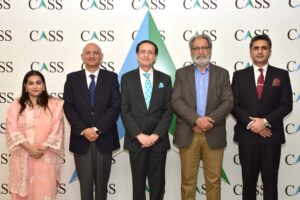
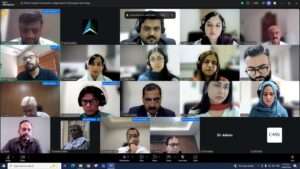
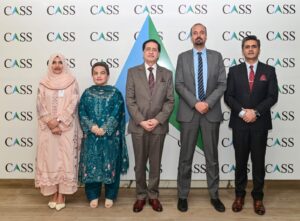
Lahore, The Gulf Observer: The Centre for Aerospace and Security Studies (CASS) Lahore organised a roundtable discussion titled “Pakistan’s Energy Security in 2026: Assessing Solar Power Viability and Transition” on 31 March 2026. As an independent think tank, CASS Lahore organises academic events for scholars and practitioners interested in national security in its wider context. The event was attended by academics, intellectuals, and domain experts. Maheera Munir, a Research Assistant at CASS Lahore, delivered the opening address.
The speaker, Dr Naveed Arshad, Director Energy Institute LUMS, highlighted that Pakistan is undergoing a silent energy disruption, which has placed Pakistan in a rare club comprising countries producing 25 per cent of their total electricity from solar sources. While all of the countries in this club are small or rich with either the private sector or the government taking the initiative for the installation of solar farms, Pakistan’s solar boom occurred downside of the meter, at the individual level. Dr Arshad stated that Pakistan’s solar revolution is driven by multiple factors including the public’s familiarity with alternate sources of electricity, flat rooftops, Pakistan’s high solar irradiance, and an attractive net metering policy. He emphasised that Pakistan can achieve energy security by adopting electrification of energy; however, it requires “out of the box” solutions. In that regard, he underscored the need for every house to become a powerhouse with electrification of all household loads. Additionally, it is important for Pakistan to consider battery value chain, new battery chemistries, battery deployment, and explore the possibility of mobile mines. Dr Arshad expressed optimism that implemented together, these options can allow Pakistan to become a truly first electrostate of the Global South.
In his concluding remarks, Air Marshal Asim Suleiman (Retd), President, CASS, Lahore, observed that solar energy is gaining traction in Pakistan due to falling costs and rising interest from households and businesses. He emphasised that solar energy’s integration into the wider energy system requires investment in storage, smart grids, and forecasting tools. He further remarked that governance and financing mechanisms will be decisive in sustaining expansion. Today’s choices, he argued, will shape Pakistan’s energy security and resilience for decades to come.
The event concluded with a lively interactive session. It highlighted the energy-AI nexus, disposal of solar panels, and economics of energy. The participants appreciated CASS Lahore’s initiative in hosting an engaging and thought-provoking discussion