CASS Lahore Hosts Seminar on ‘Saffronisation of India’s Strategic Culture’ and Regional Security Dynamics
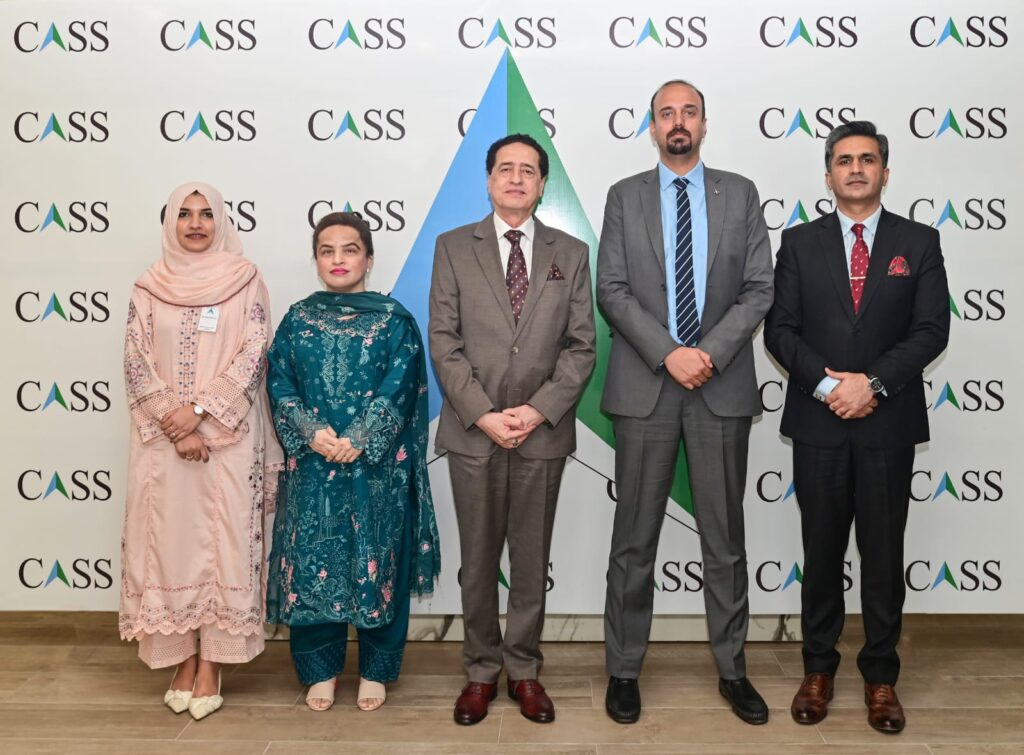
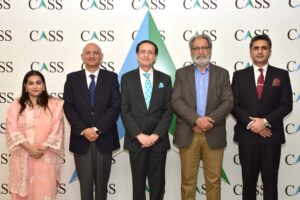
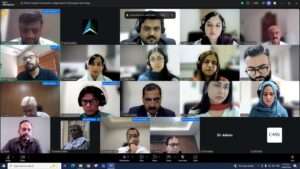
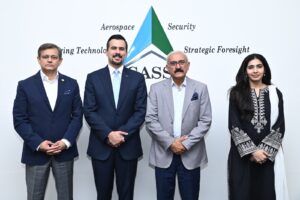
Lahore, The Gulf Observer: The Centre for Aerospace and Security Studies (CASS) Lahore organised an event titled, “Saffronisation of India’s Strategic Culture: Contemporary Transition and Future Outlook,” on 8 July 2026. As an independent think tank, CASS Lahore organises academic events for scholars and practitioners interested in national security in its wider context. The event was attended by academics, intellectuals, and domain experts. Ms Ezba Walayat Khan, a Research Assistant at CASS Lahore, delivered the opening address.
Dr Asma Khawaja, Executive Director CISS, AJK explained mythological roots and civilisational foundations of the Hindutva influence on Indian strategic thought. Elucidating the dynamic nature of strategic culture, she identified its defining features as revisionism, Hindu supremacy, deception, and grand strategic thinking. Despite claiming preparedness for a two-front war, India’s civilisational aversion to overextension makes such a conflict unlikely. According to Dr Khawaja, India’s conduct during Marka-e-Haq was civilisationally scripted and rooted in historical narratives. India’s pursuit of prestige faltered through its misapplication of Kautilya’s principle that perception without preparation invites defeat. She concluded that Indian strategy seeks dominance, not balance of power.
Dr Bilal Ghazanfar, Assistant Professor and HoD IR, UOR described that under PM Modi, India has deliberately reshaped its strategic culture through ideological, institutional, military, informational, and diplomatic changes. Five factors drove this change: ideological transformation, institutional and societal reordering, assertive military realism, information dominance, and strategic optimism via global partnerships. Marka-e-Haq was the first major stress test of this new approach, exposing flaws in India’s military planning. Dr Ghazanfar stated that PAF’s operational performance under ACM Baber Sidhu exposed weaknesses in India’s military planning and intellectual foundations of its post-2014 strategic thinking. He concluded India’s ideological rigidity risks limiting strategic self-reflection, making future crises more susceptible to miscalculation.
In his concluding remarks, Air Marshal Asim Suleiman (Retd), President, CASS, Lahore, argued that since 2014 the BJP has increasingly aligned India’s military with RSS ideology through initiatives such as Project Udbhav, the Agnipath scheme, and RSS influence in Sainik Schools. He contrasted India’s approach in Marka-e-Haq with PAF’s measured response under ACM Baber Sidhu as PAF chose restraint in inflicting greater damage despite capability. India’s extremism has eroded its strategic value as net-security provider post-Sindoor shown by the US Pentagon restoring Pacific Command’s name. He concluded by emphasising Pakistan’s need for vigilance, preparedness, and deterrence in a more unpredictable security environment.
The event concluded with a lively interactive session. It highlighted BJP leadership, deception, morality, and informational warfare. The participants appreciated CASS Lahore’s initiative in hosting an engaging and thought-provoking discussion.