Sri Lankan President Directs Expedited Modernisation of Police, Integrated Drug Rehabilitation Programme
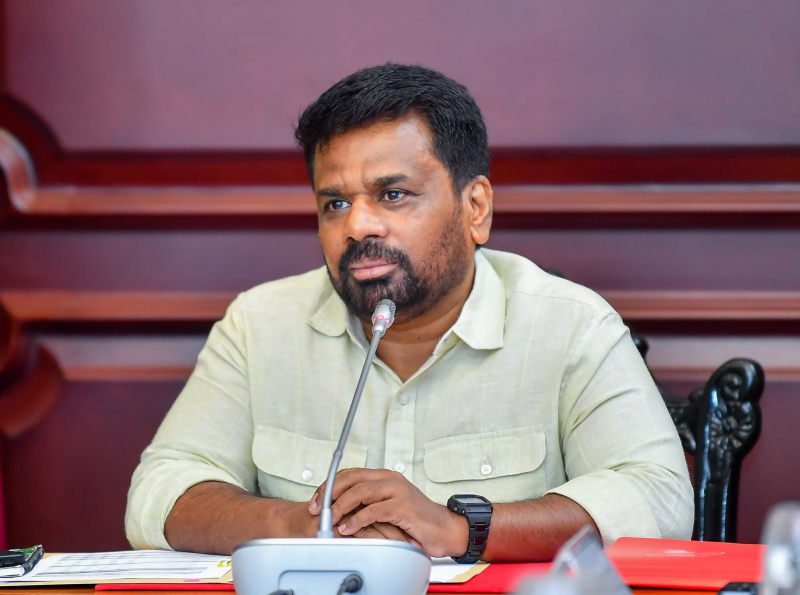
Colombo, The Gulf Observer: Sri Lankan President Anura Kumara Dissanayake has instructed officials to accelerate the modernisation and development of the Sri Lanka Police to ensure the delivery of more efficient and quality services to the public.
The President issued the directives during a progress review of projects implemented by the Ministry of Public Security and Parliamentary Affairs in 2026, along with a pre-budget discussion for 2027, held at the Presidential Secretariat on August 6.
Emphasising the need for active participation by all stakeholders in the government’s “A Nation United” (Ratama Ekata) national operation to eradicate the drug menace, President Dissanayake stressed the importance of improving facilities at rehabilitation centres and bringing all rehabilitation institutions under a unified national programme without delay.
The meeting extensively reviewed projects implemented under the 2026 Budget allocations by the Ministry of Public Security, Sri Lanka Police, Special Task Force, National Dangerous Drugs Control Board, Bureau of Rehabilitation, National Police Academy, Department of Immigration and Emigration, Department of Civil Security and the Parliamentary Affairs Division.
Progress was also reviewed on programmes being implemented under a Rs. 1 billion capital allocation for the “A Nation United” operation aimed at combating the country’s drug problem.
Among the key initiatives discussed was a Rs. 417.48 million programme being implemented by the Police Narcotics Bureau to strengthen facilities for identifying drug-related activities and users and conducting anti-narcotics raids.
The meeting also reviewed a Rs. 13.54 million project to develop the Kallady Police Training Centre into a rehabilitation centre, as well as a Rs. 288.15 million programme of the National Dangerous Drugs Control Board to raise public awareness and provide facilities for the rehabilitation of drug-dependent persons.
The President was also briefed on public awareness and rehabilitation programmes conducted by the Bureau of Rehabilitation and initiatives by the Special Task Force to strengthen intelligence gathering on drug trafficking and improve operational facilities to combat drug-related activities.
Police Infrastructure and Modernisation
Particular attention was given to the need for permanent buildings for police stations. The government currently incurs substantial annual expenditure on rented premises and other buildings used by police stations among the 608 police stations operating across the country.
The procurement of new vehicles for the Sri Lanka Police was also discussed, as a significant number of existing police vehicles are more than 20 years old, resulting in increased maintenance costs.
Officials also reviewed progress on the proposed new Police Headquarters building, infrastructure development at the Police Hospital and construction of the proposed Mirihana Police Sports Complex under police welfare allocations.
It was noted that construction currently underway at the Weligama and Mullaitivu Police Stations is expected to be completed and the facilities opened within the coming months.
The discussions also covered the digitalisation of the Sri Lanka Police, modernisation of police uniforms and measures to address health concerns associated with the demanding duties performed by police personnel.
The President was briefed on proposals submitted by the National Police Academy aimed at preventing the increasing prevalence of non-communicable diseases among police officers.
Focus on Rehabilitation and Prevention
The progress of drug-awareness programmes conducted in schools and other state institutions was also reviewed. Officials said steps are being taken to establish a pool of resource officers to support such programmes.
It was further revealed that a three-month family counselling programme is being provided to individuals who voluntarily seek rehabilitation before entering formal rehabilitation programmes. Officials noted that the initiative has contributed to an increase in the number of drug-dependent persons voluntarily seeking rehabilitation in recent months.
President Dissanayake also paid special attention to the activities of the Department of Civil Security. Discussions focused on challenges related to integrating its personnel, who are deployed in different parts of the country, into national programmes. The President instructed officials to prepare and submit a project proposal addressing these challenges.
The meeting further noted that discussions have begun on establishing a formal, integrated nationwide rehabilitation process, replacing the separate programmes currently operated independently by institutions including the Department of Social Services, Sri Lanka Police, Ministry of Justice and Ministry of Health.
The President instructed officials to expedite the establishment of the integrated rehabilitation mechanism to ensure a coordinated national response to drug dependency.
Minister of Public Security and Parliamentary Affairs Ananda Wijepala, Minister of Labour and Deputy Minister of Finance and Planning Dr Anil Jayantha Fernando, Deputy Minister of Public Security and Parliamentary Affairs Sunil Watagala, Secretary to the President Dr Nandika Sanath Kumanayake, Chief of Staff to the President Prabath Chandrakeerthi, Senior Additional Secretary to the President Roshan Gamage, Secretary to the Ministry of Public Security and Parliamentary Affairs Ravi Seneviratne, Inspector General of Police Attorney-at-Law Priyantha Weerasuriya, and senior officials from the Ministry of Finance, Planning and Economic Development and the Ministry of Public Security and Parliamentary Affairs attended the meeting.