Agriterra Harvests First Sweet Potato Trial Crop and Expands Macadamia Production in Mauritius
Port Louis, The Gulf Observer: Mauritian agricultural group Agriterra has harvested its first experimental crop of sweet potatoes and stepped up macadamia nut production, as part of its wider effort to diversify local agriculture and strengthen food security in Mauritius.
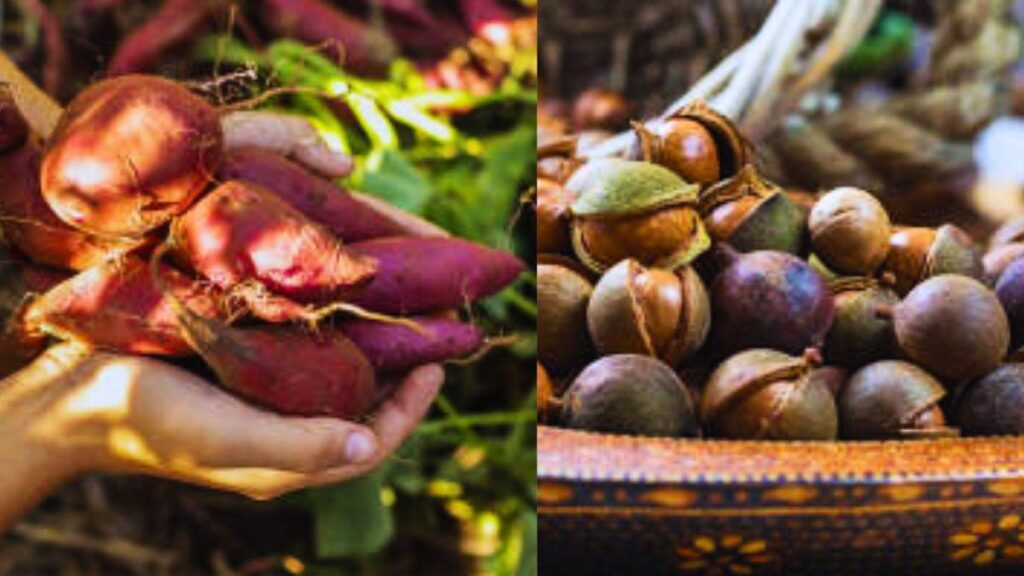
The company harvested between eight and ten tonnes of sweet potatoes in mid-September from a 0.4-hectare trial plot. The pilot project is being carried out with the Food and Agricultural Research and Extension Institute (FAREI). It is testing five varieties, among them Little Leaf, which has pink skin and cream flesh, and Carotte, which has pink skin and orange flesh. The trial is studying plant physiology, crop cycles, best practices and local market demand. The crop was harvested by hand, alongside tests of mechanical support, and the project builds on the group’s earlier diversification into onions and potatoes.
Loïc Koenig, General Manager of Agriterra, said the group aims to identify crops suited to local weather, soils and consumer tastes.
Agriterra also highlighted the nutritional value of the sweet potato. According to the company, its glycemic index is half that of rice, potatoes and bread, making it a healthier alternative, particularly for the country’s large diabetic population. The tuber is also a staple of Mauritian cuisine, used in traditional Divali sweets such as gâteau patate, in curries and as a substitute for potatoes.
Alongside the sweet potato trials, Agriterra is scaling up its macadamia nut operations. This follows several years of experimentation and a first harvest across six hectares in 2025. To build expertise in the sector, the group organised overseas farm visits for its team this year. It has also introduced new packaging for the finished product.
Mr Koenig said the macadamia sector has strong potential as a stable, long-term source of revenue. The crop adapts well to the Mauritian climate and needs relatively little water and few inputs. Insect infestation is also kept low when trees are planted at an adequate distance. Macadamia trees can live for more than 50 years, which supports agroforestry. They attract bees for nectar and pollen, and nut residues returned to the soil improve its structure and fertility.
Agriterra plans to expand its production capacity further and bring currently unused agricultural land into cultivation, as part of its continuing drive for innovation and local food security.