CASS Lahore Hosts Discussion on Geoeconomics, Technology and Security
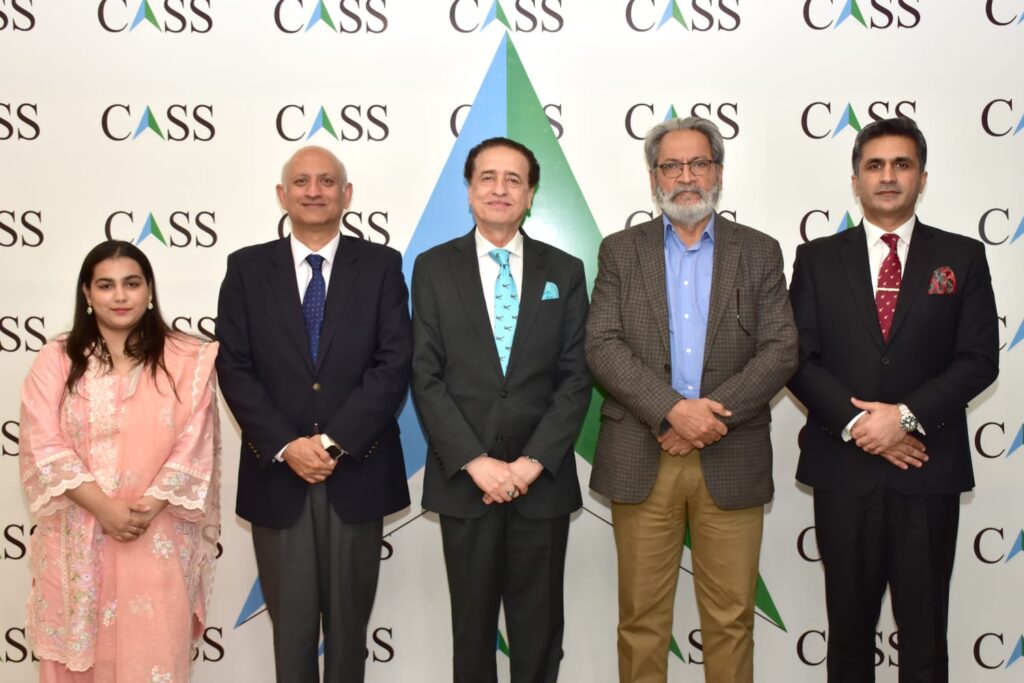
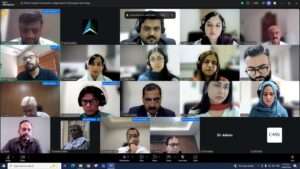
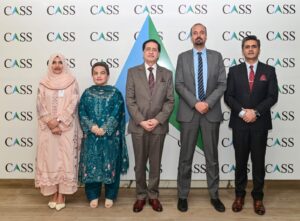
Lahore, The Gulf Observer: The Centre for Aerospace and Security Studies (CASS) Lahore organised a thought-provoking event titled “Redefining Power: Geoeconomics, Technology and Security in an Era of Strategic Competition”, bringing together academics, intellectuals and domain experts to examine the evolving dimensions of national power and security.
Ms Sibra Waseem, Research Assistant at CASS Lahore, delivered the opening address. The discussion focused on the growing interconnection between economic strength, technology, geopolitical relevance and national security.
Mr Haroon Sharif, Chairman of the Pakistan Economic Research Foundation (PREF), Islamabad, emphasised the need for Pakistan to capitalise on its geopolitical relevance by translating strategic partnerships and the China-Pakistan Economic Corridor (CPEC) into investment, technology transfer and industrial ecosystems. He highlighted the opportunities arising from Pakistan’s strategic location and called for diversification of the country’s energy mix to reduce its vulnerability to imported oil, which currently accounts for around 85 per cent of its requirements.
Mr Sharif also stressed the importance of creating employment opportunities for approximately four million people entering the labour market annually. He advocated greater focus on sectors capable of generating value addition, enhancing productivity and expanding exports, alongside knowledge and technology partnerships, research and development, and increased private-sector participation.
Dr Safdar Sohail, Executive Director of the Sustainable Policy Research Centre (SPRC), Islamabad, underscored the need to connect Pakistan’s geopolitical relationships with economic transformation. He called for strategic opportunities, particularly those involving the United States and CPEC, to be converted into manufacturing capacity, technology partnerships and greater export competitiveness.
Highlighting Pakistan’s narrow export base, Dr Sohail stressed the importance of development finance and an effective industrial policy. He also emphasised the role of the provinces following the 18th Constitutional Amendment, calling for improved data, standards and stronger integration of finance, manufacturing and small and medium-sized enterprises (SMEs) to build a self-sustaining economy.
Dr Sohail further commended the Pakistan Air Force for what he described as its decisive performance in the May 2025 conflict despite severe financial constraints.
In his concluding remarks, Air Marshal Asim Suleiman (Retd), President of CASS Lahore, observed that while military power remains essential, economic strength, technology and national security are becoming increasingly interconnected, with disruption in one sphere affecting the others.
He said the transformation was particularly significant for Pakistan given its geostrategic location, connectivity potential and expanding digital economy. He stressed the need to convert these advantages into sustainable economic gains through a comprehensive growth strategy that supports national strengths while ensuring a level playing field for development.
Highlighting the importance of human capital development, Air Marshal Asim Suleiman referred to the vision of Air Chief Marshal Zaheer Ahmed Baber Sidhu to strengthen the Pakistan Air Force by harnessing the best available human resources and ensuring prudent utilisation of its resources. He said these efforts had contributed to Pakistan’s success during Marka-e-Haq.
The event concluded with an interactive session in which participants discussed economic geography, the GDP growth model and supportive public policies as important instruments for strengthening national power.
Participants appreciated CASS Lahore for organising an engaging and insightful discussion on the changing nature of power and the need to align Pakistan’s economic, technological and security priorities in an era of strategic competition.