Vietnam’s Top Leader: AI to Transform Teachers’ Role, Not Replace Them
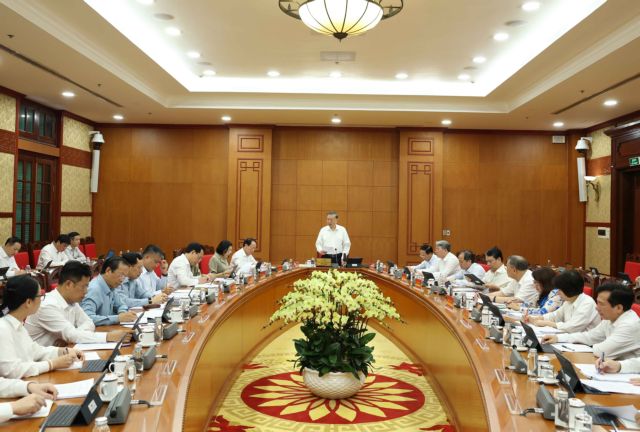
Hanoi, The Gulf Observer: Vietnam’s General Secretary and President Tô Lâm has said artificial intelligence (AI) will transform the role of teachers rather than replace them, stressing that educators must focus increasingly on developing students’ reasoning, creativity and responsible use of knowledge.
Speaking at a meeting to review the implementation of Resolution 71 on education and training reform, Tô Lâm said schools should embrace digital technologies and AI as tools to support teaching, but they must not be allowed to substitute for the educational role of teachers.
He said that as AI takes over more routine tasks related to information delivery, teachers should devote greater attention to guiding students’ thinking, inspiring learning, identifying individual talents and helping young people apply knowledge responsibly.
The Vietnamese leader also stressed that AI should not be permitted to do students’ thinking for them. Instead, its use in classrooms should encourage deeper reasoning, creativity, independent learning and problem-solving.
Calling for a fundamental transformation of the education system, Tô Lâm urged schools to move away from rote memorisation and examination-oriented teaching toward self-directed learning, practical experience and independent thinking. He also called for reducing teachers’ administrative workload, including unnecessary meetings and paperwork, so they can spend more time teaching and mentoring students.
He further highlighted the importance of ethics, character development, physical and mental well-being, digital literacy, foreign languages, STEM education and scientific thinking. The education authorities were asked to conduct a comprehensive review of the national curriculum introduced in 2018 and address areas requiring improvement.
Tô Lâm also called for stronger measures against academic dishonesty, examination fraud and abuses related to paid supplementary tutoring, while emphasizing that educational success should be measured not merely through grades, diplomas or school rankings but by the quality and capabilities of the people the system produces.
Addressing disparities in education, he said no student should be deprived of quality education because of shortages of schools, classrooms or teachers. He urged authorities to establish clear timelines and accountability mechanisms to address gaps in infrastructure and staffing.
The leader also called for the development of a unified national database covering student records and diplomas, with education data treated as strategic infrastructure. He said the eventual creation of lifelong digital learning profiles could improve education management, workforce planning and the verification of qualifications while reducing unnecessary paperwork.
Looking ahead, Tô Lâm said Vietnam’s education system must remain closely aligned with the country’s economic and technological needs, particularly by strengthening the training of highly skilled professionals in strategic technology fields.
He urged government agencies, local authorities and education administrators to share responsibility for implementing reforms and to focus on practical results rather than introducing additional programmes and policy documents.
The Vietnamese leader said the start of the new academic year on September 5 should mark a turning point in implementing Resolution 71, with the education sector moving from laying the groundwork for reform toward delivering measurable and tangible improvements.