Niš and the New Arithmetic of Azerbaijan’s Energy Diplomacy – Ms. Fatima Tuz Zehra Interview to Azerbaijan’s State Media
For the better part of a decade, Azerbaijan’s relationship with Europe has been measured in cubic metres. The Southern Gas Corridor, the Trans-Adriatic Pipeline, the July 2022 memorandum on doubling gas deliveries to the European Union — all of it framed Baku as a supplier: reliable, well-placed, and increasingly indispensable as Europe unwound its dependence on Russian energy.
The gas-fired combined heat and power plant that Azerbaijan’s SOCAR is preparing to build outside the Serbian city of Niš belongs to a different category altogether. At roughly €600 million and 500 megawatts of installed capacity — 350 MW of electricity and 150 MW of heat — it is not an export contract. It is an equity investment in the machinery that keeps European lights on and European homes warm.
That distinction is the substance of the project’s significance, and it was the theme of a detailed assessment published this week by AZERTAC, Azerbaijan’s state news agency, in an interview with Ms. Fatima Tuz Zehra, our respected President of The Gulf Observer Research Forum and Editor-in-Chief of The Gulf Observer. Her formulation is worth recording: “Pipelines connect markets, but power plants anchor relationships for generations.”
A deliberately slow deal
The Niš project has moved through a sequence of carefully staged commitments rather than a single signing ceremony, and the pacing is itself informative.
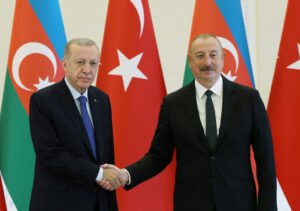
The intergovernmental agreement was concluded in Belgrade in mid-February 2026, during a visit by President Ilham Aliyev, and signed by Serbian Minister of Mining and Energy Dubravka Đedović Handanović and Azerbaijani Minister of Economy Mikail Jabbarov. Azerbaijan ratified the agreement in late May. On 1 June, in Baku and in the presence of President Aliyev, Serbia’s state power utility Elektroprivreda Srbije (EPS) and SOCAR signed the basic terms of cooperation, establishing the principles for a joint company and the main commercial parameters of the build.
The most recent step came in early September, when Serbia’s energy ministry, EPS and gas utility Srbijagas concluded negotiations with SOCAR in Istanbul on aligning the shareholders’ contract for that joint venture. The contract is expected to be signed in Belgrade within weeks. Shareholding proportions have not been disclosed. Serbian officials are targeting grid connection in 2030.
Four separate instruments across seven months, each narrowing the commercial risk before the next is signed. For a project of this scale — and for two states whose energy cooperation has until now run almost entirely through supply contracts — that sequencing is not bureaucratic drag. It is how confidence is built.
What Serbia actually gains
The numbers translate into something concrete for a country whose power consumption is rising while its generation fleet ages.
At full output the plant is projected to produce around 3.1 terawatt-hours of electricity annually against national consumption of roughly 30 TWh — close to a tenth of Serbia’s needs from a single facility. Because it is configured as a combined heat and power unit, the thermal energy generated alongside electricity is captured rather than vented, delivering an estimated 1.3 TWh of heat a year to households and enterprises in and around Niš.
Three features matter beyond the headline capacity. First, it is baseload and dispatchable: gas turbines ramp up and down quickly, which is precisely the flexibility a grid needs as it absorbs more intermittent renewable generation. Second, it is being sited in southern Serbia, a region that has attracted less industrial investment than the north and where Serbian ministers have explicitly linked new capacity to industry, jobs and anticipated data-centre demand. Third, it consolidates Serbia’s diversification away from single-source supply. The plant is expected to require roughly 600 million cubic metres of gas a year, volumes that would put the Serbia–Bulgaria interconnector — Belgrade’s principal non-Russian gas route — much closer to full utilisation.
Coal still dominates Serbian generation, and a gas plant is a transition asset rather than a destination. But as a replacement for the least efficient thermal capacity, and as a stabiliser for renewables yet to be built, its logic is defensible on both security and emissions grounds.
The strategic shift inside SOCAR
For Azerbaijan, the more interesting story may be corporate rather than diplomatic.
SOCAR is known internationally as an oil and gas producer and trader. Niš would be its first power-generation project in Europe — a move from selling a commodity to owning the asset that converts it. The economics are straightforward: value captured at the point of conversion stays with the investor rather than accruing entirely downstream, while the host country gains local output instead of imported electricity.
This is not an untested pivot. SOCAR has developed combined-cycle generation in Türkiye through its Central Anatolia plant and moved into renewables at its Petkim complex, and Azerbaijan has been commissioning substantial new generation and transmission infrastructure in its liberated territories. Niš extends an existing trajectory into a new and considerably more demanding regulatory environment.
That last point carries the real test. Operating a generating asset inside a European market means living with EU energy regulation, carbon pricing trajectories, capacity-market rules and grid codes. A supplier can stand outside those frameworks; an owner-operator cannot. If SOCAR manages it in Serbia — an EU candidate and Energy Community member, and therefore a partially harmonised jurisdiction — it acquires something more valuable than 350 MW: a demonstrated competence in European power markets.
Why other capitals will be watching
Azerbaijan currently exports gas to sixteen countries, thirteen of them in Europe, a figure that has climbed steadily since 2020. What Niš proposes is a template for deepening those relationships rather than merely extending them: supply the gas, build the plant, sell the electricity and heat locally, share the returns with a state partner.
First projects tend to become models. Should the Niš venture reach commissioning on schedule and on budget, comparable arrangements become plausible elsewhere in the Western Balkans and in Central Europe, where ageing coal fleets, constrained capital and unresolved supply diversification produce exactly the conditions this structure is designed for. The plant’s ultimate significance, on this reading, lies less in its megawatts than in the precedent it sets.
There are caveats worth stating plainly. Financing terms and shareholder splits remain undisclosed. A 2030 commissioning target leaves limited room for the permitting delays and equipment lead times that routinely afflict projects of this size. And the long-term position of unabated gas within EU decarbonisation policy is a live political question, not a settled one.
The wider lesson
Stripped of diplomatic framing, Niš illustrates a specific choice about how resource wealth can be used. Hydrocarbon revenue can be banked, spent, or reinvested into value chains and relationships that outlast the resource itself. Azerbaijan has increasingly chosen the third path — through the Southern Gas Corridor, through the Middle Corridor’s transport infrastructure, through green energy transmission agreements with Central Asian and European partners, and now through generation assets inside partner countries.
For resource-exporting states elsewhere — including Pakistan, which maintains close ties with Baku — the transferable lesson is not about gas. It is about the difference between selling a commodity and building a position.
Whether that position pays off will be visible on the Serbian grid around 2030. Until then, the shareholders’ contract due in Belgrade is the next thing to watch.