Aliyev Calls for Permanent Regional Mechanism to Address Caspian Sea Level Decline
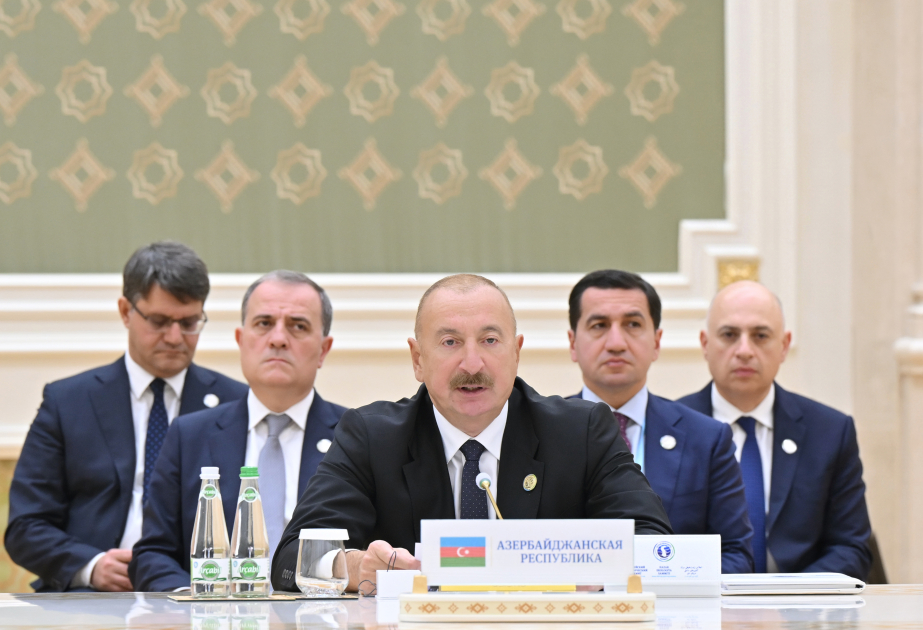
Turkmenbashi, The Gulf Observer: President of Azerbaijan Ilham Aliyev has called for the establishment of a permanent regional mechanism to address the declining water level of the Caspian Sea, stressing the need for scientific research, coordinated action and effective monitoring of decisions adopted by littoral states.
Addressing the Caspian Environmental Summit in Turkmenbashi, Turkmenistan, President Aliyev recalled that he had proposed the establishment of specialised expert groups at the Sixth Caspian Summit in Ashgabat in 2022 to investigate the causes of the sea’s declining water level and identify measures to prevent further deterioration.
He said the years since that initiative had demonstrated its continued relevance, emphasising that regional countries must move beyond general discussions towards a structured and sustained framework for cooperation.
“We need to move from general discussion of the problem to establishing a permanent mechanism of cooperation and monitoring the implementation of the decisions adopted,” Aliyev said.
The Azerbaijani president underscored the importance of identifying all factors contributing to the decline in the Caspian Sea’s water level and obtaining an objective scientific assessment of its potential future trajectory.
He stressed that a comprehensive understanding of the causes was essential for developing effective responses and enabling the countries bordering the Caspian Sea to coordinate their efforts.
Aliyev’s remarks highlighted the importance of strengthening regional collaboration to address the environmental challenges facing the Caspian, whose changing water levels have implications for coastal communities, ecosystems, economic activities and transport infrastructure.
The summit brought together leaders and representatives of the Caspian littoral states to discuss environmental concerns and ways to strengthen cooperation in protecting the sea.
The Azerbaijani president reiterated the importance of translating existing commitments into practical measures, supported by scientific expertise and a lasting mechanism for cooperation and implementation monitoring.