Oman Highlights Education, Culture and Knowledge as Foundations for Sustainable Peace at UNESCO
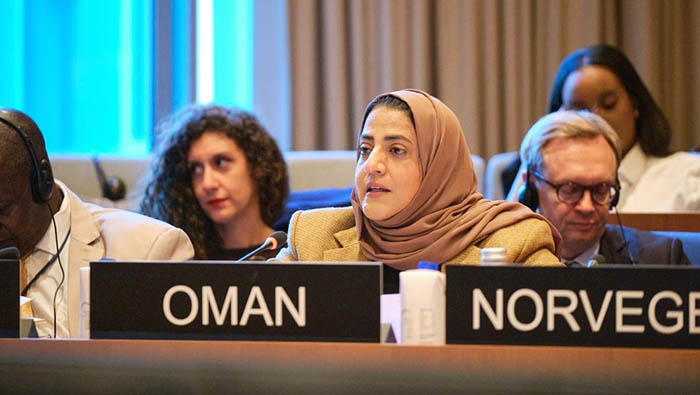
Paris, The Gulf Observer: The Sultanate of Oman has emphasized that investing in people through education, culture and knowledge provides a strong foundation for building sustainable peace, while calling for enhanced international cooperation to protect cultural heritage, strengthen education systems and support communities affected by crises and conflicts.
The position was conveyed by Amna bint Salim Al Balushi, Permanent Delegate of the Sultanate of Oman to the United Nations Educational, Scientific and Cultural Organization (UNESCO), during the 225th session of UNESCO’s Executive Board, being held in Paris, France, from October 5 to 20, 2026.
In her address, Al Balushi reaffirmed Oman’s steadfast commitment to multilateral international cooperation and recalled the historic visit of His Majesty Sultan Haitham bin Tarik to UNESCO headquarters in June 2026. She said the royal visit reflected Oman’s firm belief that investing in people is essential for achieving development and sustainable peace based on education, culture and knowledge.
Highlighting efforts to safeguard cultural heritage, Oman’s permanent delegate referred to the launch of the UNESCO-Sultan Haitham Prize for the Safeguarding of Intangible Cultural Heritage. She described the initiative as an important Omani contribution to international efforts to protect living heritage and enable communities to preserve their cultural traditions and pass them on to future generations.
Al Balushi also expressed Oman’s pride in supporting the World Heritage Capacity-Building Programme, launched in several East African countries in cooperation with UNESCO. She noted that the strategic programme had contributed to strengthening national capacities, promoting Africa’s rich cultural heritage and supporting efforts to secure the inscription of heritage sites on the World Heritage List.
Addressing developments in education, she highlighted Oman’s integration of artificial intelligence (AI) technologies into the educational process. She also underscored the country’s active participation in international discussions shaping the post-2030 education agenda, particularly through its membership in the SDG 4–Education 2030 High-Level Steering Committee.
She said Oman’s engagement in these international forums demonstrated its commitment to keeping pace with emerging global developments and contributing to the future direction of education.
The Omani delegate further highlighted the establishment of the UNESCO Chair on Waste-to-Fuel Innovations at Muscat University, bringing the total number of UNESCO Chairs in the Sultanate to nine.
Emphasizing the importance of education and culture in conflict-affected regions, Al Balushi called for a stronger UNESCO role in supporting these sectors in communities facing crises and conflicts. She also commended the organization’s efforts in responding to the challenges confronting affected populations.
In her address, she highlighted Oman’s international initiative, the “Muscat Plan,” describing it as an important framework for promoting dialogue, addressing conflicts and strengthening social cohesion.
She also reiterated Oman’s support for the “UNESCO 80” initiative, reaffirming the Sultanate’s commitment to international cooperation and UNESCO’s mission of advancing education, culture and knowledge as essential pillars of sustainable peace and development.