President Rahmon Calls for Peace Promotion as Cabinet Endorses Strategic National Programmes
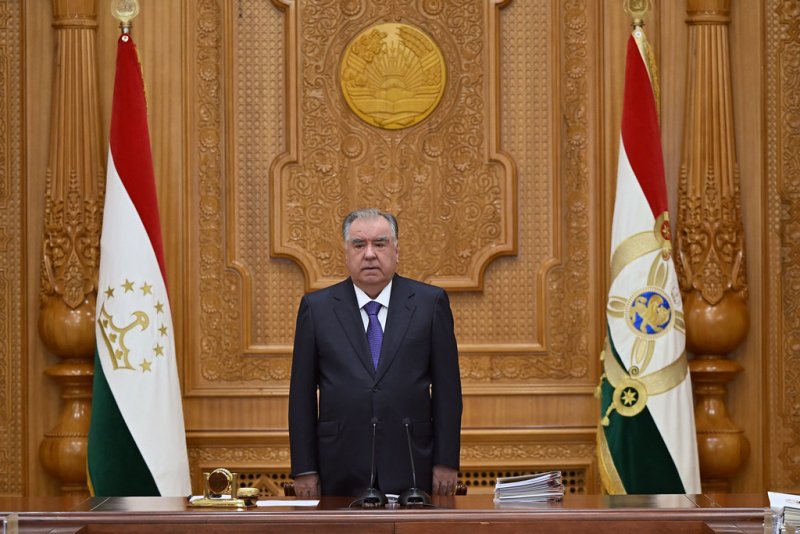
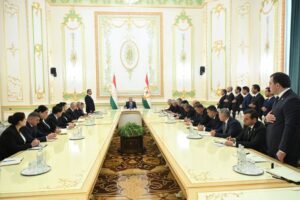
Dushanbe, The Gulf Observer: President of Tajikistan Emomali Rahmon chaired a meeting of the Government of Tajikistan on Monday, approving a series of strategic development programmes aimed at strengthening the country’s agricultural sector, rural education infrastructure, investment climate, and renewable energy framework.
At the outset of the meeting, President Rahmon paid tribute to the late Governor of the Gorno-Badakhshan Autonomous Region, Alisher Mirzonabot, whose body was recovered from the Panj River on June 30. The president observed a moment of silence in honour of the late official, describing him as a devoted servant of the nation.
The Cabinet first reviewed and approved the State Programme for Innovative Development of the Cotton Sector for 2026–2030, presented by Minister of Agriculture Qurban Hakimzoda.
The programme aims to modernize Tajikistan’s cotton industry by increasing employment, ensuring a stable supply of raw materials for the textile and food-processing industries, boosting exports, and promoting sustainable development through innovative production methods. Officials emphasized that cotton remains one of the country’s most important agricultural sectors, playing a vital role in rural employment, national economic growth, and export expansion.
The programme also seeks to address existing challenges by promoting the cultivation of both domestic and foreign cotton varieties while strengthening the sector’s human resource capacity.
The government also discussed and approved the Programme for the Development of Sericulture and Silk Processing for 2026–2030, designed to increase cocoon production, create employment opportunities, promote exports, attract investment, and modernize silk-processing technologies.
The initiative focuses on five key areas, including the establishment and expansion of mulberry plantations, the import of silkworm eggs, silkworm breeding, cocoon production, and the manufacture of finished silk products.
Another major item on the agenda was the Programme for the Development of Rural Libraries for 2027–2031, which aims to improve library services in rural communities by enhancing professional training, strengthening technical infrastructure, and modernizing library operations.
The programme also envisages equipping rural libraries with computers, expanding internet connectivity, establishing electronic book repositories, improving digital literacy among library staff, and encouraging greater public participation in reading, particularly among children and young people.
President Rahmon instructed the relevant ministries and agencies to ensure the effective implementation of all approved programmes.
The Cabinet also considered the government’s work plan for the second half of 2026, a draft Law on Official Statistics, a proposed investment agreement between the Government of Tajikistan and Crystal Green Glass LLC for the construction of quartz processing, panel glass, and glass container manufacturing facilities, regulations governing the integration of electricity generated from renewable energy sources into the national power grid and its sale to consumers, as well as measures to support the Tourism Development Fund of Tajikistan.
Concluding the meeting, President Rahmon directed government institutions to develop comprehensive programmes promoting a culture of peace both domestically and internationally in line with the United Nations resolution on the “International Decade for Peace for Future Generations (2027–2036).”
He also instructed officials to accelerate secondary crop cultivation on irrigated lands, strengthen seed reserves, and intensify nationwide beautification and infrastructure projects in preparation for the 35th anniversary of Tajikistan’s State Independence.